Okinawa soba is a wheat-noodle soup, usually served with pork and fish-based stock. Start with a classic pork-belly bowl or soki soba with pork ribs, then choose a restaurant that fits your day. A good lunch stop is more useful than a long detour to a shop that closes before you arrive.
Finding your best Okinawa soba starts with the broth, noodle texture and toppings you enjoy. Use the styles below to choose what you would like to try.
This guide explains the menu names, regional differences, ordering process and a small, practical shortlist in Naha, Onna and Motobu. It is a researched visitor guide, rather than a first-hand restaurant review. Restaurant details and the quoted menu examples were checked on 25 October 2026; follow each shop’s latest notices before travelling.
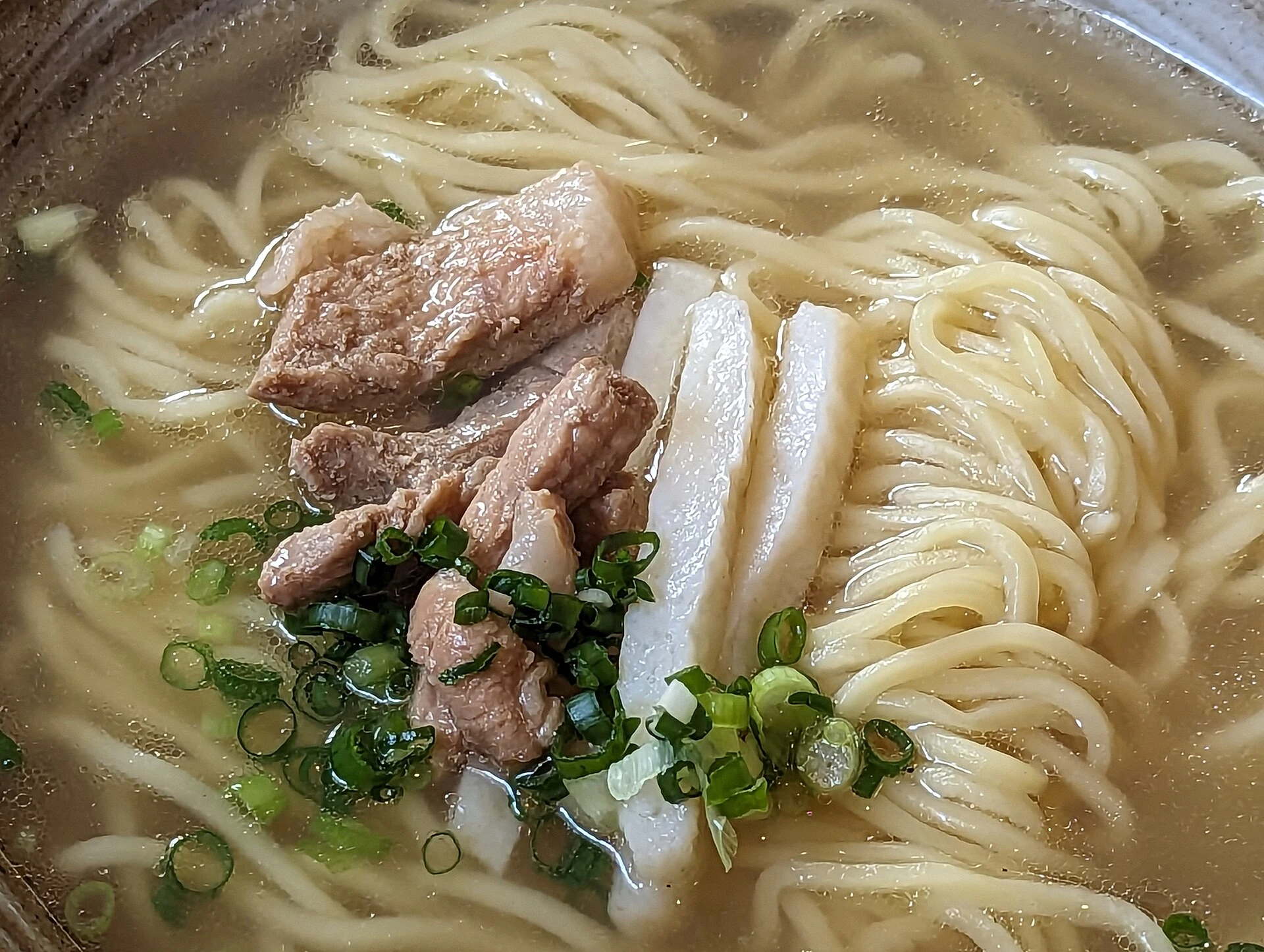
What makes Okinawa soba different?
The important distinction is the flour. Okinawa soba uses wheat rather than buckwheat, with alkaline water helping create its characteristic noodle texture. A familiar bowl combines the noodles with pork-and-bonito stock, pork, fish cake and spring onion. Japan’s Ministry of Agriculture, Forestry and Fisheries describes both the traditional combination and the many variations that have developed around it. Source: MAFF’s Okinawa soba guide.
Think of the dish as its own local tradition. Comparing it with ramen or udon can help you picture the noodles, but it will not tell you how an individual shop’s bowl tastes. The balance of the stock matters as much as the meat on top. The Ministry of Foreign Affairs’ food guide describes Okinawan stock using pork, bonito and kombu, and notes that versions vary across the islands. Source: Web Japan.
For a first tasting, try a spoonful of soup before adding anything. Then taste the noodles and the topping separately. This gives you a useful comparison if you try another shop later: you can decide whether you prefer the noodles, the stock or the cut of pork, rather than trying to declare one universal “best” bowl.
Soki soba, pork belly and other toppings
Soki soba is a type of Okinawa soba. The extra word identifies a pork-rib topping; it does not describe an entirely different noodle. Shops can offer several meat combinations on the same noodle and broth base.
| Menu name | What it refers to | Useful ordering question |
|---|---|---|
| Sanmainiku soba · 三枚肉そば | Braised pork belly | Is this the standard bowl on your menu? |
| Soki soba · ソーキそば | Pork ribs | Does it have hard bones or soft cartilage? |
| Nankotsu soki soba · 軟骨ソーキそば | Pork ribs with cartilage | How is the cartilage prepared here? |
| Tebichi soba · てびちそば | Pig’s trotters | Is it a regular or limited dish? |
| Asa soba · アーサそば | A seaweed variation | Which meat, stock and fish-cake ingredients are included? |
The pork-belly, rib and cartilage terms are described in MAFF’s overview. Tebichi and asa examples can be checked against Nakamura Soba’s own menu. A menu name alone is not a complete ingredient list.
Sanmainiku: a simple first choice
If you want to concentrate on the soup and noodles, a standard pork-belly bowl is an easy starting point. Look at the actual menu photo and description: a dish called “Okinawa soba” may be a house combination, while a named sanmainiku option may have a different quantity of meat. Ask which bowl the shop recommends for a first visit.
Soki: choose the rib topping deliberately
Ask about bones when ordering for a child or someone who would prefer an easier-to-handle topping. The words hon-soki and nankotsu help distinguish rib preparations, but it is still worth confirming the shop’s version. A menu photograph is useful for portion size; it cannot tell you whether a bone or piece of cartilage will be comfortable to eat.
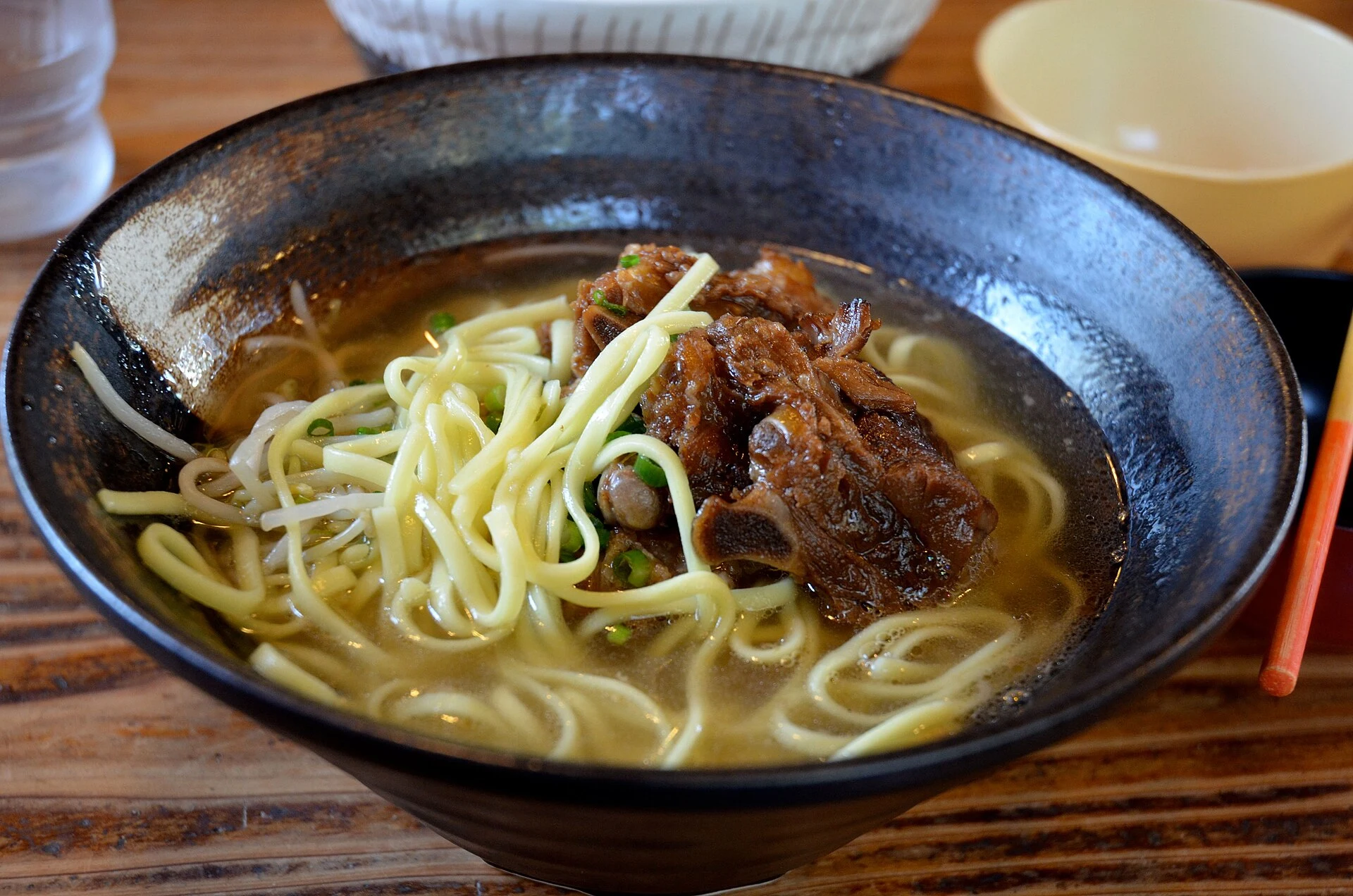
Nankotsu: the cartilage variation
Nankotsu is a useful word to recognise on a menu. It points you towards a different texture from a plain slice of pork belly. Choose it because that preparation appeals to you, rather than because the English menu calls it “soft bone” and you assume every part is the same. The server can explain how that day’s topping is cooked.
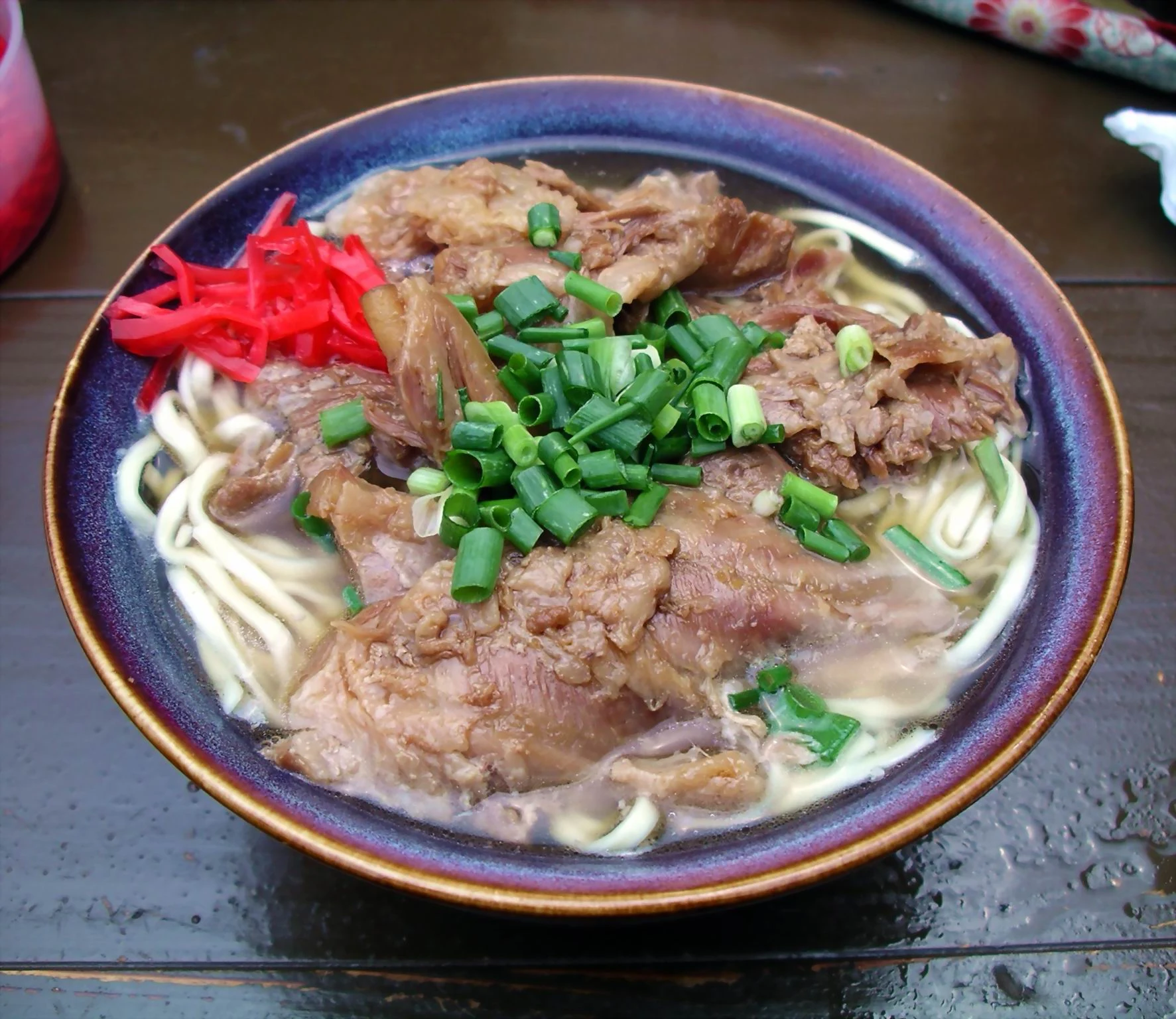
Tebichi: check availability before committing
A pig’s-trotter bowl makes sense if you actively enjoy that cut. It need not be the default first order for everyone at the table. A shop may have a small daily allocation, so have a second choice ready instead of making one limited dish the fixed centre of a busy sightseeing day.
Seaweed or tofu: read beyond the headline
A seaweed or tofu topping does not establish that the whole bowl is vegetarian. Ask what is in the stock and whether meat or fish cake is included. At Nakamura Soba, for example, asa seaweed appears in the noodles and fish cake as well as on top. That is a specific house preparation, rather than a rule for every asa bowl. Source: Nakamura Soba.
Noodles and regional styles: compare the bowl in front of you
The Okinawa noodle cooperative describes broad local preferences, including flatter, substantial noodles in the north and wavier noodles around Naha and the south. It also explains that noodle-making steps differ by area. Use those patterns as a starting point, rather than a test that every restaurant must pass. Source: Okinawa Namamen Cooperative.
Okinawa’s main island
For a short main-island holiday, compare two bowls that fit places you are already visiting. Ask whether a restaurant uses homemade noodles and whether there is a choice of noodle type. If your first bowl has a light stock, a second shop with a different noodle shape will teach you more than ordering the identical combination twice simply to tick off famous names.
Miyako soba
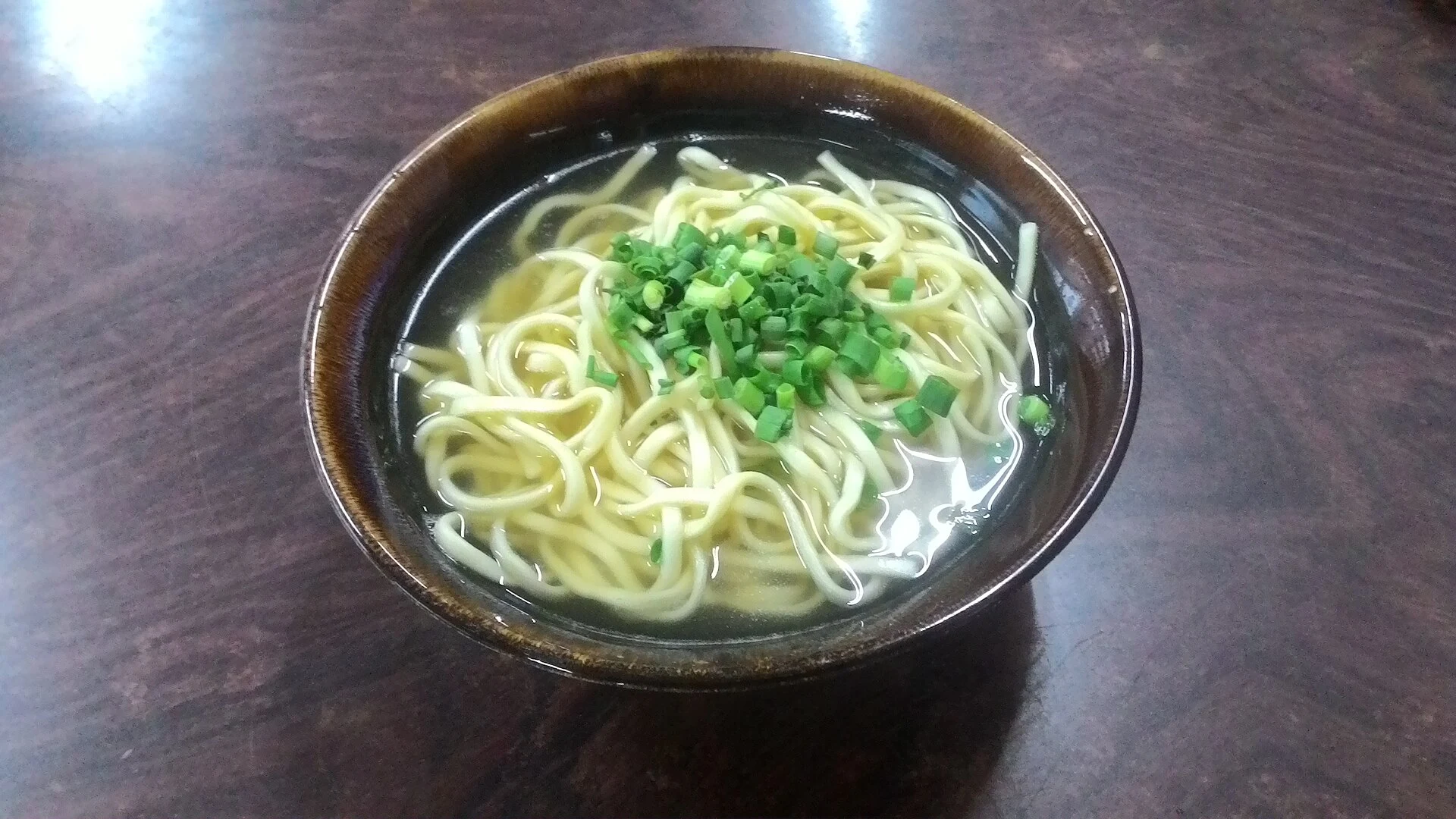
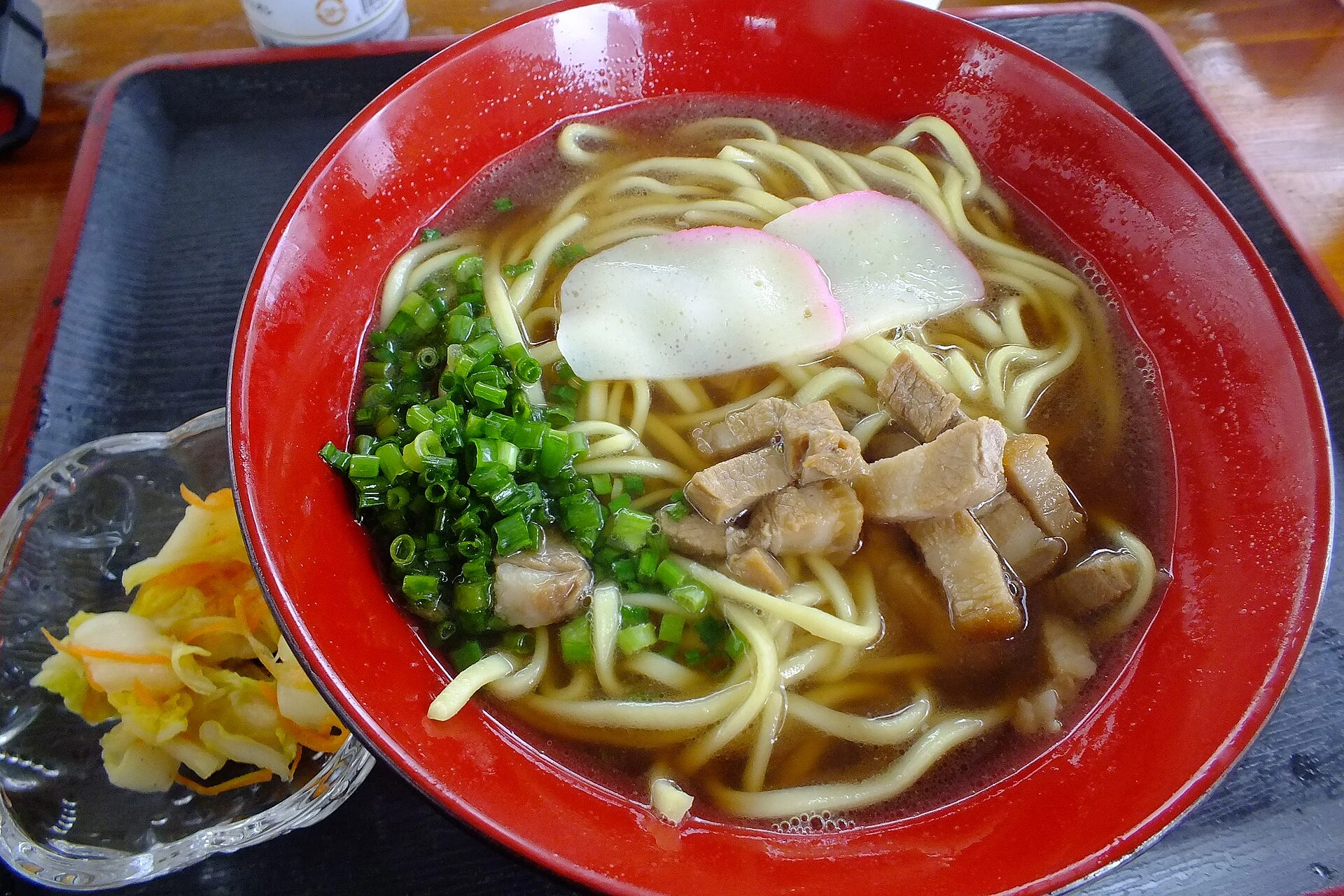
Miyako has its own soba tradition. Some versions hide the toppings beneath the noodles; that presentation should not be treated as a missing-meat mistake. AEON Ryukyu’s regional introduction describes this custom. The photograph below is a Miyako-style bowl served in Tomigusuku, showing that a regional style can also be found away from its island of origin. Source: AEON Ryukyu.
Yaeyama soba
On Ishigaki and neighbouring Yaeyama islands, look for a local version with finely cut pork and fish-cake toppings. Island pepper, often written pipazu, may appear as a condiment. These are useful details for a separate island stay, rather than a reason to attempt an extra island during a main-island lunch outing. Source: AEON Ryukyu’s regional guide.
How to order your first bowl
Begin with the entrance instructions. If a shop uses a ticket machine, choose the dish and size before buying a ticket; if it uses table service, wait for staff to seat you. Do not assume every shop follows the same system. A displayed waiting list, a queue and a priority-entry arrangement may have different instructions.
- Check the branch and queue. Confirm that you are at the restaurant named in your plan, then follow its waiting instructions.
- Choose the bowl. Use the Japanese menu name or show the exact item on your phone.
- Choose the size. Ask whether the smaller option changes the noodles, meat or both. Avoid assuming that “medium” is a child’s portion.
- Add a side if wanted. Ask whether a set includes rice before ordering another bowl of it separately.
- Confirm payment. Some restaurants accept cash and cards; an individual branch can be cashless.
| You want to identify | Japanese to show | What to confirm |
|---|---|---|
| Pork-rib soba | ソーキそば | The type of rib topping |
| Small / medium / large | 小 / 中 / 大 | Which sizes this shop offers |
| A set meal | セット | Exactly which sides are included |
| Sold out | 売り切れ | Whether another dish is still available |
| Last order | ラストオーダー / L.O. | The ordering deadline, rather than the closing time |
For a group, nominate one person to check the menu while another checks the queue instructions. Keep the restaurant’s name and address in Japanese on your phone. If there is a language barrier, pointing to one item at a time is clearer than asking several questions while the server is handling another table.
Jushi, ginger and koregusu: what goes with the bowl?
Jushi seasoned rice
Jushi is worth considering if you want a more filling lunch. The firmer cooked-rice form, kufa jushi, is different from the softer porridge-style versions. MAFF’s example combines rice with pork and other ingredients and notes that jushi is also served in Okinawa soba restaurants. It should not be assumed to be plain rice or meat-free. Source: MAFF’s kufa jushi guide.
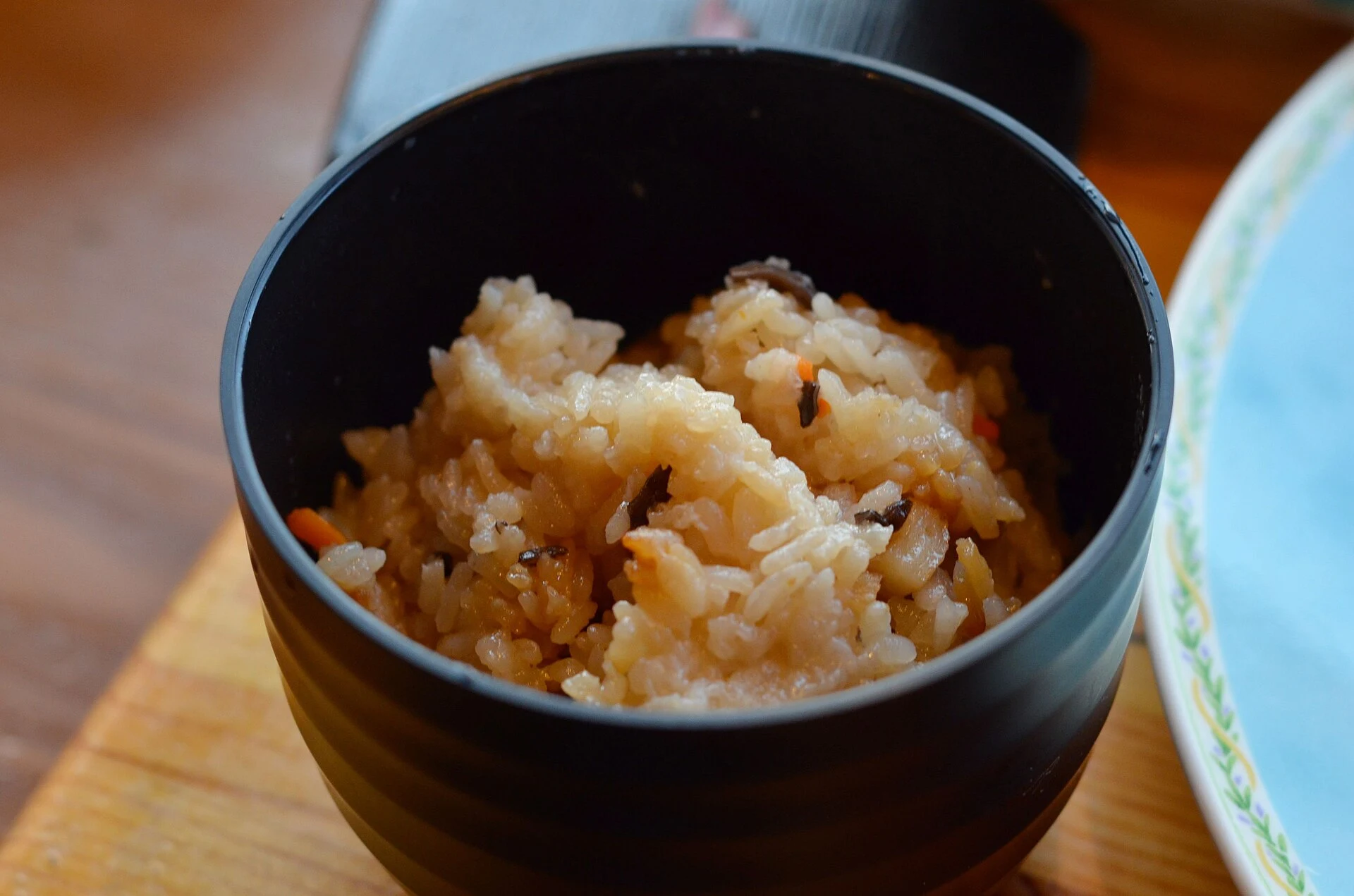
If you are fitting lunch between a market walk and an afternoon activity, decide how much food you actually want. A noodle bowl and a rice side can be substantial. Ask about the set contents, and leave space for another local speciality later instead of ordering every extra at the first stop.
Koregusu and other table seasonings
Koregusu is made by soaking island chillies in awamori, Okinawa’s distilled spirit. Taste the soup first and check the bottle before adding it. If you avoid alcohol, ask for a different condiment. MAFF also describes pickled red ginger as a common accompaniment. Source: MAFF’s introduction to Okinawa soba.
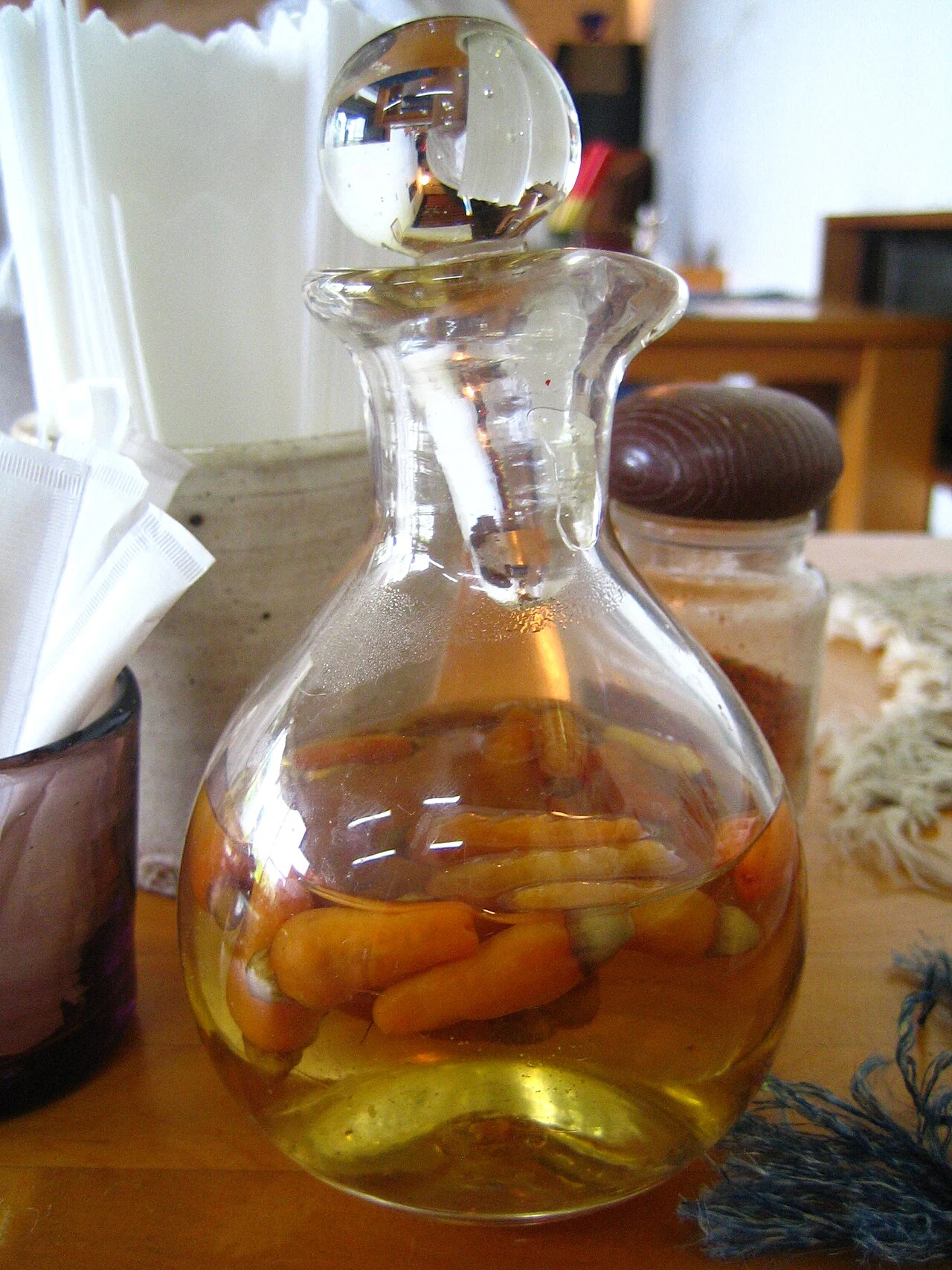
Keep a child’s bowl unseasoned until they have tasted it. Where a shop offers several seasonings, add a little to one part of the soup rather than changing the whole bowl immediately. That lets you compare the original stock with the seasoned version and avoids an unwanted surprise.
Where to try Okinawa soba: Naha, Onna and Motobu
This is a route-based shortlist, not a ranked “best restaurants” list. Choose the area first, then check the exact shop’s hours, payment arrangements and current menu. The following are the operators’ published details checked on 25 October 2026; temporary closures and sold-out finishes can override them.
| Shop and area | Published hours | Closing-day information | Planning use |
|---|---|---|---|
| OKINAWA SOBA EIBUN · Naha | 11:00–20:00; last order 19:30 | Check the shop’s official Instagram | A Naha stop with published evening hours |
| STAND EIBUN · Naha | 08:00–15:00, until soup runs out | Generally year-round, with occasional closures | An earlier start around Tsuboya |
| Nakamura Soba · Onna | 10:30–16:00 | Thursday; also check holiday notices | A daytime west-coast stop |
| Yaezen · Motobu | 11:00–15:00, until sold out | Tuesday and Wednesday | A lunch option during a Motobu day |
Naha: OKINAWA SOBA EIBUN
The flagship’s official English page lists 1-5-14 Tsuboya, Naha, cash, cards and several electronic payment methods, with no dedicated parking. It describes a Fast Pass for priority seating, but the linked booking page did not display a usable restaurant booking screen when checked. Follow the restaurant’s current instructions rather than assuming a priority slot is available. Email and Instagram direct messages are not accepted for reservations. Source: EIBUN’s flagship page.
The same brand has multiple branches. For example, EIBUN Tsuboya lists a shorter 11:00–15:00 service, Wednesday and irregular closures, and completely cashless payment. Do not transfer the flagship’s evening hours or cash policy to that branch. Source: EIBUN Tsuboya.
Naha: STAND EIBUN for an earlier meal
STAND EIBUN is at 1-1-18 Tsuboya. Its official page says the waiting list is posted from around 08:00 on business days, and that service can finish when the soup runs out. It lists cash, cards and electronic payment, with nearby paid parking rather than a dedicated car park. That makes it a different planning option from simply turning up at the flagship at breakfast time. Source: STAND EIBUN.
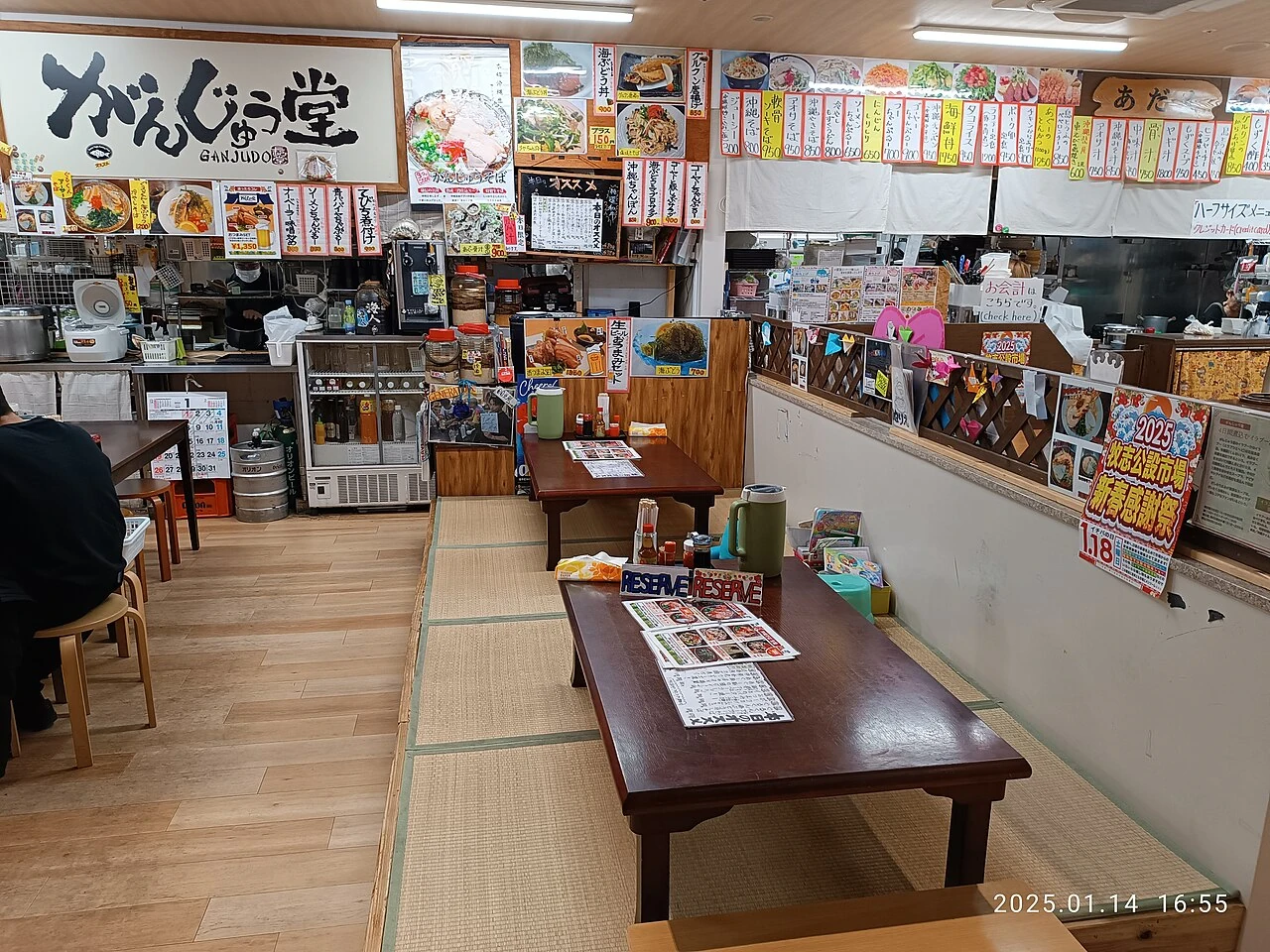
For a wider Naha food walk, continue with our Makishi Public Market guide. A market visit and a specialist soba lunch can be separate experiences; check your appetite before booking or ordering both.
Onna: Nakamura Soba
Nakamura Soba’s address is 1669-1 Serakaki, Onna. Its operator describes homemade noodles and asa seaweed dishes, and lists a car park, wheelchair facilities and children’s chairs. Check your own access needs with the shop. Its 16:00 closing time makes it a lunch stop, not a dinner plan after sunset. Source: Nakamura Soba’s shop information.
The current published menu is useful for choosing between standard soba, soki and asa before you arrive. Treat limited dishes as a possibility, not a promise. The menu also supplies item-specific ingredient information; read the entry for your chosen bowl rather than relying on a generic description of soba.
Motobu: Yaezen
Yaezen’s official site lists 342-1 Namizato, Motobu, daytime service and Tuesday–Wednesday closing days. The same address and regular hours appear on the official northern Okinawa tourism listing, which includes soba variations such as squid-ink, tebichi and soki. Confirm the day’s menu directly; this guide does not quote a current price for Yaezen. Sources: Yaezen and Yanbaru’s official tourism listing.
For a Motobu day, choose lunch before you lock in the rest of the afternoon. An aquarium visit followed by a late lunch only works if the chosen restaurant is still serving. Our Churaumi Aquarium guide helps you organise the attraction separately from restaurant opening times.
Prices: use a current menu, then add your extras
There is no single price that accurately describes every Okinawa soba restaurant. Below is one verified example, Nakamura Soba’s published menu, checked on 25 October 2026. It is not a prefecture-wide average or a quotation from every shop in this guide.
| Item | Published price | What to remember |
|---|---|---|
| Okinawa soba, soki soba or asa soba · medium | ¥1,200 | Choose the dish, then the size |
| The same bowls · large | ¥1,400 | Ask about the portion before upsizing |
| Jushi rice | ¥300 | An extra side, unless included in a specified set |
| Additional soki · one piece | ¥300 | Check availability when ordering |
Source: Nakamura Soba’s official menu. Follow the displayed shop prices if they change.
As a transparent arithmetic example, two medium bowls and one jushi side total ¥2,700 at those listed prices. Drinks, extra toppings, transport and parking are separate. This is a sample lunch calculation, not a package or a guaranteed bill. For another restaurant, build the same calculation from its current menu instead of carrying this budget across automatically.
If you want to keep lunch flexible, set a per-person food budget and decide in advance whether the priority is a bigger bowl, a rice side or another snack later. That is more useful than ordering a premium topping because an old blog described the whole dish as inexpensive.
Ingredients: wheat, stock and toppings need separate checks
A description such as “seaweed soba” or “tofu soba” gives only part of the picture. Before ordering, ask about four components: the noodles, the broth, the topping and any seasoning or side dish. If you need an ingredient excluded, establish whether the kitchen can accommodate that request before buying a ticket.
- Wheat: Okinawa soba is not a gluten-free substitute for buckwheat noodles.
- Pork and fish: these can be in the broth even when the visible topping is vegetables or tofu.
- Egg, dairy and soy: recipes differ. Check the exact item instead of assuming a simple-looking soup excludes them.
- Alcohol: ask about condiments and cooking ingredients if you avoid it.
- Shared preparation: ask the restaurant about the equipment and kitchen practices relevant to your needs.
For a concrete example of why the exact menu matters, Nakamura’s asa entry lists egg, dairy, wheat, soy and pork, while its soki entry lists dairy, wheat, soy and pork. That is this operator’s information, not a universal recipe. Source: Nakamura Soba’s ingredient labels.
EIBUN publishes an allergen page but dates that information to December 2023 and says recipes may change. Treat it as a starting point for a direct check, rather than a current guarantee for a specific bowl. If staff cannot confirm the information you require, choose another meal. Source: EIBUN’s allergen information.
Planning a soba stop during your day out
A Naha food walk
Choose an early meal around Tsuboya or a lunch before exploring the market streets. Keep a second option in the same area so that a long queue does not consume the whole outing. If Shuri is your main attraction, plan the meal and the castle as separate stops; a restaurant in central Naha is not automatically beside the castle. See our Shuri Castle planning guide.
An Onna coast day
Place a daytime soba stop before the restaurant’s closing window, then leave the later part of the day for your resort or another activity. Check the restaurant’s closing day before choosing which day to drive the coast. A Thursday closure, for example, is a reason to move the lunch plan rather than discover the problem when everyone is hungry.
A Motobu or northern sightseeing day
Decide which matters more: lunch first, or a longer first attraction visit followed by a restaurant with a confirmed later service. Keep one nearby backup, and avoid putting a sold-out-prone lunch immediately before a fixed return departure. Our five-day itinerary puts northern sightseeing into a wider trip structure.
If you are already arranging a private sightseeing day, tell us your preferred lunch area, dietary questions and how much time you would like to leave for a meal. You can ask about a charter with a flexible lunch stop. Restaurant opening, seating and the day’s menu still need separate confirmation.
Before-you-go checklist
- Save the restaurant’s exact branch name and Japanese address.
- Check today’s hours, last order, closing day and any sold-out notice.
- Choose a main bowl and a second-choice topping.
- Check whether you need cash, a card or another accepted payment method.
- Confirm ingredients before paying if you have dietary requirements.
- Read the queue, waiting-list or ticket-machine instructions at the entrance.
- Allow room in the schedule for ordering and eating; do not treat a meal as an instant stop.
- Keep one backup nearby, rather than another famous restaurant across the island.
For more dishes to try around the islands, use our Okinawa food guide. This article stays with soba so that choosing a bowl does not become a second full itinerary to manage.
Okinawa soba FAQ
What is the difference between Okinawa soba and soki soba?
Okinawa soba is the broader dish. Soki soba specifies a pork-rib topping. Check whether the shop uses hard-bone ribs or a cartilage preparation.
Is Okinawa soba made with buckwheat?
The traditional noodles are wheat-based, rather than buckwheat noodles. That distinction does not establish that a particular kitchen can accommodate an allergy or ingredient restriction.
Can I eat Okinawa soba for breakfast or dinner?
Yes, if you choose a shop with suitable hours. STAND EIBUN lists an 08:00 start; EIBUN’s flagship lists evening service. Those hours do not apply to every branch or restaurant.
How much does a bowl cost?
Check the current restaurant menu. A verified example in this guide is ¥1,200 for a medium bowl at Nakamura Soba. Sizes, special toppings and sides change the total.
Is a seaweed or tofu bowl vegetarian?
Not necessarily. Confirm the stock, noodles, fish cake, other toppings and side dishes with the restaurant. A meat-free-looking topping is not enough information.
Do I need a restaurant reservation?
Follow the exact shop’s instructions. A waiting list and priority seating are different arrangements. EIBUN does not take reservations by email or Instagram direct message; check its current official guidance before relying on another booking route.
Sources and further reading
Sources are linked beside the relevant information. Restaurant pages were checked on 25 October 2026. Prices, opening hours, branch policies and menus can change. Photographs are separately licensed illustrations with dates and credits; none is presented as evidence of a current menu or a visit by OkinawaVia.