Makishi Public Market makes a good centrepiece for a food-focused walk in Naha: browse the downstairs counters, choose a meal upstairs and leave time for the surrounding shopping lanes. This guide explains what to eat, how the carry-up cooking system works and what to check before you visit.
If you searched for Makishi fish market, use this guide to plan your visit to Makishi Public Market, its food stalls and the surrounding Naha market streets.
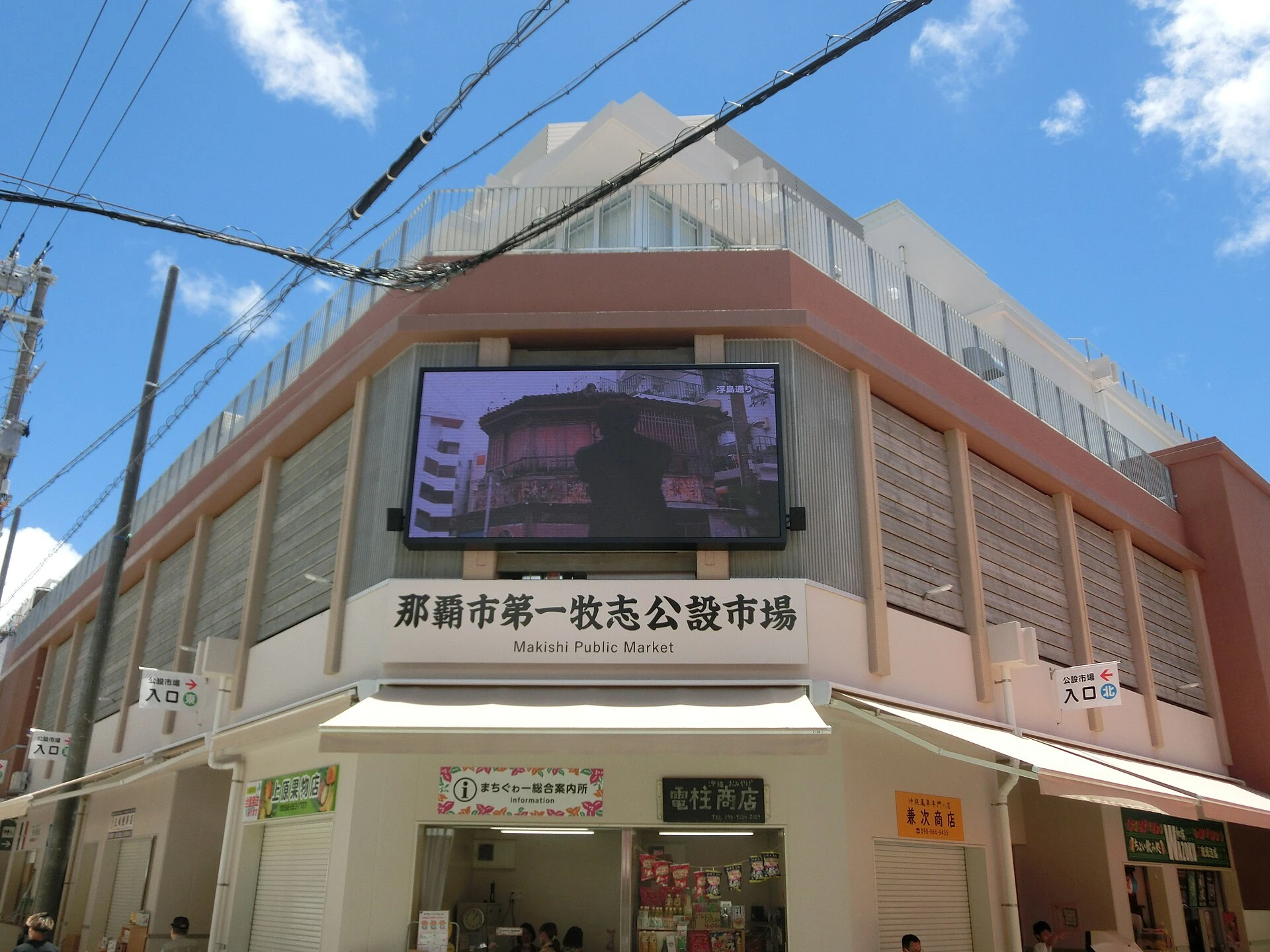
A MARKET LUNCH, AT YOUR OWN PACE
For a first visit, plan around lunch and allow roughly 1½–2 hours for browsing and a meal. Choose either a restaurant’s normal menu or suitable downstairs ingredients cooked upstairs. Confirm the ingredient total and the separate cooking charge before buying.
Practical information checked October 18, 2026. Visit durations and walking combinations are our planning suggestions. Documentary photographs show the market on their stated dates; visible prices are not current quotations.
What is Makishi Public Market, and where should you start?
The full name is Naha City First Makishi Public Market, or Daiichi Makishi Kosetsu Ichiba (第一牧志公設市場). Save the address 2-10-1 Matsuo, Naha, rather than a general Kokusai Street pin. “Naha public market” often refers to this market in visitor searches, but the surrounding neighbourhood contains many separate shops and shopping lanes.
The rebuilt market reopened on March 19, 2023. Photos and directions from the earlier building or the temporary-market years can look quite different. The operator’s facility guide records its establishment in December 1950 and the rebuilding history.
First floor: browse before choosing
Start with a circuit of the food counters. The official shop directory and floor map identify fishmongers, butchers, grocers and other businesses. Look at the range, ask what is ready to eat and decide whether you want a few purchases or a meal. A striking display is a reason to ask questions, rather than a reason to order more than your group wants.
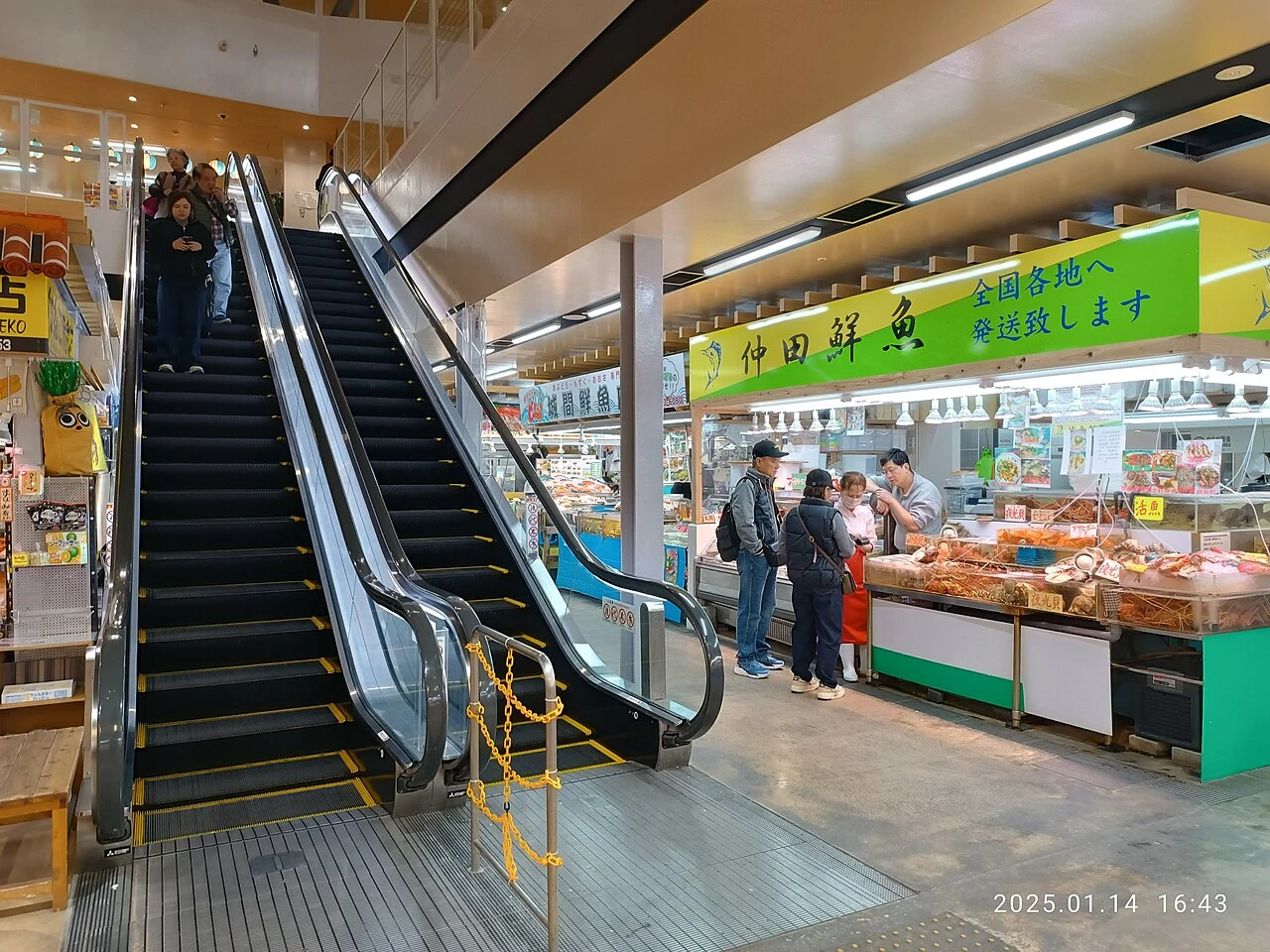
Second floor: restaurant menus and carry-up meals
The upstairs restaurants offer a straightforward alternative to selecting raw ingredients: look at the menu, check the portion and order lunch. If you want the carry-up experience, agree the arrangement with the seller and restaurant first. Knowing these two options before shopping helps you stay within both your appetite and budget.
Third floor: planned experiences, rather than another food court
The official map identifies cooking-experience and multipurpose rooms on the third floor. A booked class is a separate activity from asking a restaurant to prepare purchased ingredients. If a class interests you, check its organiser, meeting point, language, inclusions and booking conditions; do not assume a walk-in restaurant order includes a lesson.
Makishi Public Market opening hours, last orders and closure days
The market operator publishes the following building-wide guidance. Individual shops have their own service hours, so use the kitchen’s last order when planning a meal.
| What to check | Published guidance | How to use it |
|---|---|---|
| Building hours | 08:00–22:00; shops vary | An open building does not mean every stall or kitchen is serving. |
| Carry-up cooking last order | 19:45 for eligible first-floor ingredients | Ask the vendor and restaurant earlier; only some products qualify. |
| Second-floor dining last order | 20:00 general guidance | Check the chosen restaurant’s own cut-off. |
| Regular closure | Fourth Sunday each month, except December | Check notices and shop-specific holidays before travelling. |
| Address | 2-10-1 Matsuo, Naha, Okinawa | Use the current building’s map pin. |
Is breakfast, lunch or dinner the best fit?
Lunch is our simplest recommendation for a first visit, because it gives you room to browse before choosing where to sit. A very early arrival needs a specific shop plan: building hours start at 08:00, while the official listings for Tsubame and Honen, for example, start restaurant service at 11:00. For dinner, arrive well before the last-order window and confirm the restaurant is open that day.
Check the date as well as the weekday
Besides the monthly closure, the facility guide lists New Year, Lunar New Year and Obon closures, with additional shop differences. A shop’s weekly day off can also fall on a day when the rest of the market is open.
Date-specific notices checked October 18, 2026: the operator confirms the market closure on Sunday, October 25, 2026. It also announces Kokusai Street traffic restrictions on October 18, 2026, from 10:00 to 22:00 for the Eisa event, including effects around nearby private parking areas. For later visits, consult the latest notices rather than applying these dates to another year.
How does Makishi Public Market’s carry-up cooking system work?
Mochiage, often translated as “carry-up” or “lift-up,” means buying suitable ingredients downstairs and having them prepared at a second-floor restaurant. The official how-to guide makes three points clear: ask which ingredients qualify, pay for ingredients at the shop, and pay the cooking charge at the restaurant. Preparation charges vary.
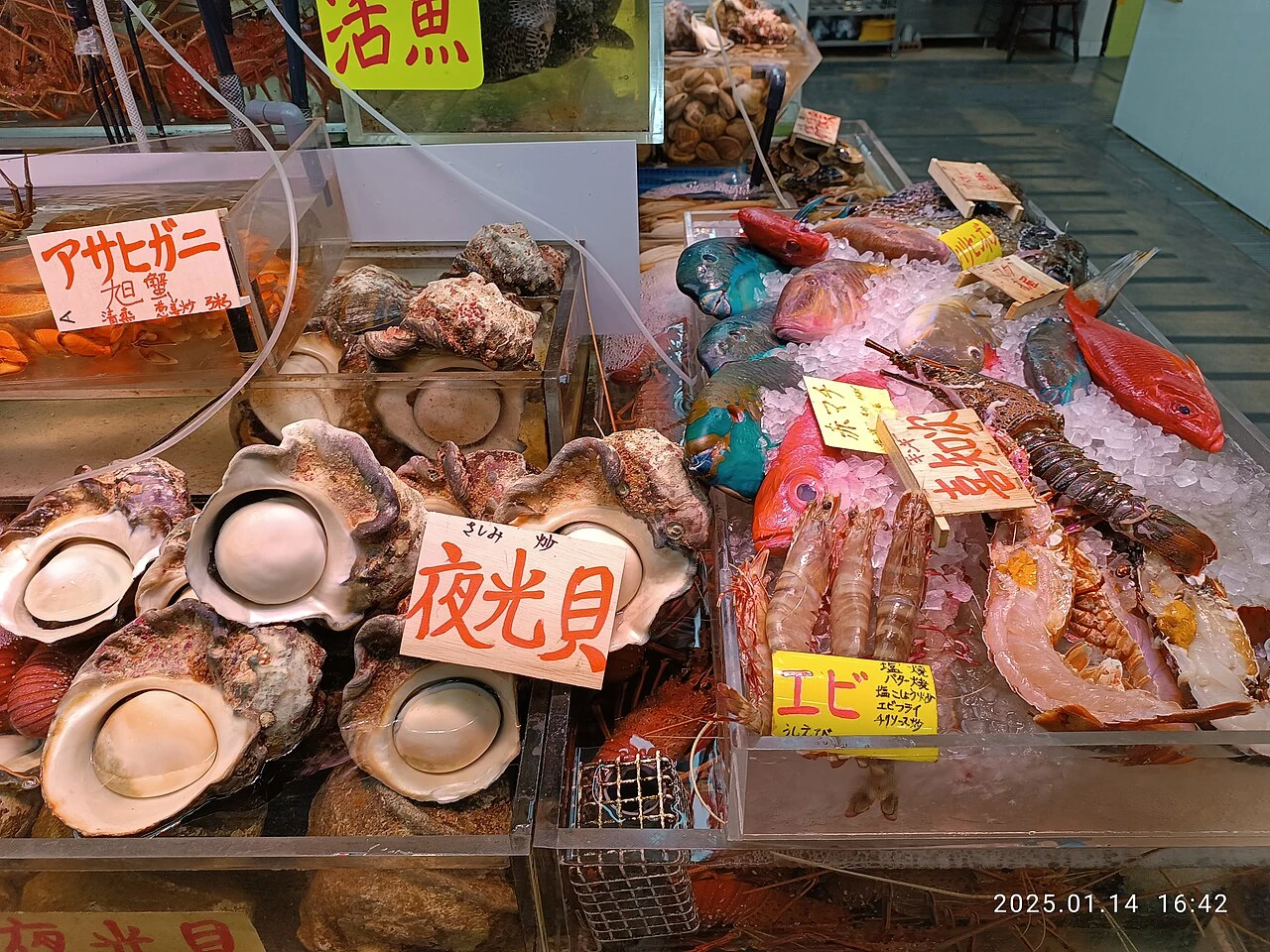
Step 1: decide the meal before buying the ingredients
Tell the vendor how many people will eat and whether you want a light lunch or a shared main meal. Ask which restaurant can prepare the selection. If you have an ingredient restriction or prefer cooked seafood, make that part of the conversation before money changes hands. Keep the order manageable; you can explore the rest of the market without buying a sample of everything.
Step 2: agree the quantity, unit price and ingredient total
Ask whether the number on a sign applies to one piece, a tray, a stated weight or the entire item. Have the seller show you the full ingredient amount for your actual selection. When several people share the bill, agree that total as a group. A large shellfish or whole fish can make a different kind of lunch from a small ready-prepared pack.
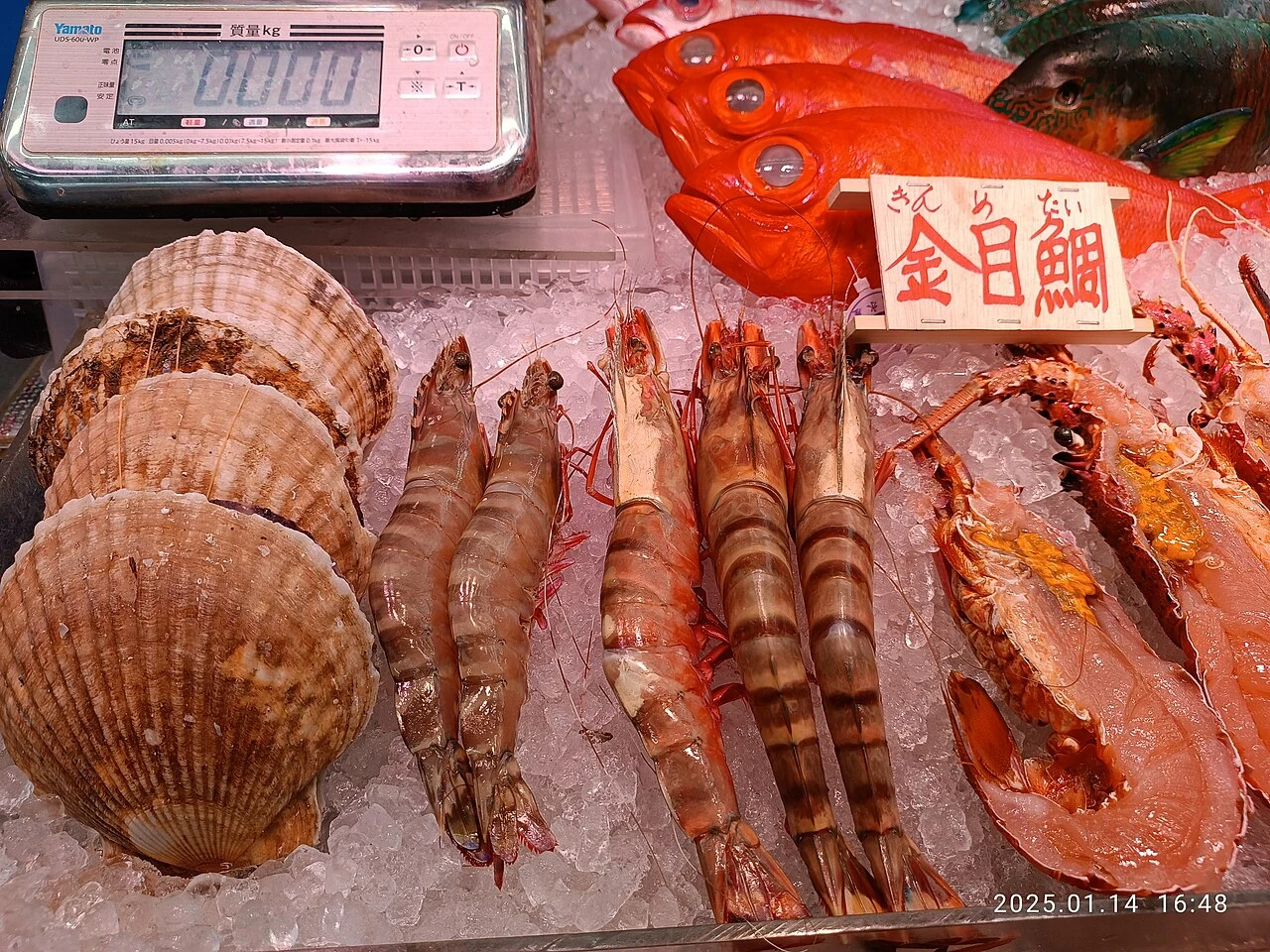
Step 3: confirm the cooking method and separate charge
Ask the receiving restaurant how it proposes to cook each item, what the preparation will cost and whether rice, soup, sauces or drinks are extra. If the quote is per person or per preparation, ask how that applies to your party and selection. Use the restaurant’s answer for the total; a cooking fee mentioned in an old travel blog is not a universal current market price.
Step 4: confirm the handover and where to sit
Follow the seller’s instructions for getting the purchase to the agreed restaurant. Check which table or counter to use and roughly how long preparation may take. Keep your receipt or order details with you. Avoid purchasing first and searching upstairs for any kitchen willing to take it afterwards.
Step 5: pay the two parts in the right places
The ingredients and restaurant preparation are separate purchases. Before adding side dishes, review what you have already ordered so that the final meal matches your budget. If anything about the arrangement is unclear, pause and ask for the details in writing or on a calculator before proceeding.
When a normal restaurant order is easier
Choose the regular menu if you want a predictable dish, are eating alone, have limited time or simply prefer to compare complete meals. You still get to browse downstairs. The carry-up system is one way to enjoy the market; you do not need to use it to make a visit worthwhile.
What to eat at Makishi Public Market
Begin with the kind of meal you want, then use the current menus and counters to choose. The options below help you make that decision; availability, ingredients and portions belong to the individual shop or kitchen.
| Your priority | A useful direction | Ask before ordering |
|---|---|---|
| A seafood-focused experience | Suitable carry-up ingredients or a restaurant seafood dish | Preparation, edible portion, ingredient total and cooking cost. |
| A simple individual lunch | A noodle dish or a set from a normal menu | Topping, bowl size and what the set includes. |
| Several local flavours | Shared Okinawan dishes and small sides | Number of servings, broth, sauces and ingredients. |
| A lighter stop | A small prepared item, peanut tofu or a sweet | Ready-to-eat status, ingredients and where to eat it. |
Seafood: choose the preparation as well as the display
Compare the seafood selection with the meal you actually want. Ask about a suitable cooked preparation, bones and serving size, rather than ordering solely by colour or size. If you prefer sashimi, ask for an item specifically sold or prepared for that purpose. A display tank or a photograph cannot answer questions about today’s serving.
Okinawan meals from the upstairs menus
Tsubame’s official listing covers Okinawan, seafood and Chinese cooking; Honen lists Okinawan cuisine as well as cooking first-floor seafood purchases. Read their actual menus on arrival and compare a full meal with separate plates. For unfamiliar dish names, our Okinawa food guide explains soba, champuru, rafute and other starting choices.
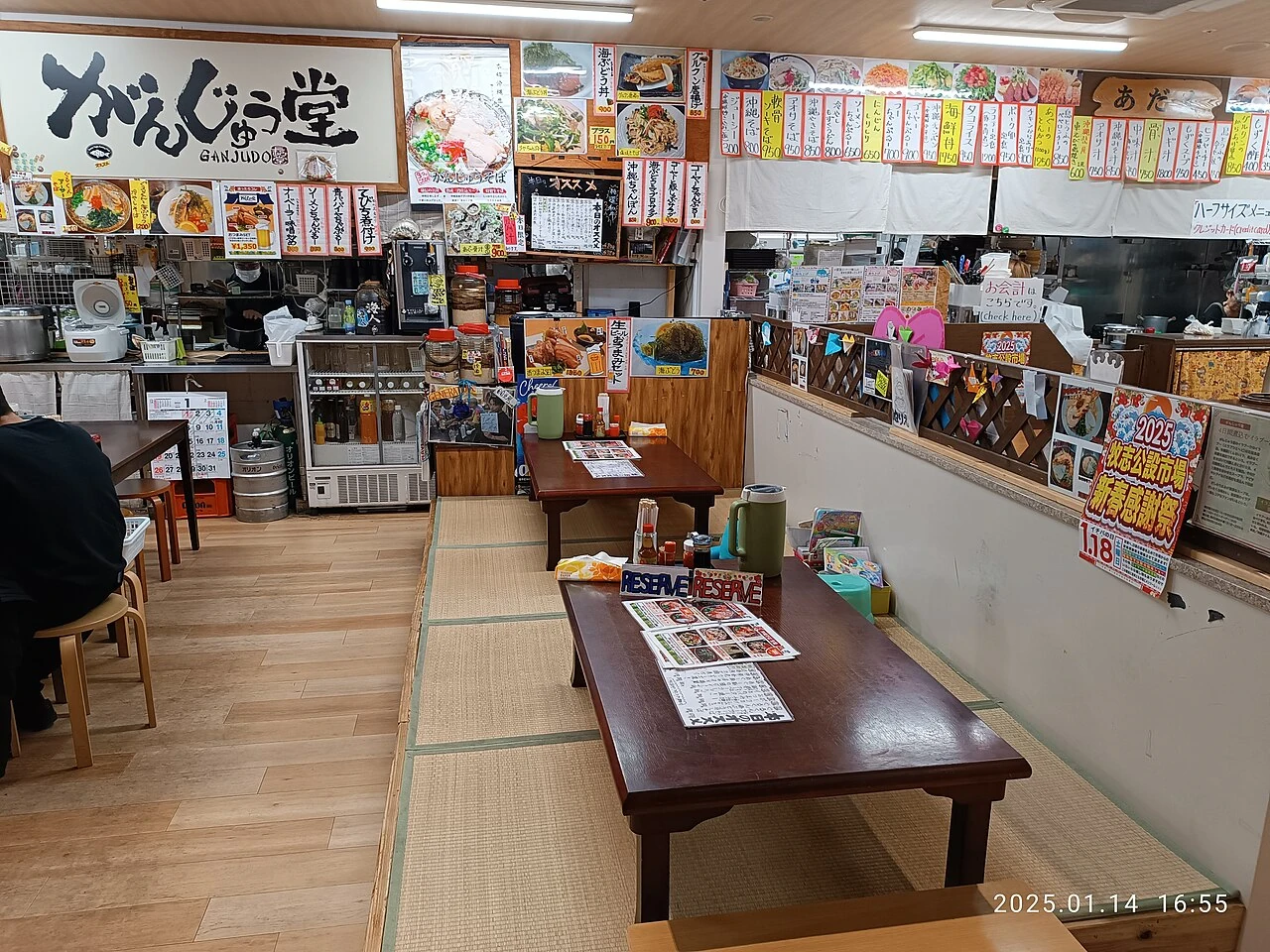
Peanut tofu, seaweed and smaller purchases
Two specific directory entries are useful for looking beyond fish: Hama specialises in jimami tofu, and Mozukimu lists mozuku, sea grapes and other seaweed products. Ask whether the item is ready to eat, how the sauce is served and how to store a takeaway purchase.
Jimami tofu contains peanuts; its name does not make it ordinary soy tofu. If avoiding an ingredient, discuss the actual product and sauce with the seller. A seaweed or vegetable item may also have added seasoning, so the main ingredient alone does not establish dietary suitability.
Meat counters, sweets and a more varied visit
The butchers are part of the market’s identity too. They can make the downstairs browse interesting even when lunch comes from a normal restaurant menu. Ask which products need cooking and which are prepared foods, and treat raw-ingredient shopping as a separate decision from ordering a ready-to-eat snack.
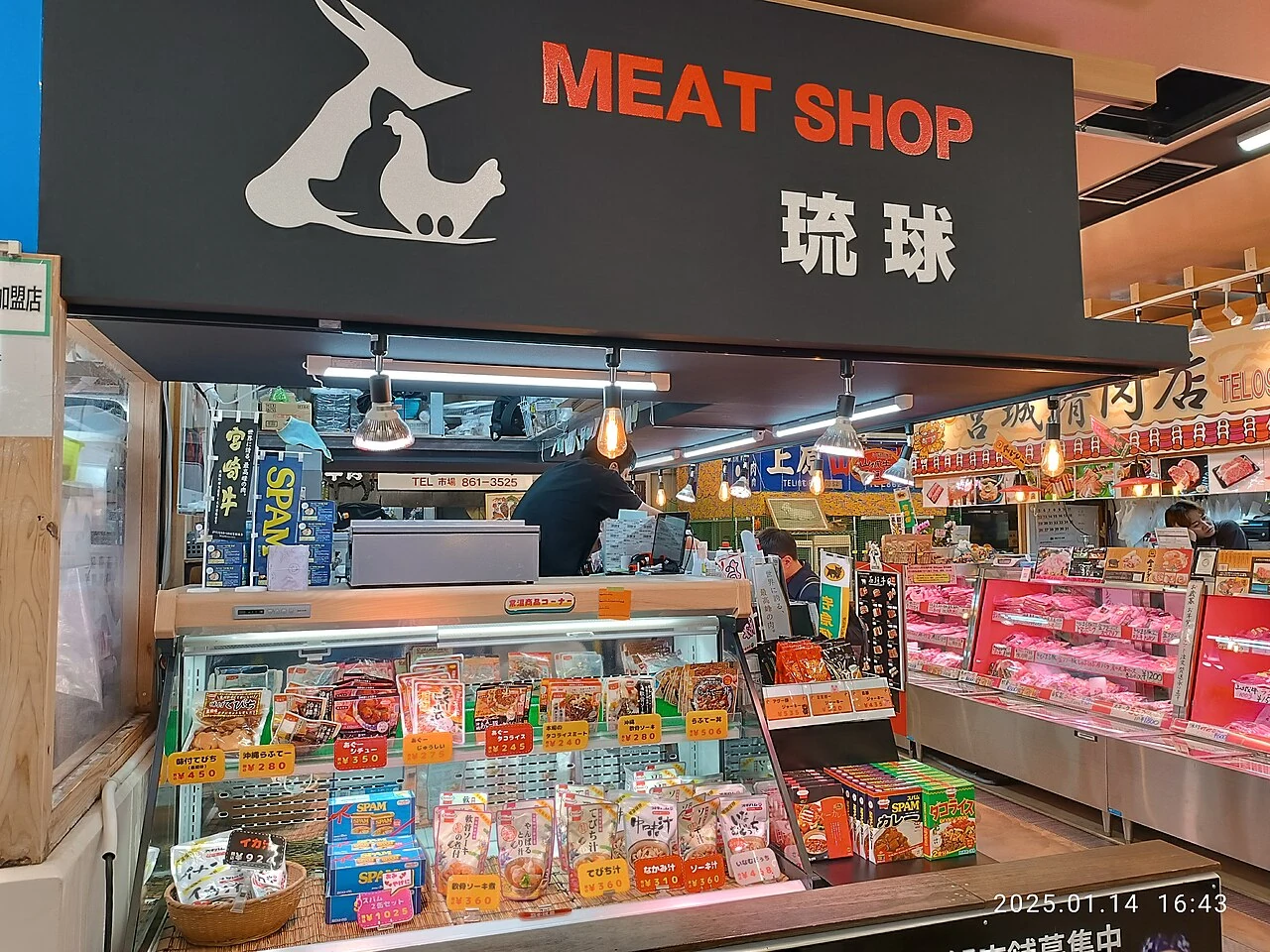
The second-floor directory also lists Ayumi sata andagi and H&B gelato. Check their current service before building your afternoon around a particular sweet. A small snack after lunch leaves more flexibility than buying several full portions before you have decided where to eat.
Market shops and restaurants to look up before visiting
These are practical examples from the market’s official directory, checked October 18, 2026, rather than a restaurant ranking or a claim of personal dining experience. Shop schedules add to building closures; reconfirm the chosen business for your date.
| Business / floor | Why look it up | Published shop guidance |
|---|---|---|
| Tsubame / 2F | Normal menus plus carry-up cooking | 11:00–21:00; last order 19:50. Lists Thursday and other closure dates. |
| Honen / 2F | Okinawan cooking and preparation of purchased seafood | 11:00–21:00; last order 20:00. Lists Wednesday off. |
| Hama / 1F | Specialist jimami tofu shop | From 09:00 until sold out; Wednesday off. Do not rely on late-afternoon stock. |
| Mozukimu / 1F | Mozuku, sea grapes and other seaweed products | 08:30–16:30 in its listing. Check market-wide closures too. |
For an early meal outside the building, Potama’s Makishi Market branch publishes an address of 2-8-35 Matsuo and hours of 07:00–20:00, year-round. It is a separate nearby business. Check its own updates rather than applying the public market’s building schedule to it.
How much does a market meal cost, and how should you pay?
Build the budget from the actual order
There is no single useful price for “a Makishi Market seafood lunch.” For carry-up dining, write down ingredients + cooking + rice or sides + drinks + any stated extras. For a normal menu meal, check whether the number includes a full set or one plate. Compare the complete bill for the same number of diners.
As a concrete nearby snack reference, Potama’s live standard sandwich page listed ¥450 including tax on October 18, 2026, with delivery pricing separate. That is one product, not an estimate for an upstairs market lunch. Recheck the live item and filling when ordering.
Confirm payment at each business
The example shop listings above show card, electronic-money and QR-payment options, but that does not establish a single payment policy for every market vendor. Ask at the particular counter and restaurant. Keep a practical cash option and remember that paying for ingredients does not settle the restaurant’s separate preparation bill.
Shopping to take home
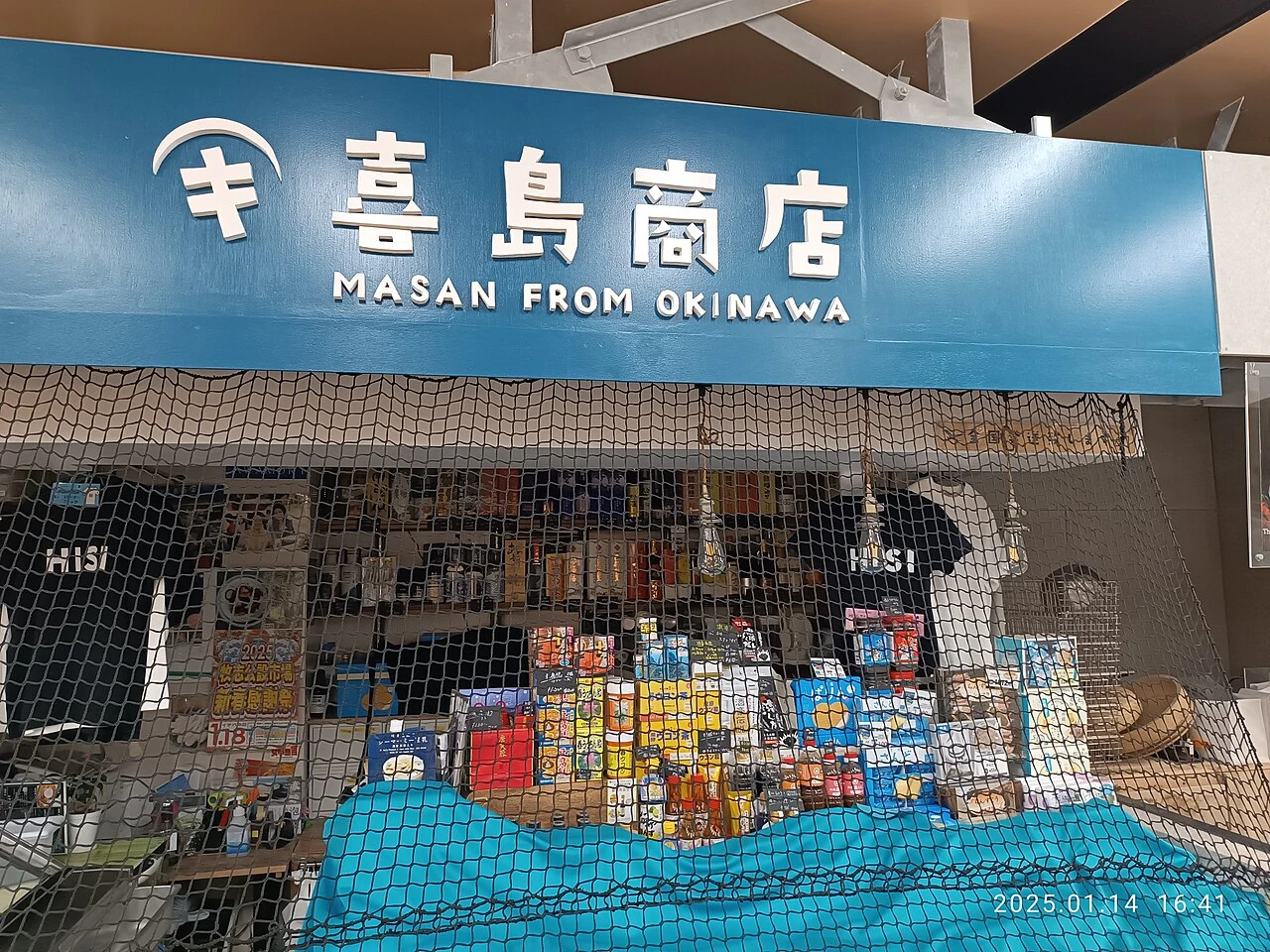
Packaged foods can make a more manageable purchase than fresh ingredients if you are staying in a hotel without a kitchen. Read the label for storage, best-before information and ingredients, and ask how long an item can remain out of refrigeration. Buy for the journey you are actually making. For international travel, check your destination’s official import rules before purchasing food to carry home.
How to get to Makishi Public Market from Kokusai Street and Naha Airport
Walking from the monorail and Kokusai Street
The operator gives approximately 9 minutes on foot from Makishi Station and 10 minutes from Miebashi Station; its facility page rounds the Makishi walk to 10 minutes. Treat those as direct-walk estimates and allow extra time for shopping, crossings or a slower pace. Save the current market map pin and use the official access map to orient yourself among the lanes.
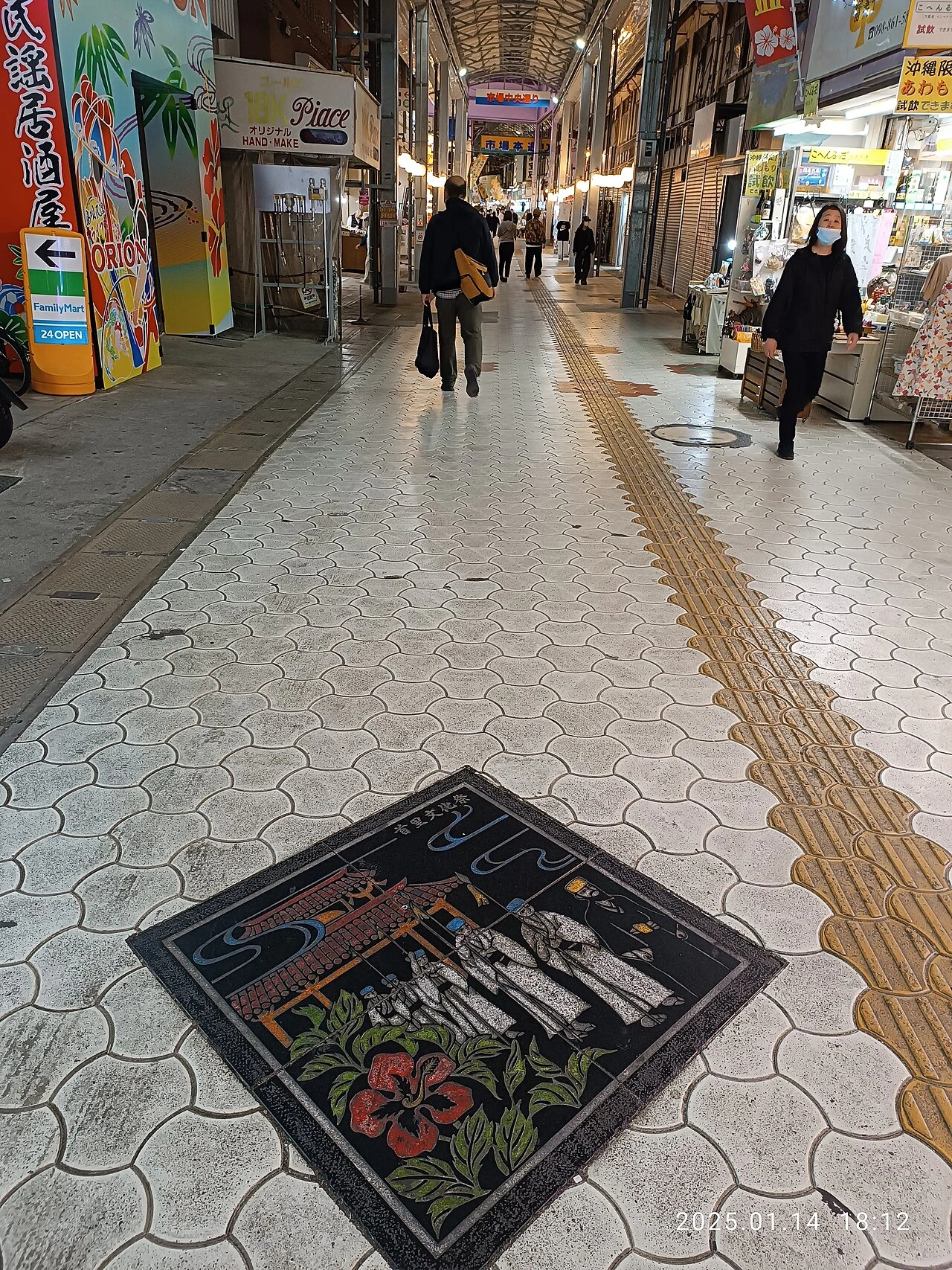
From Kokusai Street, enter the shopping streets towards the market rather than expecting the main entrance to stand directly on the main road. The covered arcades and the market building are connected parts of a walk, but are not one business with one set of hours.
From Naha Airport or a hotel
Yui Rail connects the airport with central Naha, followed by the walk from a suitable station. If you have substantial luggage, consider going to your accommodation first and returning for a relaxed meal. Our Naha Airport transfer guide compares arrival options; the Okinawa without a car guide helps with a wider Naha stay.
Parking, taxis and meeting a driver
The facility guide lists no market car park. Its access page notes nearby paid parking, one-way traffic on Ukishima Street and time-dependent road restrictions on Kokusai Street. Select a lawful parking or meeting location before arriving; a restaurant booking does not reserve road access or parking.
If this is one stop in a wider private sightseeing day, agree a specific nearby meeting point and time with your driver, then explore the market lanes on foot. Readers arranging that wider journey can ask OkinawaVia about a suitable Naha route and pick-up. For the market alone, walking from a central Naha base is often the simpler plan.
A flexible Naha walking plan: market, Kokusai Street and Tsuboya
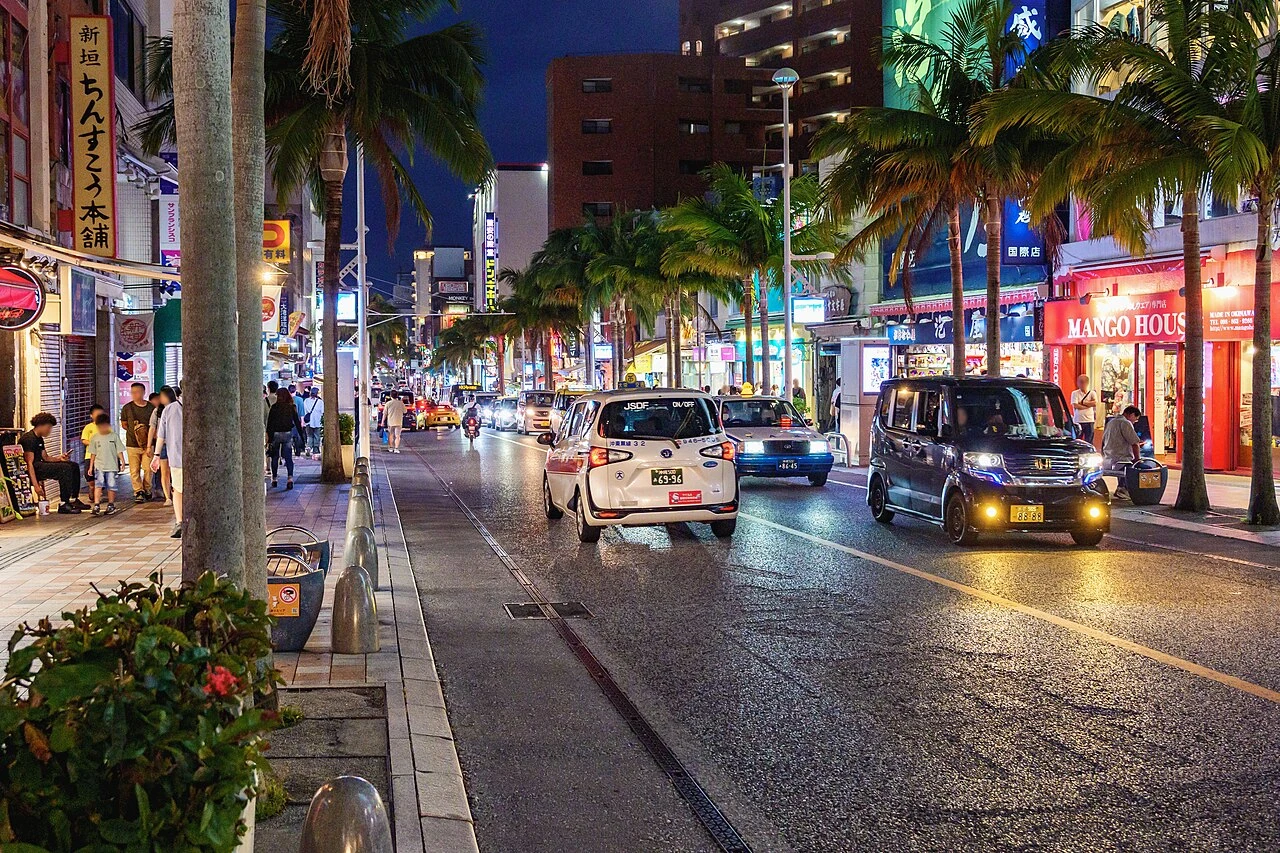
The official Naha introduction places the market among the covered shopping streets off Kokusai Street and describes nearby Tsuboya’s pottery heritage. That makes a compact food-and-shopping walk possible without adding a cross-island drive.
| Time available | Suggested shape | Keep flexible |
|---|---|---|
| About 45–60 minutes | A downstairs browse and one small purchase or snack | Skip a complex carry-up order if time is fixed. |
| About 1½–2 hours | Browse, decide on a normal menu or carry-up lunch, then a short arcade walk | Meal preparation and queues may need longer. |
| A relaxed half day | Market lunch, shopping lanes, then Tsuboya or Kokusai Street | Choose one extra area rather than rushing through every lane. |
A lunch-centred visit
Walk in with enough appetite for lunch, browse first and make the meal your fixed stop. Leave the shopping afterwards open-ended. If one restaurant is closed, another normal menu can keep the visit enjoyable without making a specific carry-up selection the only successful outcome.
Adding pottery or an evening stroll
After eating, choose the Tsuboya area if pottery shops interest you, or return to Kokusai Street for a broader shopping walk. Check the actual shop hours if there is a particular studio you want to see. Keep the market meal earlier than the building’s closing time suggests.
Fitting the market into a longer Okinawa trip
Give Naha’s food streets their own time instead of treating them as a rushed lunch between distant attractions. Our three-day Okinawa itinerary separates a Naha day from coastal and northern sightseeing. That leaves room to stop when a menu or shop catches your interest.
Visiting with children, mobility needs or dietary preferences
Facilities and access
The facility guide lists accessible toilets, wheelchair lending and a nursing room, and says stroller rental is unavailable. The shop directory’s map marks elevators and escalators. If a particular facility or step-free route is essential, contact the market management office on 098-867-6560 before visiting and confirm how to reach the chosen restaurant.
Choose the meal around the people eating it
For children, ask about portions, bones and the preparation they will be comfortable eating. For dietary restrictions, include stock, sauces and cooking ingredients in the conversation. Have a written explanation available if useful, and choose a business that can answer your questions. An English menu or a familiar photograph does not establish the ingredients of the final dish.
A short checklist before setting out
- Check the market closure notice and the chosen shop’s weekly day off.
- Save the current Matsuo address and plan the walk or lawful vehicle meeting point.
- Choose a normal menu meal or agree carry-up eligibility before buying ingredients.
- Confirm the full ingredient and preparation costs, plus any extras.
- Allow time for cooking and keep a fixed flight or tour deadline separate from an open-ended lunch.
- Ask before close-up photographs of stalls or people, and leave working aisles clear.
Makishi Public Market FAQ
Is Makishi Public Market worth visiting if I do not eat seafood?
It can be: the directory includes meat, grocery, peanut-tofu and seaweed specialists, as well as restaurants and sweets. Browse first, then choose a suitable item or normal menu meal. Check ingredients with the business rather than assuming a dish is seafood-free.
Do I have to buy fish downstairs to eat upstairs?
No. Restaurants such as Tsubame and Honen list their own cooking alongside carry-up services. Compare the regular menu if you want a simpler lunch.
Is the cooking fee always ¥500 or ¥550?
The operator says cooking charges vary with the preparation. Confirm the charge for your selected ingredients and group before buying. A fee quoted in an older guide should not be treated as a current fixed rule.
Is the market open every Sunday?
No. Its regular closure is the fourth Sunday, except December, and special or shop-specific holidays also matter. Check the operator’s notices for your exact date.
Can I eat dinner at 21:00 because the building closes at 22:00?
Do not plan on that. General guidance lists carry-up cooking last orders at 19:45 and second-floor dining at 20:00; individual restaurant cut-offs may differ. Confirm service with the restaurant and arrive earlier.
How long should I allow?
Our suggestion is about 1½–2 hours for browsing and a meal, with more time for queues, a leisurely carry-up order or nearby shopping. A short snack visit can be quicker. These are planning allowances, not measured waiting times.
Is the market still in its temporary building?
The rebuilt market reopened in March 2023 at 2-10-1 Matsuo. Use the current official map; do not rely on temporary-market directions from an older article.