A bowl of Okinawa soba, a plate of goya champuru and a few unfamiliar small dishes can tell you as much about the islands as a day of sightseeing. Use this Okinawa food guide to choose what to eat, understand the menu and put good meals into a route that makes sense.
Explore Okinawa traditional food through the dishes below, from noodles and tofu to local vegetables and sweets, and leave time for food stops in your travel plan.
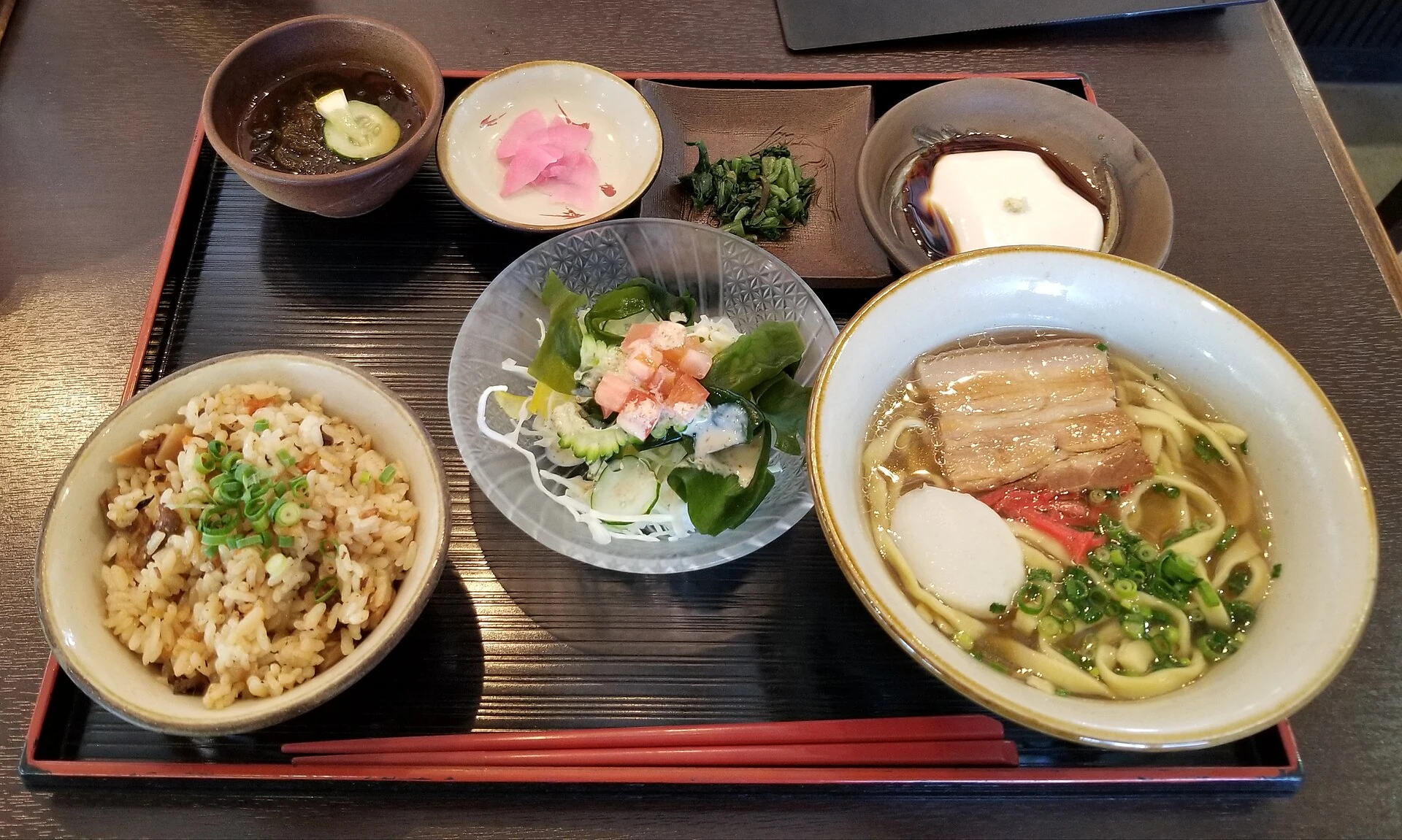
A FIRST TASTE OF THE ISLANDS
Start with one noodle or rice lunch, one dinner of shared local dishes and one sweet stop. You do not need to cross the island for every speciality. Choose the dishes first, then find them near the places you already plan to visit.
Practical information checked October 17, 2026. Meal combinations and visit allowances below are editorial suggestions. Photo captions identify the dates and distinguish dish illustrations from specific dining locations.
Okinawa food at a glance: what should you try first?
If you have only a few meals, begin with Okinawa soba or taco rice for lunch. At dinner, choose a local restaurant with small plates so that your group can try different textures: bitter melon, soft braised pork, peanut tofu and sea grapes. Leave a little room for sata andagi or a purple sweet-potato dessert.
The table is a starting point for choosing, rather than a fixed tasting menu. Ingredients, portions and accompaniments change between kitchens; ask what comes with the particular dish you order.
| What you feel like | Look for | What to expect | Check before ordering |
|---|---|---|---|
| A noodle lunch | Okinawa soba / soki soba | Wheat noodles, savoury broth and a choice of toppings. | Pork, fish broth, topping and bowl size. |
| A familiar rice dish | Taco rice | Taco-style toppings over rice. | Exactly which toppings are included; sauce and spice. |
| Vegetables with a distinctive flavour | Goya champuru | A bitter-melon stir-fry, often with tofu and egg. | Meat, fish seasoning and available variations. |
| A rich shared plate | Rafute | Soft, slowly simmered pork. | Whether it is a small plate or a full set meal. |
| Something smooth or crunchy | Jimami tofu / umibudo | Peanut tofu / sea grapes. | Peanuts in jimami tofu; ingredients in the sauce. |
| A sweet break | Sata andagi / beni-imo sweets | Fried doughnuts / purple sweet-potato treats. | Flavour, ingredients and storage instructions. |
What makes Okinawan food different?
Okinawa’s cooking reflects its history as the Ryukyu Kingdom and a place of exchange with China, mainland Japan and other parts of Asia. Court cooking, everyday home dishes and ceremonial meals all contribute to the cuisine. The official Okinawan food-culture introduction is a useful background to that variety.
For a visitor, the most useful distinction is between a speciality’s name and the way a restaurant serves it. A dish might appear as an individual plate, a rice-and-soup set, a noodle topping or part of a course. Two menus with the same dish name can give you quite different meals.
You will also meet firm island tofu, seaweed, pork and vegetables such as goya. Modern comfort foods belong in the picture too: the official main-island itinerary includes taco rice and pork-and-egg rice snacks alongside traditional cuisine. A first trip can make room for both a shokudo, or casual diner, and a more deliberate Ryukyuan dinner.
Okinawan dishes to try: noodles, rice and main plates
Okinawa soba and soki soba
Despite the name, Okinawa soba is made with wheat rather than buckwheat. The Ministry of Agriculture’s dish guide describes pork-and-bonito broth and toppings including pork belly, fish cake and spring onion. Soki refers to the pork-rib topping; it is not simply another name for every bowl of Okinawa soba.
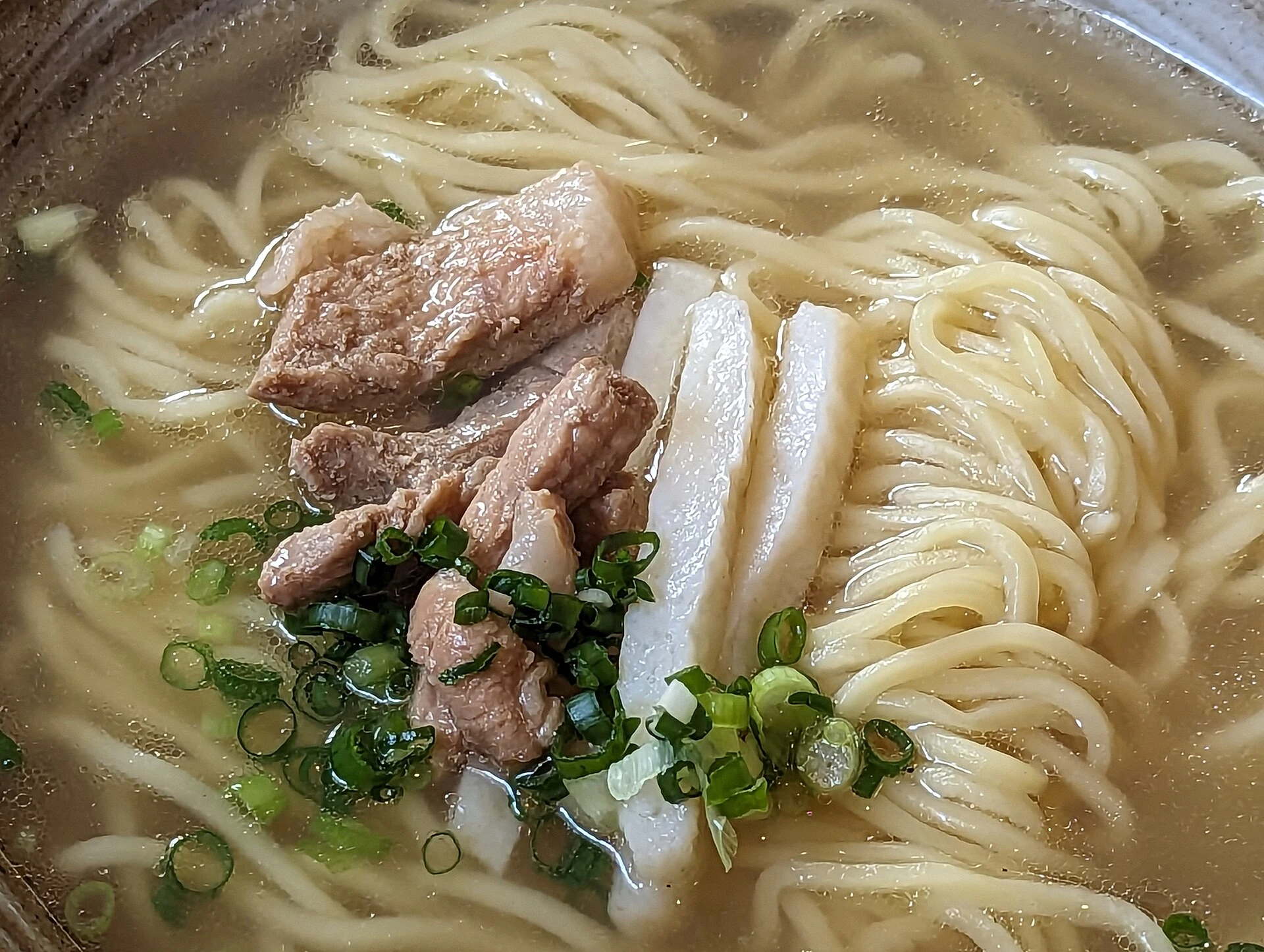
Choose the topping before adding sides. A bowl with a rice accompaniment may already be enough for lunch, especially if you want an afternoon snack. Ask whether a smaller bowl is available for a child or a lighter appetite. Add condiments after tasting: koregusu is chilli steeped in awamori, so check it if you avoid alcohol or strong seasoning.
Goya champuru and other stir-fries
Goya is bitter melon, with a flavour that deserves its name. In champuru, it is stir-fried with other ingredients rather than served as a plain vegetable side. The official island-vegetable guide introduces goya and other ingredients you may see on menus.
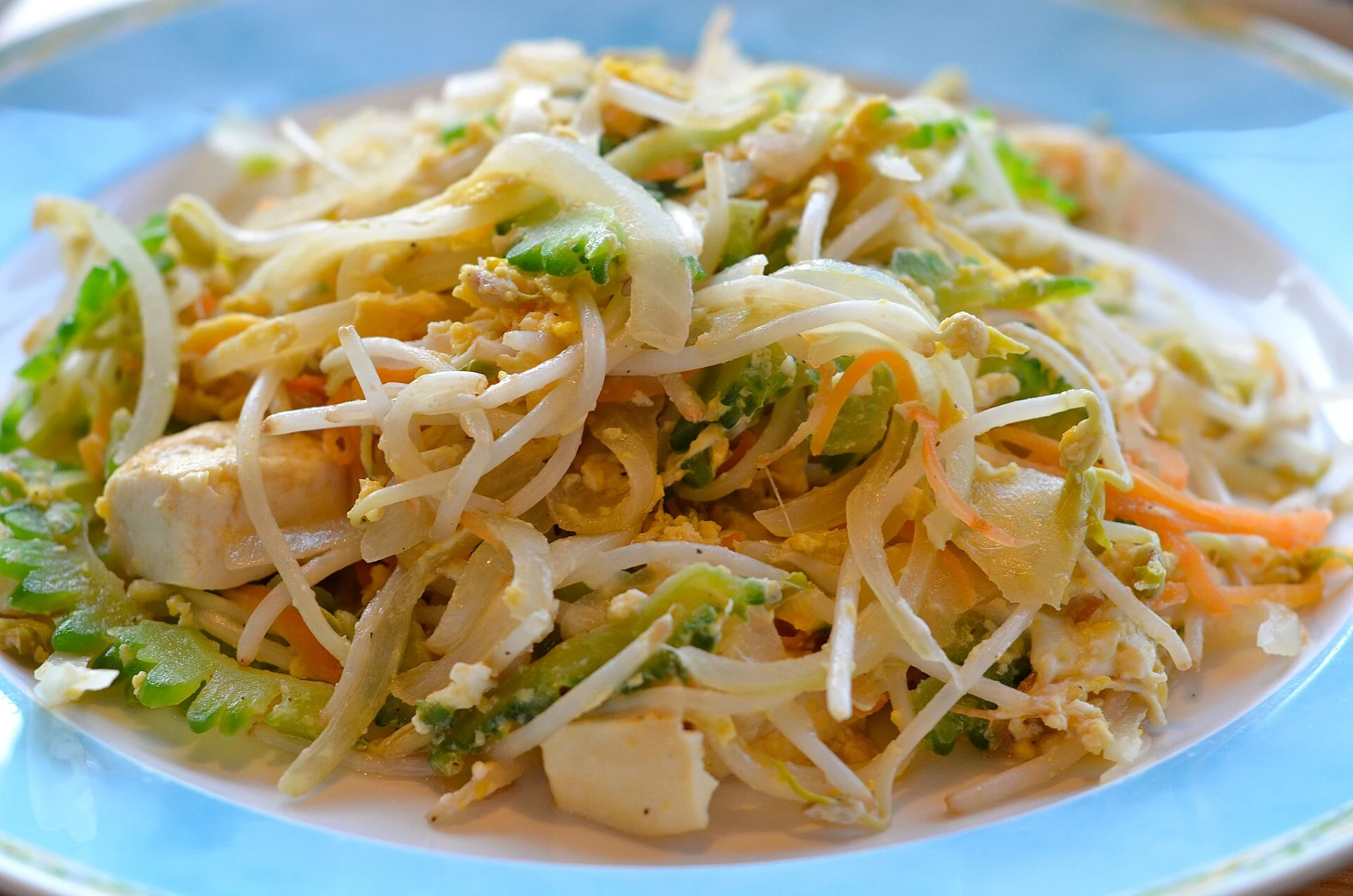
If your group is curious about the bitterness, share a plate before making it everyone’s main meal. Ask about a tofu or other vegetable variation if you prefer a different centrepiece. A vegetable name does not establish a vegetarian recipe: ask about the meat, stock and seasoning in the actual stir-fry.
Rafute and Agu pork: a dish versus an ingredient
Rafute is slowly simmered pork, traditionally cooked with ingredients such as soy sauce, sugar and awamori. MAFF’s rafute guide explains the preparation. It is a useful shared choice when your table wants something soft and rich alongside vegetables or seaweed.
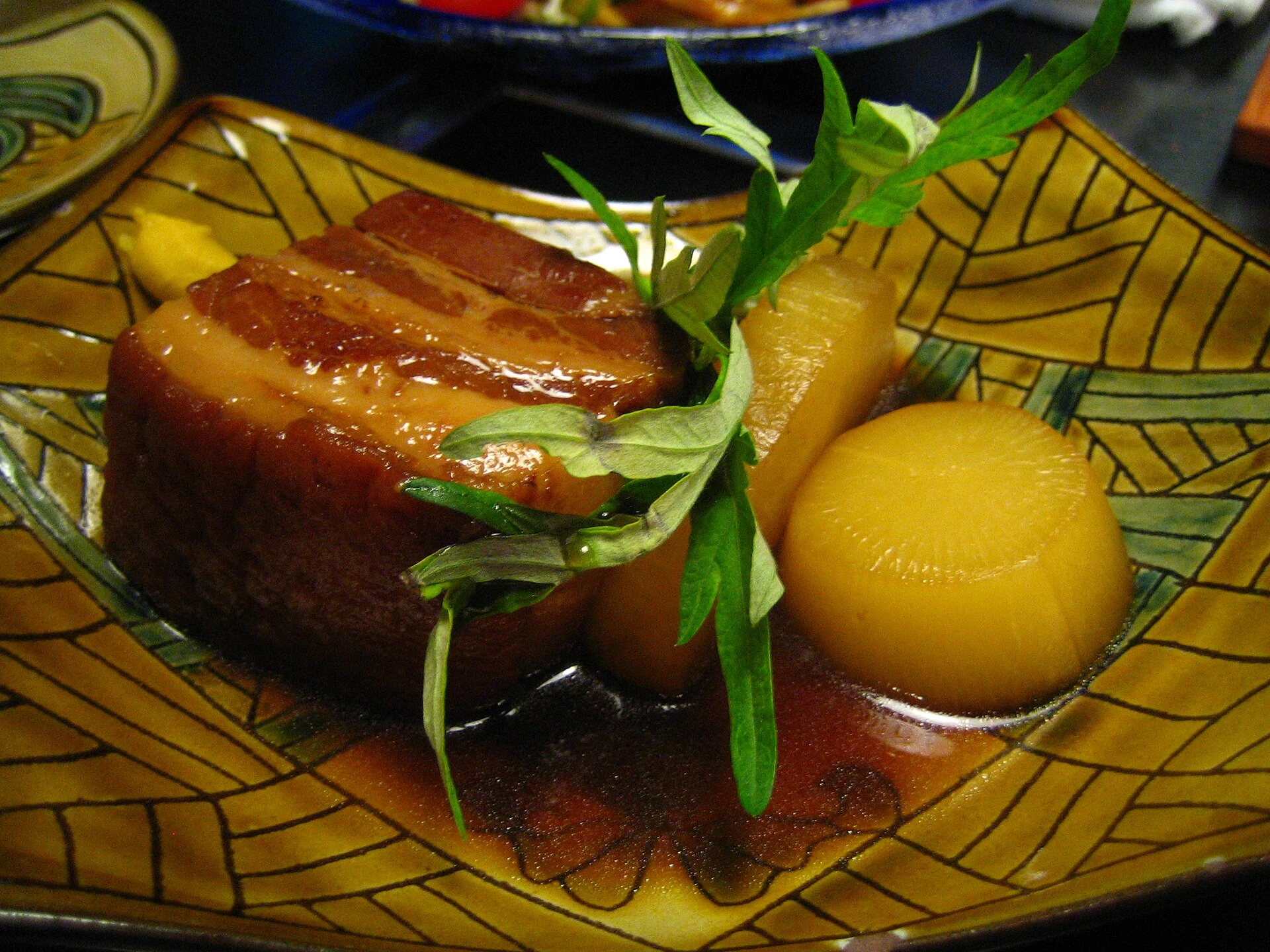
Agu identifies a pork speciality, rather than one particular recipe. The official premium-meat guide describes it in preparations including shabu-shabu. Do not assume every plate of rafute uses Agu. If the breed matters to you, look for it explicitly on the menu and confirm which course or cut you are buying.
Okinawa taco rice
Taco rice puts taco-style meat and other toppings over rice. The official tourism itinerary introduces it as an example of Okinawa’s blended food culture. It suits a straightforward lunch when you want a different flavour from noodle soup.
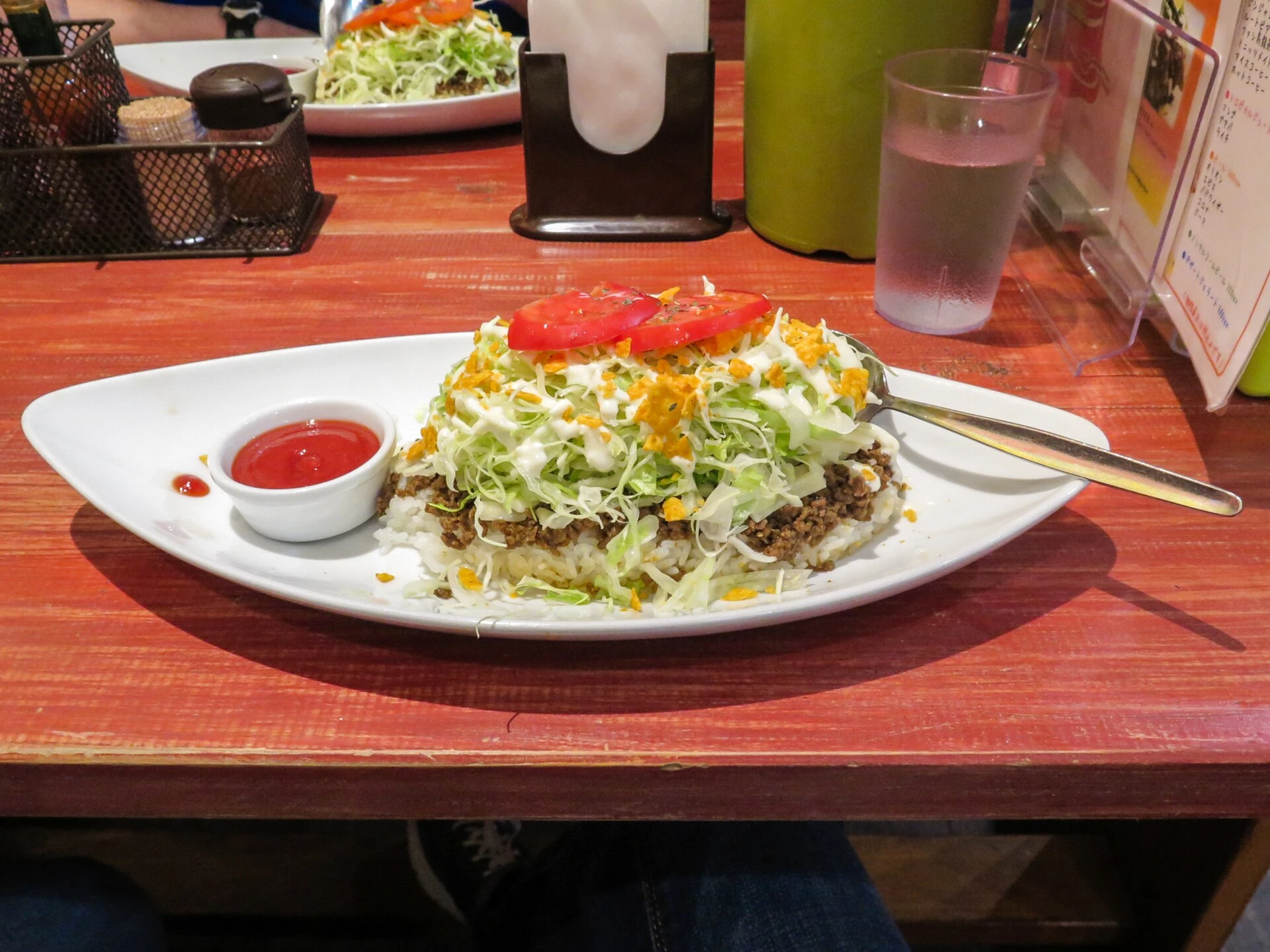
Read the option names carefully. Meat, cheese, vegetables, egg and sauces may form separate combinations, so the lowest listed price may not buy the fully topped plate in a photograph. Ask for spicy sauce separately if that suits your group, and check the portion before ordering extra sides. This guide helps you choose the dish; a restaurant’s current menu determines the exact version.
Jushi: the rice accompaniment worth noticing
Jushi, also written juushii, can refer to more than one rice preparation. MAFF distinguishes mixed-rice and porridge styles. That is useful when a menu translation simply says “Okinawan rice.”
Ask whether the serving is a small side, a set accompaniment or a bowl in its own right. Check the stock and added ingredients if you avoid meat or fish. Ordering one rice-and-noodle combination thoughtfully can be more satisfying than treating every component as a separate full meal.
Pork-and-egg onigiri for a simpler stop
Pork-and-egg onigiri combines luncheon meat and egg with rice and nori. Potama’s own introduction describes the rice-sandwich format; different shops and branches offer different fillings.
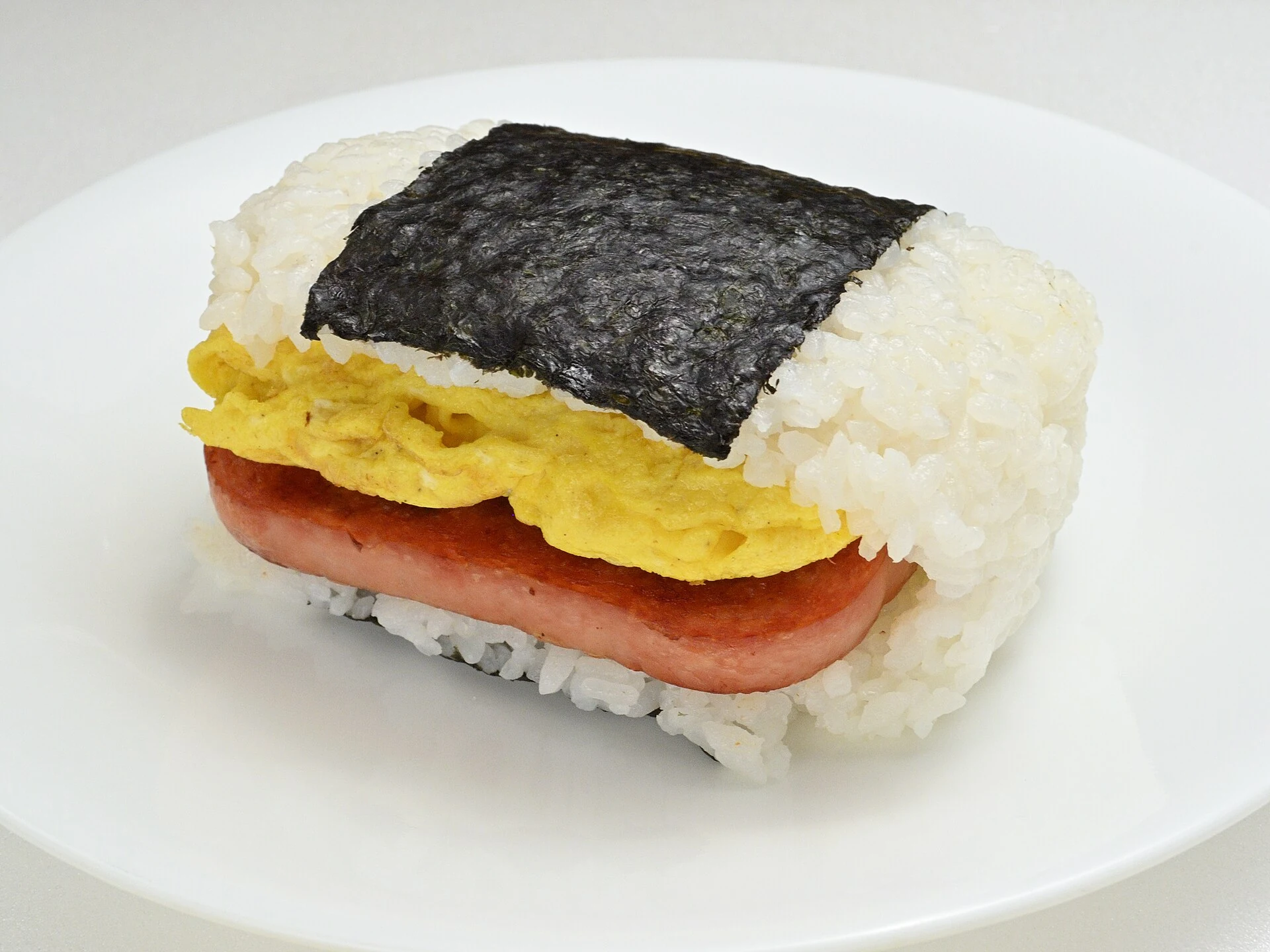
It is a practical breakfast or takeaway choice when you want to keep the morning flexible. Select the branch as well as the filling: the operator’s menu separates shared items from branch-specific versions. A photograph of a sandwich elsewhere is not a promise of a particular brand’s ingredients or portion.
Tofu, sea grapes and small plates to share
Jimami tofu: peanut tofu with a smooth texture
Jimami tofu is made from peanuts and starch. Its name can be misleading if you expect ordinary soy tofu. MAFF’s jimami tofu page describes its ingredients and the sauce served with it.
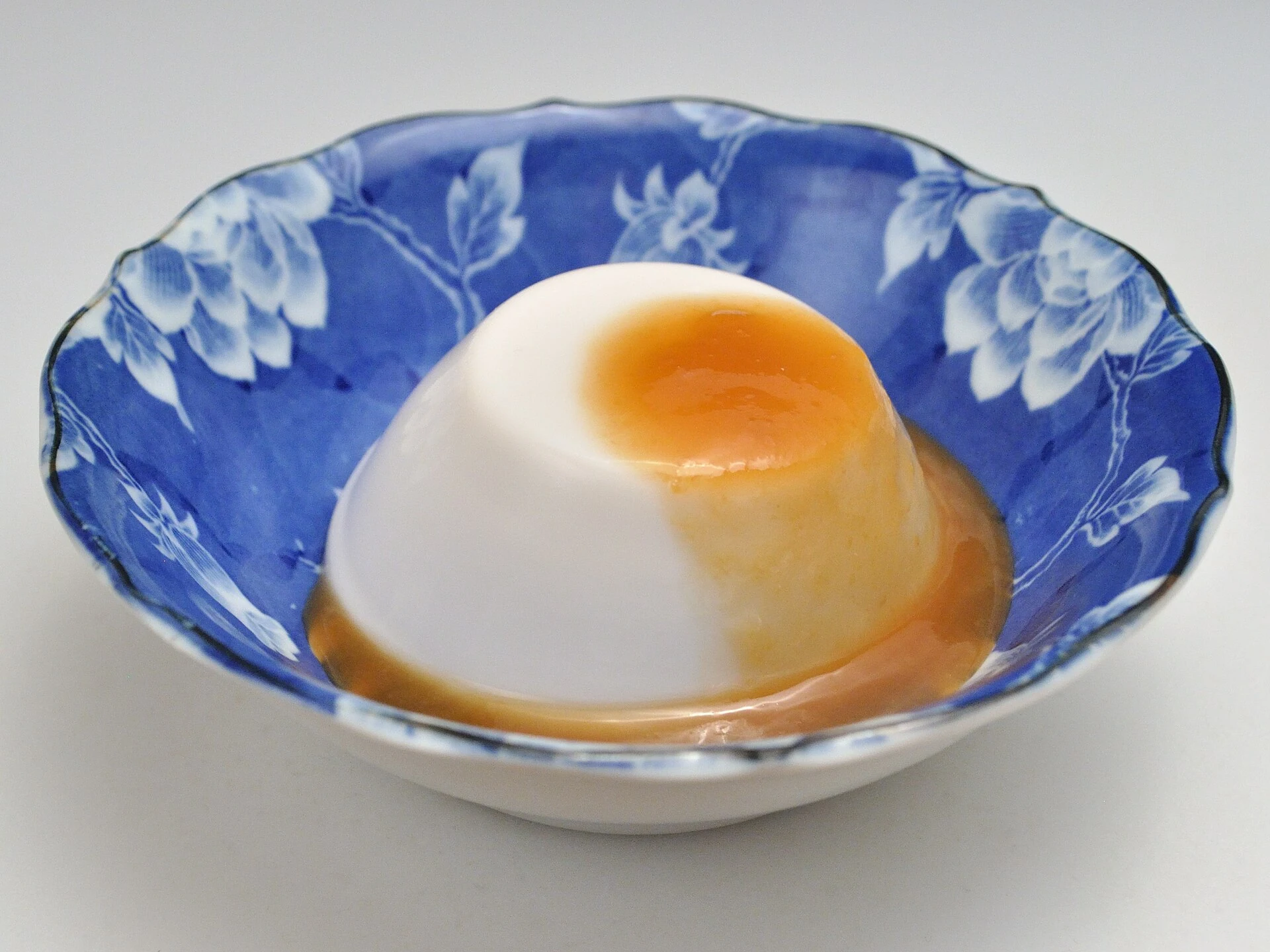
Try it as a small plate if you like smooth textures. It may come with a savoury-sweet sauce, rather than being offered only as dessert. It contains peanuts; explain any ingredient restrictions before ordering and include the sauce in that conversation.
Umibudo and mozuku: two different seaweed experiences
Umibudo, or sea grapes, have tiny beads that pop as you eat them. The official seafood guide describes them as an edible seaweed found in markets and restaurants, including salads and rice dishes.
Mozuku offers a different, softer seaweed texture. For a simple introduction, look for a small side or soup and ask how it is seasoned. Our opening set-meal photograph includes mozuku; it illustrates how a small portion can sit alongside a main dish. If you are choosing plant-based food, ask about dressings and stock rather than relying on the seaweed itself.
Island tofu and a wider Ryukyuan meal
Shima dofu is firm island tofu, while yushi dofu is a softer preparation. MAFF’s Okinawa introduction explains the distinction. These names are worth recognising when comparing a tofu-centred meal with a dish that merely contains some tofu.
For dinner, a useful starting combination is one tofu dish, one vegetable plate and a main such as rafute or cooked fish, with rice if wanted. Confirm serving sizes with the restaurant. A course can be another way to explore the cuisine, provided you check the menu, number of diners, substitutions and price before reserving.
Okinawan sweets and drinks for the gaps between meals
Sata andagi
These round fried doughnuts have a characteristic split surface. MAFF’s sata andagi introduction describes a flour, egg and sugar dough, with variations in flavour. Buying a small amount lets you try one without displacing the next meal.
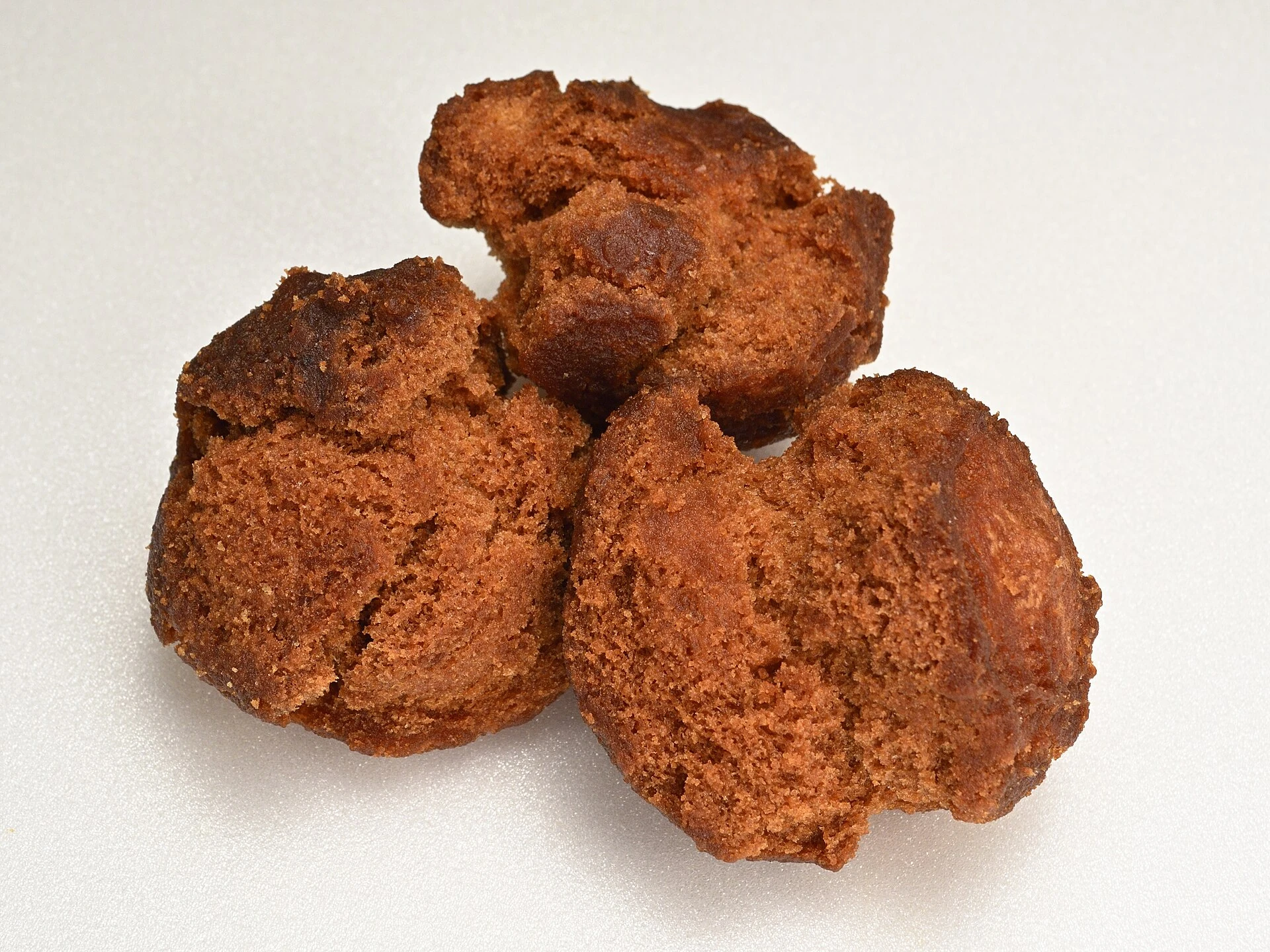
Ask what has just been prepared and which flavours are available. If you are buying a bag to take away, check the maker’s storage and best-before guidance; a fresh snack and a packaged souvenir are different purchases.
Beni-imo sweets and island fruit
Beni-imo is purple sweet potato, used in sweets such as tarts. Okashigoten’s tart story gives a producer’s view of the speciality. Read the product label when comparing baked tarts, chilled desserts and frozen versions; they need different handling.
Fruit is another good way to vary a sweet stop. The official island-fruit guide introduces shikuwasa, pineapple and mango. It lists mango season as June–August. A mango-flavoured dessert available in another month does not necessarily mean fresh local mango is being harvested then.
Tea, citrus drinks and awamori
Ask for the drinks list rather than assuming every local speciality is alcoholic. Potama’s menu, for example, lists sanpin tea alongside other drinks. Shikuwasa gives a tangy citrus option in juices and other preparations; ask whether a drink is sweetened if that matters to you.
Awamori is a distilled rice spirit, rather than brewed sake; the official awamori introduction explains its production. If you choose an alcoholic drink, arrange your onward travel without driving. Alcohol can also appear in cooking and condiments, so mention avoidance when discussing a meal.
Where to find local food around Naha and the coast
Choose an area that fits your day before choosing a restaurant. A meal within walking distance of your Naha accommodation serves a different purpose from a destination lunch during a northern drive. The following are planning areas, not a ranking of restaurants or a claim that every venue serves every dish.
| Area | A useful food plan | What to check |
|---|---|---|
| Naha: Kokusai Street and Makishi | A market visit, noodle lunch, sweets or a dinner of shared dishes. | The actual shop, kitchen hours and market closure date. |
| Chatan / American Village | A meal alongside a coastal visit; compare taco rice, rice snacks and other menus. | Branch address, seating and queues for your chosen time. |
| Onna and the west coast | Keep lunch close to the coast stop or accommodation you already use. | The last order and return transport; avoid a long detour for a short snack. |
| Nago / Motobu / the northern route | Choose one lunch area around your main attraction, leaving optional snacks flexible. | Map the restaurant separately from the attraction and allow parking time. |
A walkable Naha starting point
Makishi Public Market and the nearby shopping streets let you build several food choices into a compact visit. Save the market location rather than a general pin for Kokusai Street. A specific example nearby is Potama’s Makishi Market branch, which publishes its own address and hours; it is a separate business from the market itself.
If you are exploring without a vehicle, our Okinawa without a car guide helps with the wider transport plan. You can leave a northern restaurant for another day rather than interrupting a good walking route.
Chatan, Onna and northern stops
The official main-island itinerary includes food options in American Village, such as taco rice and pork-and-egg rice snacks. For a northern sightseeing day, select lunch near the attraction that gets most of your time. A meal around Motobu suits an aquarium day more naturally than a return to Naha solely for lunch.
Our Churaumi Aquarium guide and Kouri Island guide help you judge how much room remains for a meal. A cafe photograph with an ocean view should not dictate the route until you have checked the actual address, opening day and kitchen service.
How to eat at Makishi Public Market
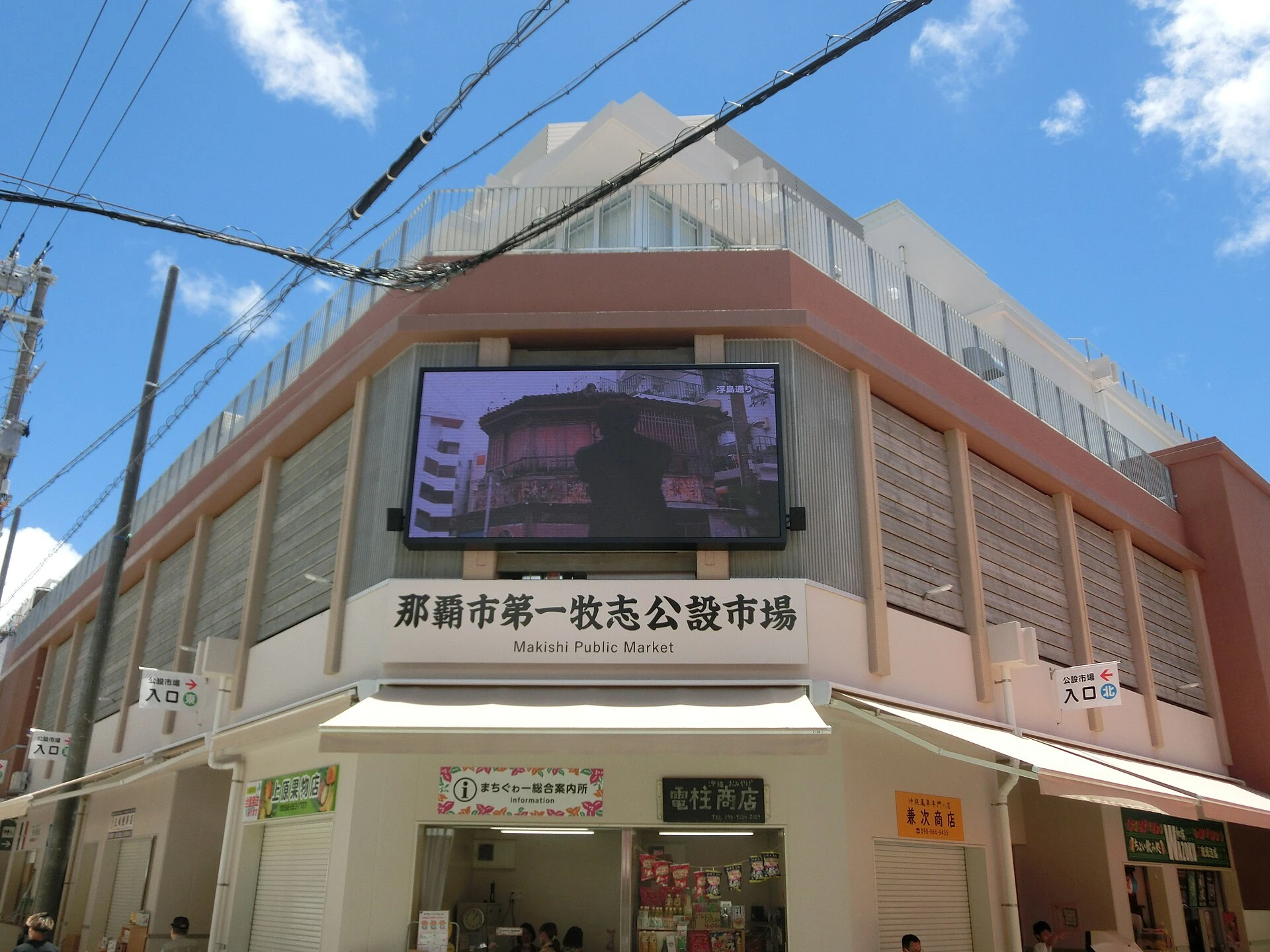
The market’s mochiage, or carry-up, system lets you buy suitable ingredients on the first floor and have them cooked at a second-floor restaurant. Use the market’s own explanation rather than assuming a single all-inclusive price.
- Ask before purchasing. Confirm that the ingredient can be carried upstairs, how it will be prepared and which restaurant will cook it.
- Agree the food cost. Clarify the quantity, any weight-based price and the full ingredient total with the vendor.
- Agree the cooking cost separately. The market says preparation charges vary with the cooking method. Ask about rice, soup, drinks and any other extras too.
- Pay in the appropriate places. Ingredients are paid for at the shop; cooking is paid for at the restaurant.
You can also choose a restaurant’s normal menu if you would prefer a simpler order. A market visit does not require buying a large seafood selection. Ask before taking close photographs of stalls or people, and keep the working aisles clear.
Hours, last orders and closure days
The official market website lists building hours of 08:00–22:00, varying by shop. It gives 19:45 as the last order for cooking eligible first-floor carry-up ingredients, and 20:00 for second-floor restaurants. Those last orders matter more to a dinner plan than the building’s closing time.
The regular closure is the fourth Sunday of each month, except December; New Year, Lunar New Year and Obon arrangements can vary by shop. Check current notices for your date. The address is 2-10-1 Matsuo, Naha; the operator gives approximately nine minutes on foot from Makishi Station. Our suggestion is to leave 60–90 minutes for browsing and a straightforward meal, with more time for queues or a leisurely carry-up lunch.
How to budget and order without surprises
Compare the whole order, not the first number
For a diner meal, check whether the listed item includes rice, soup and sides. For a course, check the price per person, the required number of diners and drinks. For an izakaya, ask about any seating, cover or small appetiser charge before settling in. A headline booking price needs its exact branch, date and course to be useful.
As one menu reference, Potama’s current standard sandwich page listed ¥450 including tax when checked on October 17, 2026. Delivery prices differ. Compare the actual branch and filling; an older downloadable menu can show a different price from the live product page.
A concrete souvenir example: Okashigoten’s official shop listed its standard room-temperature beni-imo tarts at ¥648 for three and ¥1,296 for six, including tax, when checked on October 17, 2026. These are product prices, not a typical restaurant bill; delivery charges and other products differ. Check the current label and price when buying.
For everyday meals, build your budget from the actual menu instead of treating an old blog’s price as a quote. Keep a small cash option and confirm accepted payments with the particular business. A reservation, a table request and a prepaid course can have different cancellation conditions.
Ask about ingredients in the dish, broth and sauce
Useful questions are specific: “What is the soup stock made from?”, “Does this contain pork, fish or peanuts?” and “Can the sauce be served separately?” Give the restaurant your restrictions in writing if that makes the conversation clearer.
| Menu wording | Useful follow-up |
|---|---|
| Okinawa soba | Ask about wheat noodles, stock, fish cake and the chosen pork topping. |
| Tofu or vegetable dish | Ask about meat, bonito seasoning, broth and sauce. |
| Jimami tofu | Identify peanuts explicitly and discuss the accompanying sauce. |
| Taco rice | Confirm meat, cheese, egg, dressings and sauce rather than relying on a photograph. |
| Sweets | Read the actual product’s ingredients and storage instructions. |
For vegetarian, vegan, halal or other dietary requirements, look for a venue that can confirm the complete preparation. Removing a visible topping does not change the stock already used. For food allergies, ask the restaurant about ingredients and preparation before ordering; a menu name or online photograph cannot answer those questions.
How to build food stops into your sightseeing day
Choose one meal that matters most, then keep the other stops flexible. Our suggested combinations below spread the different dishes across a trip, without asking you to eat a full lunch at every stop.
| Your day | A balanced starting plan | Keep flexible |
|---|---|---|
| Naha on foot | A simple breakfast → market browse and lunch → small sweet stop → shared Okinawan dinner. | Choose either a substantial market lunch or a separate full noodle meal. |
| Chatan or the west coast | Breakfast near your hotel → taco rice or a local diner lunch → a coastal drink break. | Skip the extra cafe if it adds a long detour. |
| Aquarium / northern day | Breakfast before departure → one planned lunch area near the main visit → an optional sweet stop → dinner near your overnight base. | Allow the attraction its time; keep a second lunch choice in the same area. |
Our three-day Okinawa itinerary puts these areas in a wider trip. Before leaving the hotel, check opening days and last orders, save the exact address and decide which stop you would drop if the morning runs late.
If your group is already planning a private sightseeing journey and wants a particular lunch stop, send OkinawaVia the restaurant name, hotel and preferred time. Allow for parking, queues and meal time within the agreed service hours. Restaurant reservations, dietary suitability and meal costs should be confirmed separately; the private driver guide explains the transport arrangements.
Okinawa food FAQ
What food is Okinawa famous for?
A useful first selection is Okinawa soba, goya champuru, rafute, taco rice, jimami tofu and umibudo. Add sata andagi or a beni-imo sweet if you want dessert. Choose a few across your meals rather than trying to fit every dish into one sitting.
Is Okinawa soba made from buckwheat?
The traditional noodles described by MAFF use wheat instead of buckwheat. Confirm the ingredients of the actual bowl if you have a dietary restriction, including the broth and toppings.
Is Okinawan food vegetarian?
There are vegetables, tofu and seaweed to explore, but a vegetable or tofu dish can include meat, fish stock or animal-based seasoning. Choose a venue that can confirm your requirements and ask about the complete preparation.
What is the difference between jimami tofu and ordinary tofu?
Jimami tofu is made with peanuts and starch. Shima dofu and yushi dofu are soy-based tofu preparations. Check the serving and its sauce separately, especially when explaining an allergy or other restriction.
Can you eat at Makishi Public Market in the evening?
Check the particular restaurant and current market notices. The market lists second-floor last orders at 20:00 and eligible carry-up cooking last orders at 19:45, even though its general building hours extend later. The fourth Sunday is normally a closure day except in December.
How much does the market’s carry-up cooking cost?
The official guide says ingredients and cooking are paid for separately, and the cooking charge varies with the preparation. Ask for the ingredient total, cooking total and extras before purchasing. A single price quoted in an older travel article is not a complete bill.
Do you need a car to try Okinawa food?
You can plan a varied first introduction around Naha on foot, with transport to your chosen neighbourhood. For coastal or northern meals, fit the food stop into an existing route and plan the return. You do not need a separate island-wide restaurant trip to start enjoying the cuisine.
ABOUT THIS GUIDE
Prepared by OkinawaVia for English-speaking visitors. Official practical sources checked October 17, 2026. This is an editorial planning guide, without a claim of personal dining visits. Restaurant menus, prices and operations can change. Sources are linked beside the relevant information; photograph captions identify authors, licences, dates and adaptations. No restaurant ranking, review score or guaranteed reservation is implied.