An Okinawa taxi is useful for a hotel-to-restaurant ride, a rainy afternoon in Naha or the last few kilometres after a bus journey. A resort transfer or a day in the north needs more planning: the fare is only one question, and getting a car back is another.
Compare the Okinawa taxi fare for a direct journey with the route and agreed hours of a private charter when you are planning several sightseeing stops.
This guide covers Okinawa Main Island, including Naha, Chatan, Onna and the Motobu area. It explains the meter schedule checked on 26 October 2026, how to find and pay for a taxi, and when to compare a direct ride with a reserved transfer or sightseeing charter. Ishigaki, Miyako and other islands have separate fare arrangements.
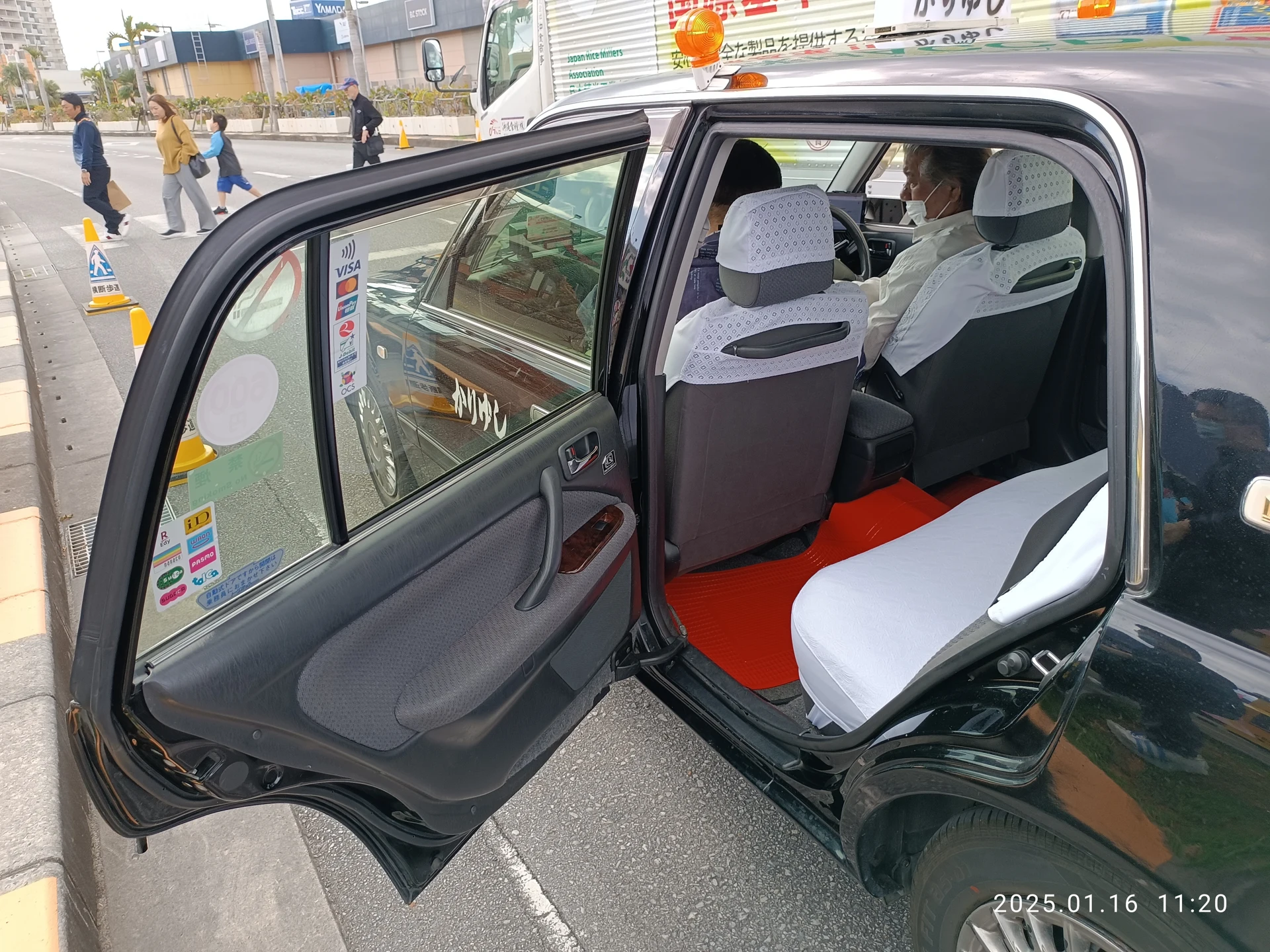
Using taxis in Naha and around Okinawa
Choose a taxi for a specific journey, rather than assuming you need a car for every part of your holiday. In Naha, walking and Yui Rail may cover much of a city day; a taxi can fill the awkward gap between a station and a hotel, carry shopping, or avoid a difficult walk. Our Okinawa without a car guide helps you choose a base around that approach.
Outside the city, build the plan around the actual entrance and pickup point. A beach, restaurant and resort sharing the same town name can still require different journeys. Give the driver the property’s full name and Japanese address, and keep the map pin available offline. For a return journey, save the departure point too.
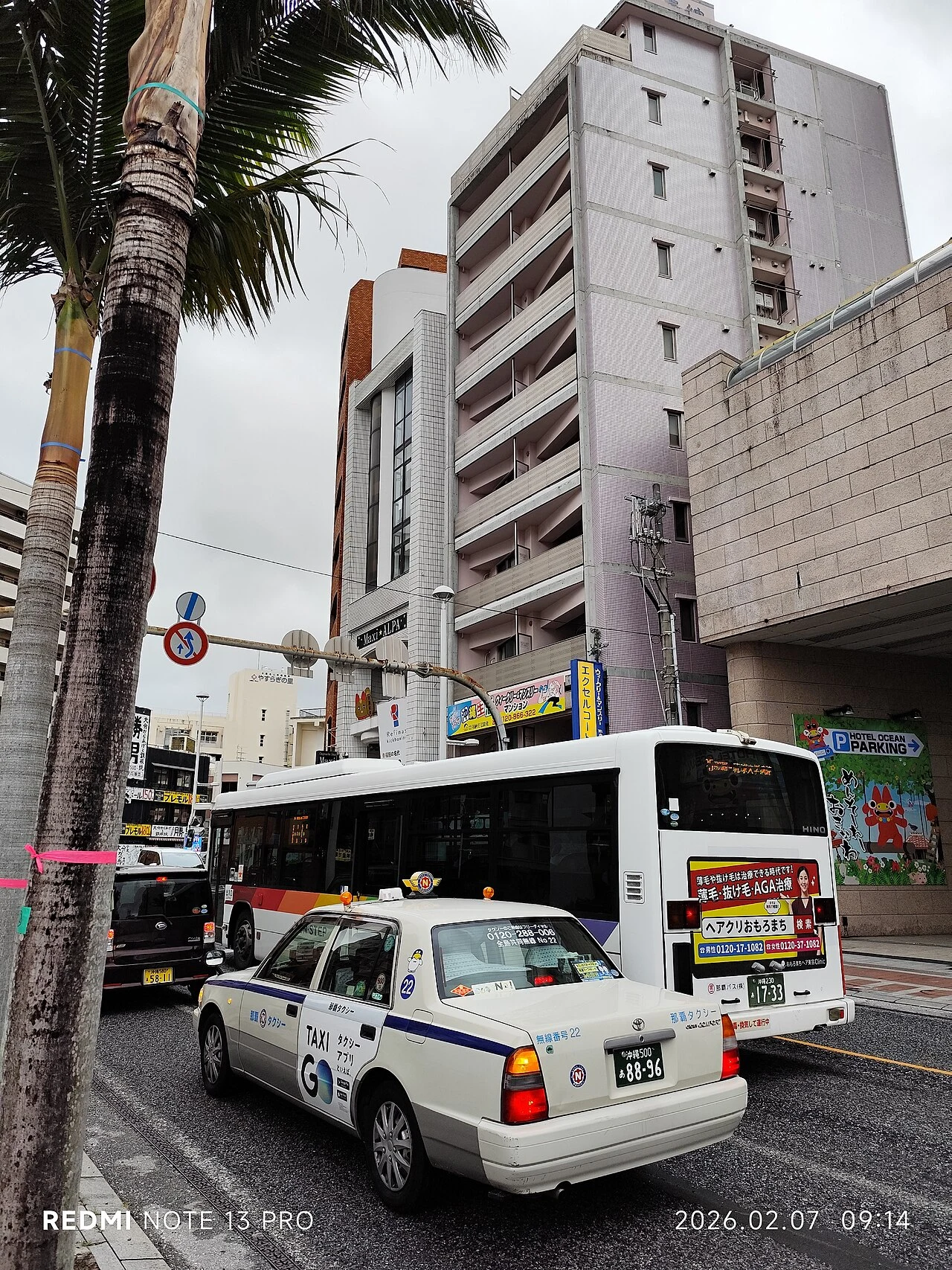
A Naha detail that matters: the Kokusai-dori shopping association schedules its Sunday transit mall from noon to 6 pm, subject to cancellation. Traffic restrictions affect access to the street. Arrange a reachable side-street or hotel pickup with the driver rather than placing a pin in the pedestrian area. Check the official transit-mall notice for current arrangements.
Okinawa taxi fares: understand the meter
The current ordinary-taxi reference
The Okinawa Hire-Taxi Association’s main-island corporate-taxi upper-limit schedule, dated 24 August 2026, lists these ordinary-taxi rates. They are not a guaranteed price for every operator or vehicle. See the association’s fare table.
| Meter component | Ordinary taxi reference | Meaning for your journey |
|---|---|---|
| Initial fare | ¥650 for the first 1.65 km | A shorter ride still starts with the initial fare. |
| Further distance | ¥100 per additional 350 m | The road route matters, not straight-line distance. |
| Low-speed time | ¥100 per 2 minutes 20 seconds at 10 km/h or below | Slow traffic can increase the fare. |
A simple distance-only budget example
For illustration, using that schedule and rounding additional distance upward in 350 m increments gives roughly ¥1,650 for 5 km and ¥3,050 for 10 km. These are our calculations for a hypothetical daytime ride, excluding low-speed time, dispatch, reservations, app charges and tolls. They are not airport route quotes.
Night rides and charges beyond the meter
Okinawa MK’s ordinary-taxi page confirms a 20% late-night/early-morning surcharge from 10 pm to 5 am. Its own listed pickup fee and time-specified dispatch fee are ¥300 each; those operator-specific charges should not be applied to every taxi company. Tolls are extra. Check the current MK meter and fee schedule.
When comparing options, ask for the total payable: fare, pickup, reservation or platform charges, tolls, parking and any waiting time. A lower base fare can still produce a higher total if the booking method adds fees. Older online examples may also pre-date the August 2026 revision.
How to get a taxi in Okinawa
1. Join a designated taxi stand
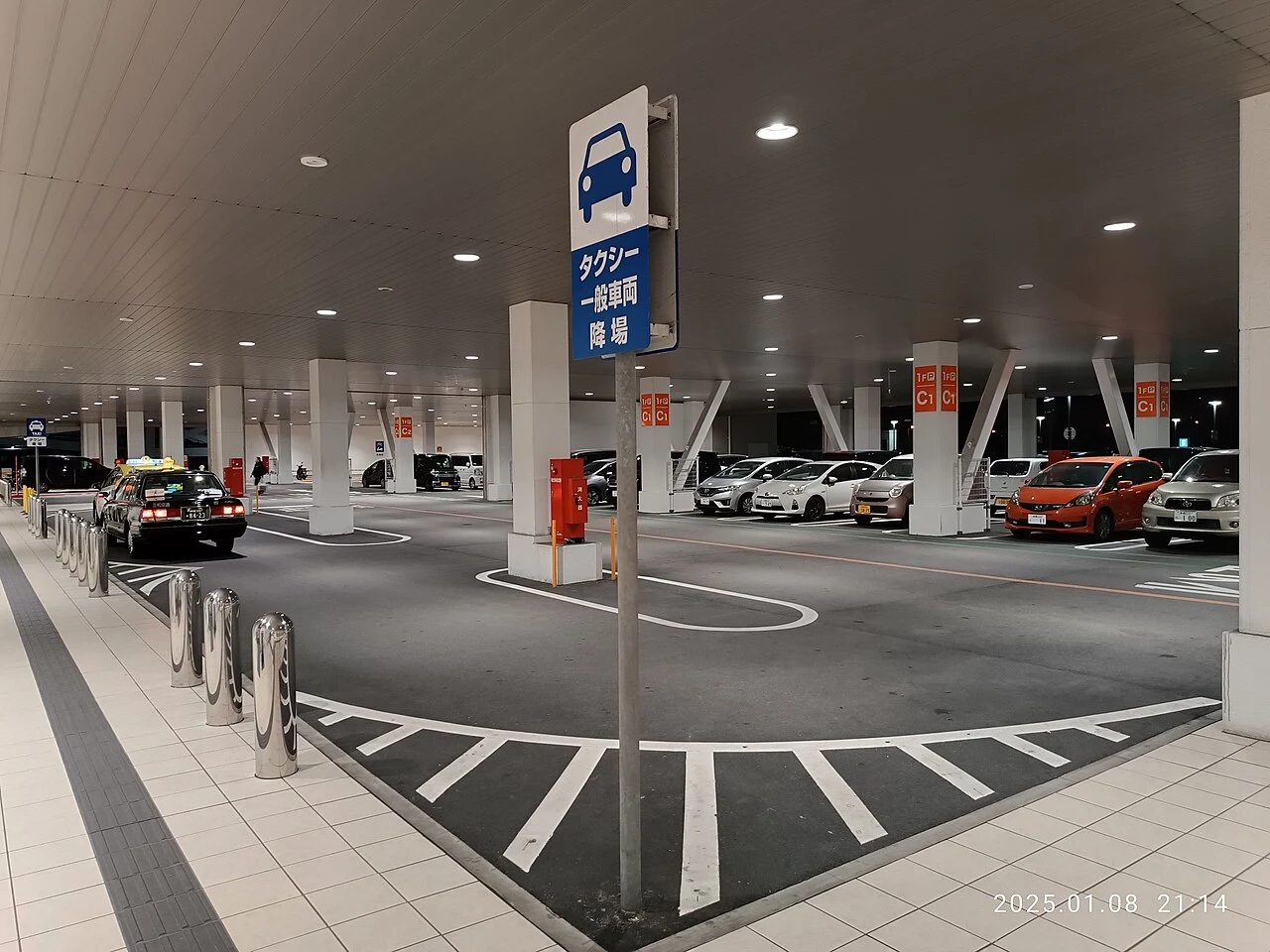
A signed stand gives you a clear starting point at an airport, station or shopping complex. Join the queue, explain the party and luggage size, and follow staff directions where available. A nearby row of parked vehicles is not automatically an available taxi queue.
2. Hail a vacant taxi where it can stop safely
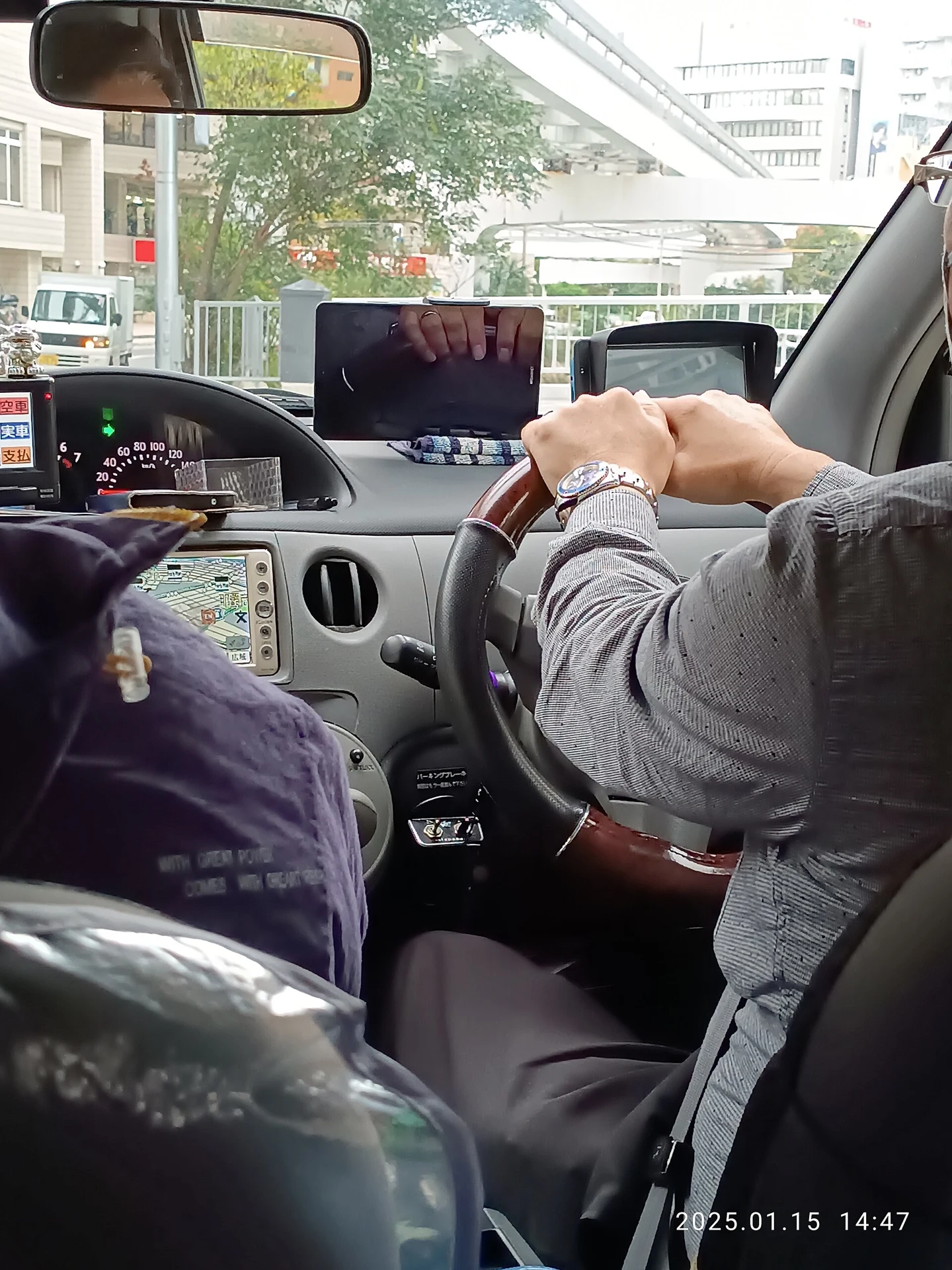
Look for the dashboard indication 空車 (vacant). Do not rely on the body colour. Use the pavement side and avoid junctions or places where stopping would obstruct traffic. JNTO explains the vacancy signs and basic taxi procedure.
3. Request a car through an app
Set both the destination and a pickup point you can actually reach. Check the assigned vehicle details and the app’s meeting instructions. If your pin falls on the wrong side of a divided road, fix the location before the driver is committed to that approach.
4. Ask your hotel to help with dispatch
This is useful when a property has a particular vehicle entrance or you need to communicate luggage or accessibility requirements. Ask which company is handling the ride, how you will recognise the car, and whether the arrangement is confirmed. Give reception enough notice for a time-critical departure.
5. Keep one live arrangement
If you switch from an app to a street taxi, first cancel the unwanted request according to its conditions. An unneeded car can still incur a charge. For DiDi reservations, the operator explicitly says dispatch is not guaranteed and asks users to check the dispatch notification; see its rider FAQ.
GO, DiDi and Uber: what visitors should check
The official Okinawa travel guide lists GO and DiDi. Uber also publishes an OKA airport taxi service page. Treat each as a way to request an available service, with different payment, dispatch and reservation conditions.
| App | Useful official information | Check before requesting |
|---|---|---|
| GO | Its English site supports international cards and Apple Pay. | Registration, payment setup, location access and all displayed fees. |
| DiDi | Its FAQ explains meter-based fares plus applicable pickup and toll charges. | Payment choice, reservation conditions and driver confirmation. |
| Uber | Its airport page lists local taxi options and app pickup directions. | The product actually available at your pin and its current price conditions. |
GO and overseas phone numbers
GO’s registration instructions use an SMS-capable mobile number. A data-only eSIM does not itself give you an SMS number. Some country-number combinations cannot register while outside Japan; GO says to check location settings if registration fails after arrival. Read its registration restriction and foreign-number location requirement. Do not assume a US, Singaporean, Australian, Korean, Hong Kong or Taiwanese number guarantees successful setup.
The GO English website describes international-card and Apple Pay support. Set up a working payment method and keep a taxi-stand or hotel-dispatch alternative. Successful installation alone is not a completed ride arrangement.
Read the fee details, not only the headline estimate
GO says its International Service Charge applies to completed GO-requested rides by short-term foreign visitors, in addition to the meter, pickup fee and GO App charge. It has exclusions, including areas charged a remote-area service fee. Check the amount on Fare Details before ordering; the official explanation does not give one universal total for every journey.
DiDi distinguishes in-car payment from app payment; its FAQ says the selected payment method cannot be changed after the order is confirmed. For an app-paid ride, follow the app’s payment process rather than paying again in the vehicle. Review DiDi’s payment and reservation conditions before submitting a request.
Uber in Okinawa: check the live product
Uber’s Naha Airport pickup page states that displayed past-month average prices are not fixed or guaranteed and that sample ride products may not be available in your app. Use the actual pickup and destination to check. A website saying “24/7” should not be read as proof that a car is assigned for your particular early departure.
Taxis from Naha Airport
Find the correct stand or reserved pickup
The airport’s current first-floor map labels ordinary all-area taxi stands 9 on the domestic side and 24 on the international side, with separate jumbo, reserved and accessibility-related positions. Follow signs on the day, especially around works, and consult the official airport taxi map. For an app or prebooked transfer, use the meeting instructions for that booking rather than automatically joining the ordinary queue.
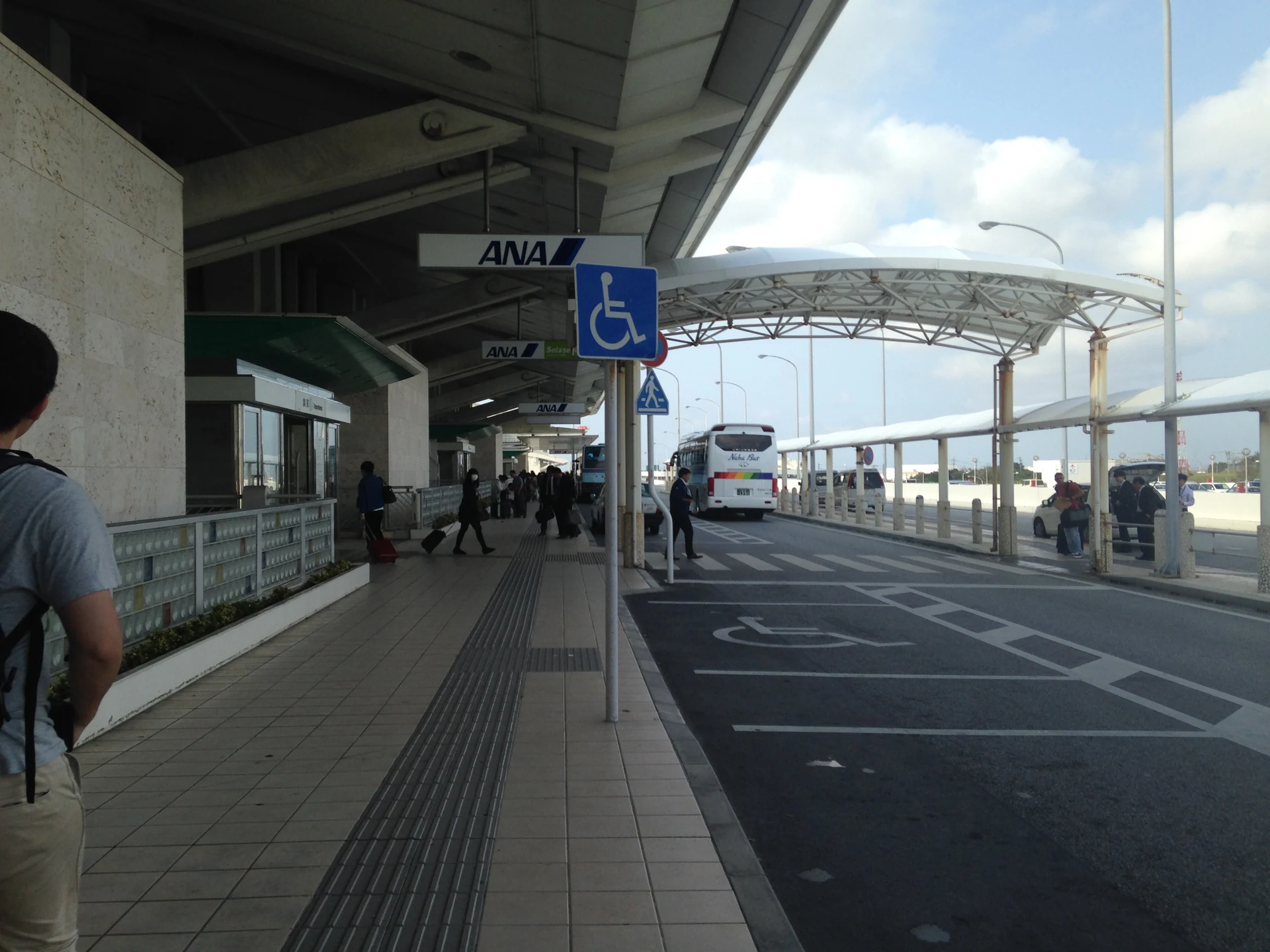
Use airport travel times as a starting point
The airport’s reference sheet gives about 20 minutes to Kokusai Street, 20 minutes to Shuri Castle and 40 minutes to American Village. It expressly warns that traffic, route and time of day affect the journey and fare. These are reference driving times, excluding queues, baggage collection and other airport procedures. Use the airport’s published estimate sheet and allow a separate margin.

Compare a metered ride with a reserved transfer
A fixed-price airport product can simplify the budget for a longer direct journey. As a dated comparison, Okinawa MK’s table below is one-way, per vehicle, tax included for its listed Serena airport service. These are MK’s published examples, not OkinawaVia prices.
| Airport route / example area | MK Serena listed fare | Important condition |
|---|---|---|
| Chatan / American Village area | ¥7,650 | Tolls extra; arrival-lobby meeting parking extra; direct single-destination product. |
| Southern Onna / Hotel Monterey area | ¥15,300 | |
| Northern Onna / Manza area | ¥17,850 |
Source: Okinawa MK airport service, information dated 24 August 2026, checked 26 October. Prices may change. Confirm the exact hotel, vehicle, luggage, flight-delay and cancellation conditions; this direct product does not include sightseeing stops. For buses, rail and other arrival options, use our Naha Airport transfer guide.
Taxi rides to Chatan and Onna resorts
For Chatan, specify the hotel entrance or the agreed pickup point around American Village. For Onna, the full property name is particularly useful: “Onna resort” is too broad for a dependable quote. The operator examples above distinguish the southern and northern parts of the village.
Plan the return at the same time as the outbound ride. A resort can be a comfortable base without being a place where a vacant taxi will always pass at your preferred moment. Ask your accommodation about confirmed dispatch for dinner, a hotel change or an airport departure. Our Naha, Chatan, Onna and Motobu comparison explains how your base changes the transport plan.
For an early flight, work backwards from the airline’s required airport arrival time, then add the road journey and a disruption margin. Arrange pickup while you can still obtain assistance from the hotel or operator. A short normal-time journey and a successful booking last night do not guarantee the same conditions tomorrow.
Longer trips and return pickups: solve both directions
A taxi to a northern attraction can solve the outward journey and leave the return unresolved. For Motobu, Kouri Island or a quiet coastal stop, confirm whether the same car will wait, return at an agreed time or leave after dropping you off. These are different arrangements with different costs.
- Pickup: exact facility entrance, time in Japan local time, and a map pin.
- Contact: a number or in-app method you can use with your travel connection.
- Waiting: whether the car stays, and what happens if your visit runs over.
- Return: confirmation that the operator accepts the return journey, not just a request received.
- Full price: both directions, tolls, parking and any dispatch or waiting charges.
- Fallback: a usable scheduled service or assistance point if the arrangement changes.
If Churaumi Aquarium is the main objective, compare the complete alternatives in our Naha to Churaumi Aquarium transport guide. Avoid judging a full-day plan only by an outbound app estimate.
Point-to-point taxi or sightseeing charter?
A point-to-point ride buys a journey. A charter reserves a vehicle and driver for an agreed period and route. The useful comparison is the total cost and arrangements for your whole day, including the time spent visiting places.
| Your plan | Option to compare first | Question that decides it |
|---|---|---|
| Hotel to dinner, then back | Two ordinary rides | Can you arrange the return at the time and place needed? |
| Airport straight to one resort | Metered taxi vs reserved transfer | What is the complete fare and luggage fit? |
| Several attractions with time at each | Sightseeing charter | Does the quote cover waiting, route, hours and the final drop-off? |
| One long ride to a remote place | Return arrangement vs charter | Who is responsible for the journey back? |
Operators publish different packages and restrictions. For example, Naha Taxi’s sightseeing page lists an eight-hour northern course at ¥30,900 for its ordinary taxi and ¥52,000 for its jumbo, with tolls and paid parking extra. It requests booking at least three days ahead and confirmation of prices when reserving. Those are that company’s published examples, not a market-wide rate or a quote from us.
Luggage, children and accessible vehicles
Passenger seats do not tell you how many large suitcases fit. Send the operator the number of adults and children, children’s ages, suitcase sizes, stroller and any mobility equipment. Ask about child seats in advance; a car found at a rank is not a confirmed child-seat booking.
For accessibility, say whether the passenger will remain in the wheelchair or transfer to a seat. Give wheelchair dimensions and any assistance needed at both ends. Okinawa MK, for example, describes a rear-entry wheelchair-compatible Serena, recommends advance arrangements because numbers are limited, and lists different capacity when a wheelchair passenger travels. Read the operator’s accessibility information and confirm the actual vehicle fit.
A larger vehicle may use a different fare class. Ask for the car and luggage arrangement to be written into the confirmation rather than assuming a generic “taxi” or app icon is sufficient. Our driver versus self-drive comparison can help if equipment and repeated daily journeys change your overall choice.
Combining a taxi with Yui Rail or a bus
You can use public transport for the convenient part of a journey and a taxi for the difficult final leg. Compare the station exit, the walk, luggage handling and the cost for your whole group. Saving a small amount is less useful if the transfer point leaves you without a confirmed onward ride.
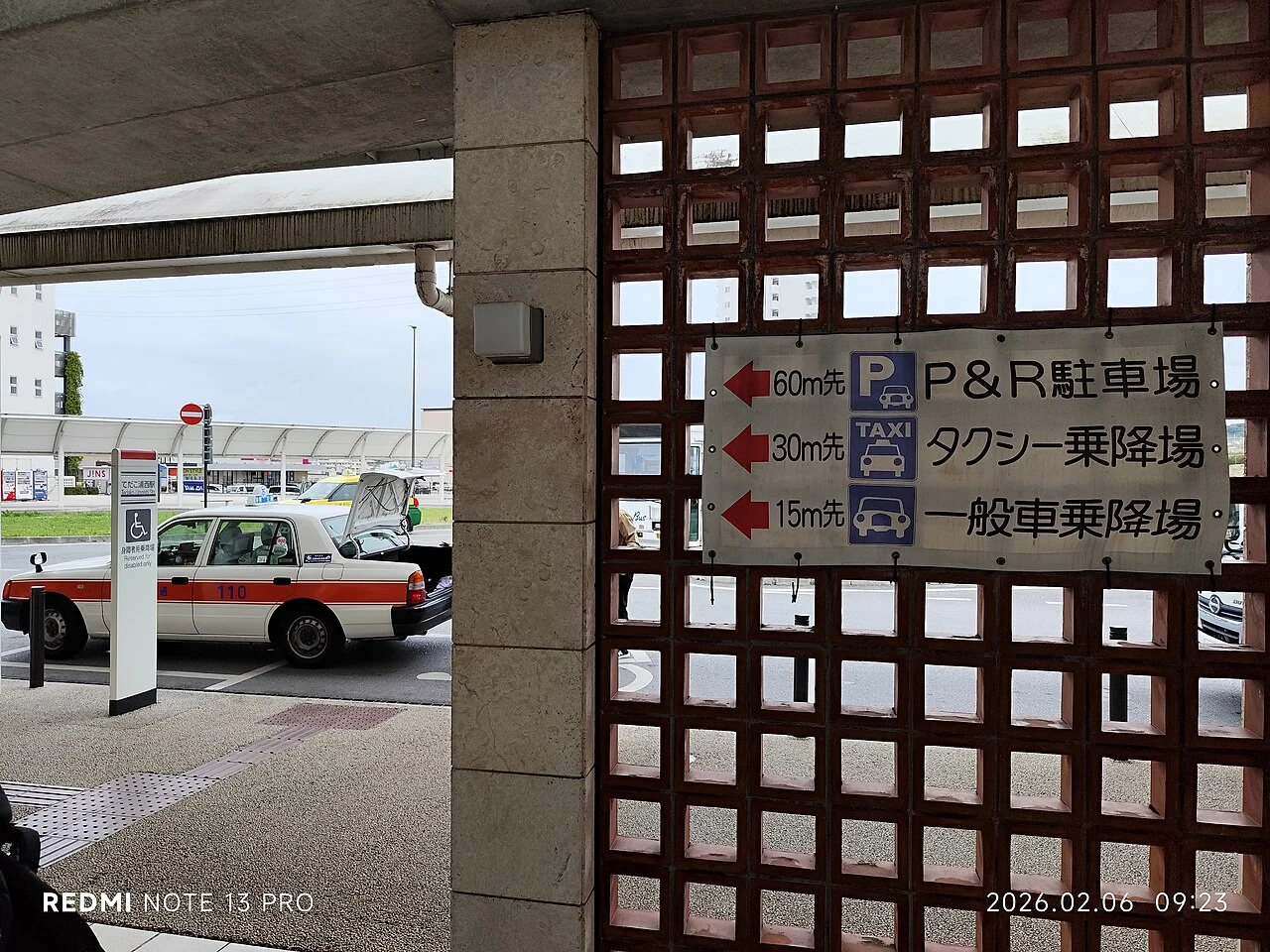
Yui Rail’s official station list and timetable cover Naha Airport through Tedako-Uranishi, including Asahibashi, Makishi and Shuri. The rail line does not continue to the northern resorts. Check the last usable departure for your date and connect at a place where a pickup can actually be arranged.
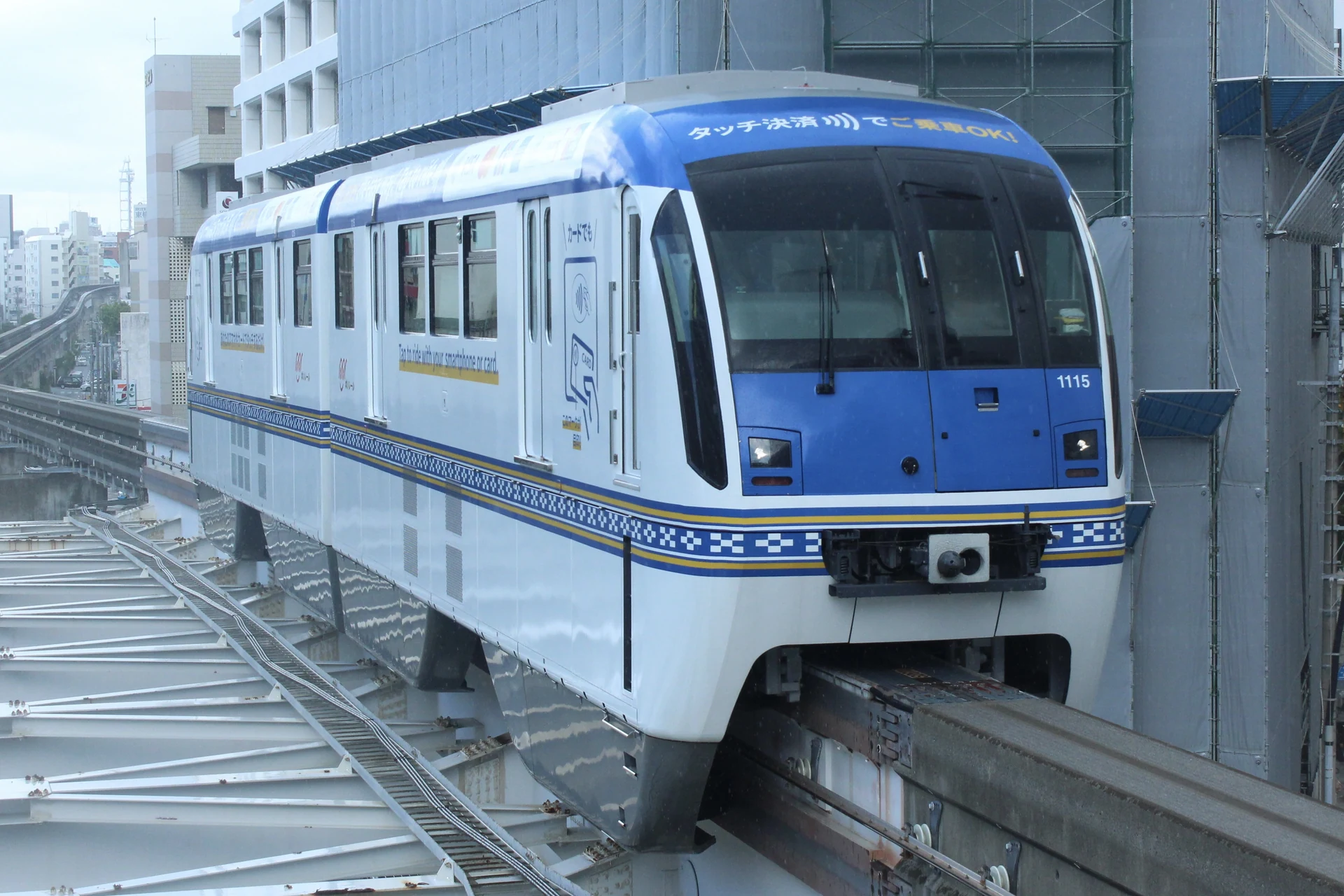
For a bus-and-taxi combination, identify the exact stop and the operator of the last leg before leaving. Do not assume every roadside bus stop has taxis waiting. Compare this with a direct ride when carrying several cases or travelling at a time when missing a connection would have a large consequence.
Before-you-ride checklist and useful phrases
- Save the destination: full Japanese name, address, map pin and correct entrance.
- Confirm the vehicle: people, cases, equipment and any pre-arranged seat or accessibility need.
- Confirm payment: ask before departure for a street/rank ride; review the selected payment method for an app ride.
- Check charges: meter or fixed product, toll route, booking fees and waiting.
- Plan the return: confirmed pickup, meeting point and contact method.
- Before getting out: check seats and boot, collect luggage and keep the receipt or app trip record.
Let the driver operate the automatic passenger door. Carry some yen as a backup because payment options differ by vehicle, especially away from major cities. Have your destination written in Japanese if communication is difficult. These basics follow JNTO’s taxi guidance. A tip is not expected; see JNTO’s tipping advice.
| What to communicate | Japanese to show the driver |
|---|---|
| Please take me to this address. | この住所までお願いします。 |
| Can I pay by credit card? | クレジットカードは使えますか。 |
| About how much will it cost? | 料金はだいたいいくらですか。 |
| Could you issue a receipt? | 領収書をお願いします。 |
A translation can help explain a request; the driver’s or operator’s acceptance is still what confirms it. If you lose something, use the company and trip details on the receipt or in the app rather than trying to identify a car from memory.
Okinawa taxi FAQ
Are taxis expensive in Okinawa?
A short ride shared by a small group can be practical. Long distances, slow traffic and extra charges change the total. Use the current meter reference above for context, then compare the complete journey with public transport or a reserved product. A reputation for being cheaper than Tokyo is not a route quote.
Is Uber available in Okinawa?
Uber publishes an airport taxi pickup service for Naha. Check the live app at your actual pickup point for available products, price conditions and driver assignment. Its advertised sample products and historical average prices do not guarantee a particular car.
Can I pay an Okinawa taxi by card?
Payment options depend on the vehicle and booking method. Ask before starting a street or rank journey. For an app booking, check the selected payment method and complete its setup. Keep yen as a backup rather than assuming every taxi accepts the same card or wallet.
Do taxi drivers speak English?
Do not assume an ordinary dispatched car includes an English-speaking driver. Save the Japanese destination and map pin. If English communication throughout a sightseeing day is essential, request it explicitly and have the operator confirm the arrangement.
Can I get a taxi for an early flight?
Arrange it ahead with your hotel or operator and check that a car is confirmed. The main-island night/early-morning surcharge may apply. Work backwards from airline check-in requirements and include a road-delay margin; an app accepting a future request is not the same as a guaranteed pickup.
Can I take a taxi from Naha to Churaumi Aquarium?
Compare an accepted long-distance ride and a confirmed return with a sightseeing charter or scheduled bus. Decide whether the driver will wait or collect you later, and confirm tolls, parking and waiting charges. The aquarium transport comparison covers the route in more detail.