You can enjoy Okinawa without renting a car. Choose a hotel with useful connections, make Naha your easy exploring day, and arrange the longer journeys around the places you most want to see.
Building an Okinawa itinerary without a car starts with choosing a base and checking which journeys work by rail, bus, taxi or a reserved private driver.
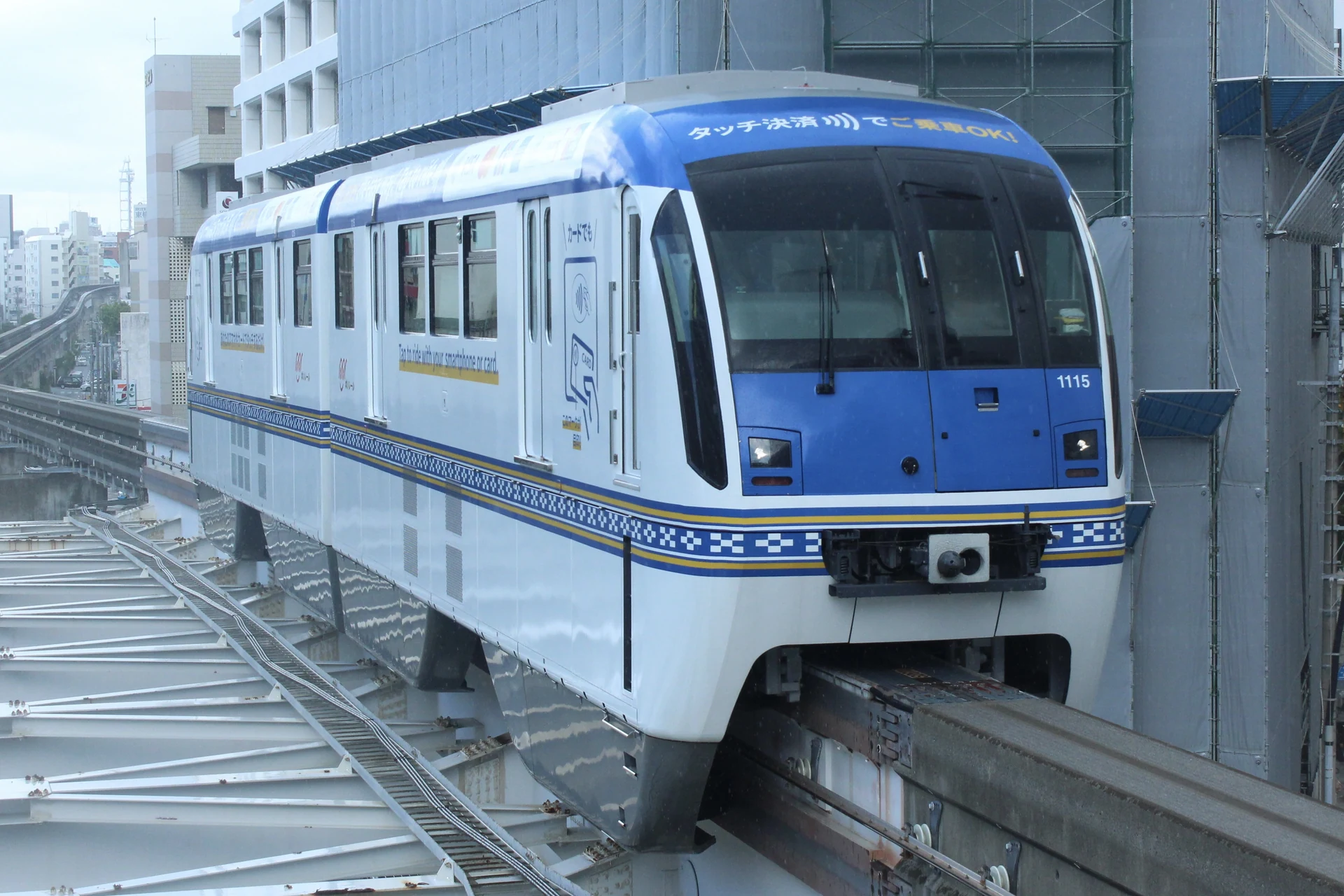
THE QUICK ANSWER
For city sightseeing: stay near a useful Naha station and combine rail with walking. For the aquarium and the north: compare a scheduled bus, a fixed day tour and a private charter. For a resort stay: check both the airport connection and how you will reach dinner or activities after arriving.
This guide covers Okinawa Main Island without driving yourself. Buses, taxis and a hired vehicle with a driver are among the options. A trip relying entirely on public transport needs more attention to stops and return departures than one with a pre-arranged road journey.
Is Okinawa without a car right for your trip?
Start with the holiday you want, rather than the transport you think you must book. Naha food, city streets and a selected northern outing can work well without a rental car. Several distant beaches, a late dinner away from your hotel and spontaneous stops on the same day need a different arrangement.
The official Okinawa transport overview distinguishes monorail, buses, taxis and island transport. Use those options selectively: you do not have to hire a driver for every city journey, and a bus reaching one attraction does not automatically connect the rest of your wish list.
- A good fit: a station-area Naha hotel, city walking, time for a seated lunch, and one main destination on a longer day.
- Needs closer planning: a hotel away from shops, children and several bags, a late flight, or a northern outing with multiple separate stops.
- Worth arranging in advance: transport after your selected return service, a vehicle with suitable luggage space, child seats, or specific access and language requirements.
Choose how independent you want to be. You might use rail on arrival, walk around Naha, take a scheduled bus to the aquarium and arrange a direct return airport transfer. Another party might prefer a fixed sightseeing tour for its northern day. Both are valid ways to travel without driving.
Where to stay in Okinawa without a car
Your hotel’s actual entrance matters more than the district name. Check the walk from the station or bus stop, the road crossings, luggage storage and the places you can reach for dinner. A low room price can lose its appeal if every meal requires another paid journey.
Naha: choose the station for the journeys you will make
Naha is our practical starting recommendation for visitors combining city days with trips elsewhere. Asahibashi is useful when your chosen buses use Naha Bus Terminal. Kencho-mae—labelled Prefectural Office on the English rail map—suits plans using the western end of Kokusai Street or a confirmed nearby boarding point. Makishi and Miebashi give other central-city options.
Before booking, map the hotel against your selected departure point. A tour’s meeting place, a local bus platform and the northern shuttle’s stop can be different even when all are described as “Naha.” Do the final walking check with the hotel, especially if you are carrying large suitcases.
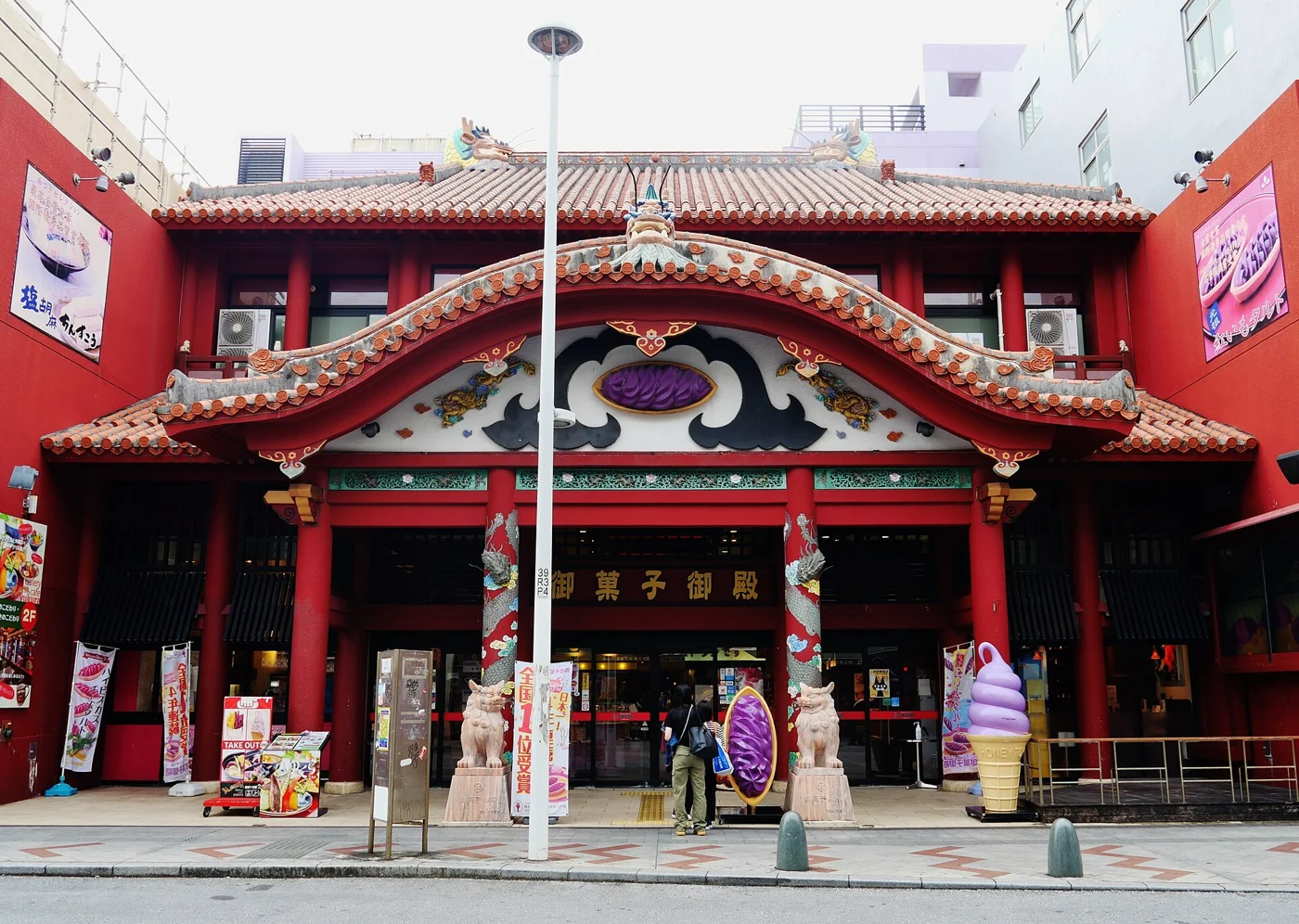
Chatan: useful when waterfront evenings are a priority
Chatan can suit a slower stay around American Village and the waterfront. Check that your hotel and preferred restaurants form a comfortable walking area. Then plan the journeys outside that area separately: airport access, a Naha day and any northern excursion. Yui Rail does not run to Chatan.
Onna and Motobu: choose the hotel and the connection together
A resort stay without a rental car can work when you want time at the hotel and arrange selected outings. It becomes less convenient if you expect to visit a different distant restaurant or beach every day. For Onna, check the particular bus and final hotel connection. For a Motobu stay focused on the aquarium and Bise, check the exact entrance and walking route before assuming everything is nearby.
| Base | Useful for | Check before booking |
|---|---|---|
| Naha station area | City food, rail journeys and selected day-trip departures. | Hotel entrance, station exit and actual bus or tour meeting point. |
| Chatan waterfront area | Walkable evenings and time around American Village. | Road connections for every trip outside Chatan. |
| Onna resort | Hotel time with a few planned outings. | Served stop, hotel connection, meals and return airport journey. |
| Motobu / Bise area | A northern stay centred on the aquarium and village. | Walking distances, luggage and the connection back south. |
How to use Yui Rail for a Naha-based holiday
The operator’s English guide lists the stations from Naha Airport to Tedako-Uranishi. Useful city stops include Asahibashi, Prefectural Office, Miebashi, Makishi, Omoromachi and Shuri. Select the station for the entrance you want to reach; being near the line does not mean an attraction is beside its platform.
| Station | Planning use | Final connection |
|---|---|---|
| Naha Airport | Arriving at or leaving the city by monorail. | Terminal walking, luggage and airport procedures. |
| Asahibashi | Plans involving Naha Bus Terminal. | Your bus platform or separate roadside stop. |
| Prefectural Office / Kencho-mae, Miebashi or Makishi | Central Naha and a Kokusai Street walking plan. | The end of the street, market or hotel you actually need. |
| Shuri | A heritage outing in Shuri. | The approach to the park and time to reach any reserved entry. |
Yui Rail accepts Suica and the interoperable cards listed on its official IC-card page, including PASMO and ICOCA. QR tickets and rail passes are alternatives. A card used on the monorail should not be treated as proof that the same payment method works on your next bus.
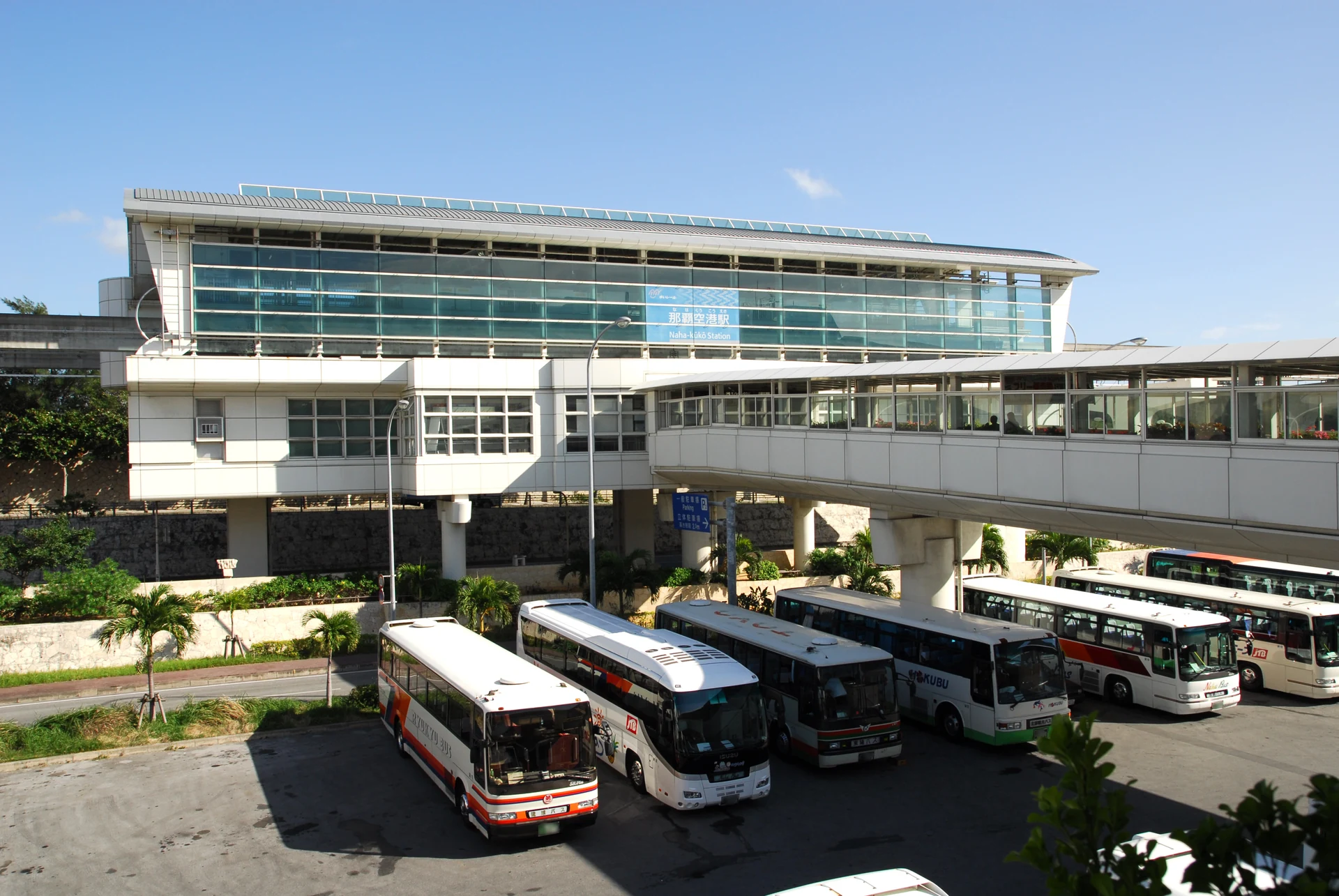
For the airport journey, see our Naha Airport transfer guide. It compares rail, hotel buses and road transfers, including the final connection to Naha, Chatan and Onna accommodation.
Okinawa buses: choose the service before choosing the payment
A local bus, airport bus and day tour do different jobs
A route bus takes you to a listed stop. A hotel limousine bus connects designated locations. A sightseeing tour follows its own itinerary and meeting instructions. The official bus overview explains these categories. Check the selected operator’s service rather than applying one bus’s reservation or luggage rules to every bus on the island.
For a local journey, record the route number, direction and stop name in both English and Japanese if available. Check the walking connection at each end and the return departure. Use the operator’s timetable alongside the route planner; a map estimate is a starting point, not confirmation of a seat or an unchanged service.
OKICA, cash and bank-card tap payments
The official local-bus guide describes OKICA and cash payments. On distance-based services, a cash passenger takes a numbered boarding ticket, matches its number to the fare display, and pays when leaving. Some flat-fare city services use payment on boarding. Follow the signs for the bus you are taking.
Prepare small yen notes and coins before the journey. The guide notes that machines on some buses may not handle new banknotes or newer ¥500 coins. Confirm the payment method for the specific service; a bank card’s tap function, an OKICA reader and a Suica-compatible rail gate are different systems.
Booking rules can also change. Okinawa Bus’s April 2026 limousine-bus tap-payment trial notice allows onboard tap payment subject to seats and equipment, with advance-ticket customers given priority. Its general English guide still instructs travellers to buy tickets beforehand. For a planned hotel journey, check the current reservation instructions and availability instead of relying on a last-minute tap payment.
Places you can explore from Naha without driving
Kokusai Street, Makishi and the pottery lanes
Build a central Naha walking area around one meal and a few places you want to browse. Kokusai Street, the Makishi area and Tsuboya’s pottery lanes can be combined without repeatedly returning to the station. Leave time for sitting down, choosing lunch and browsing small shops. Carry purchases lightly or check whether you can leave them at the hotel before a longer outing.
The Makishi market’s facility guide lists 8:00–22:00, with shop-specific hours, and a regular fourth-Sunday closure except December. Check additional holiday closures and the individual food stall. The building’s opening time does not mean every restaurant serves throughout those hours.
A current museum check: Naha City lists the Tsuboya Pottery Museum as temporarily closed from September 1, 2026 to March 31, 2027, with reopening planned for April 1, 2027. A pottery-street stroll and a museum visit are separate plans; confirm current shop openings for browsing during the closure.
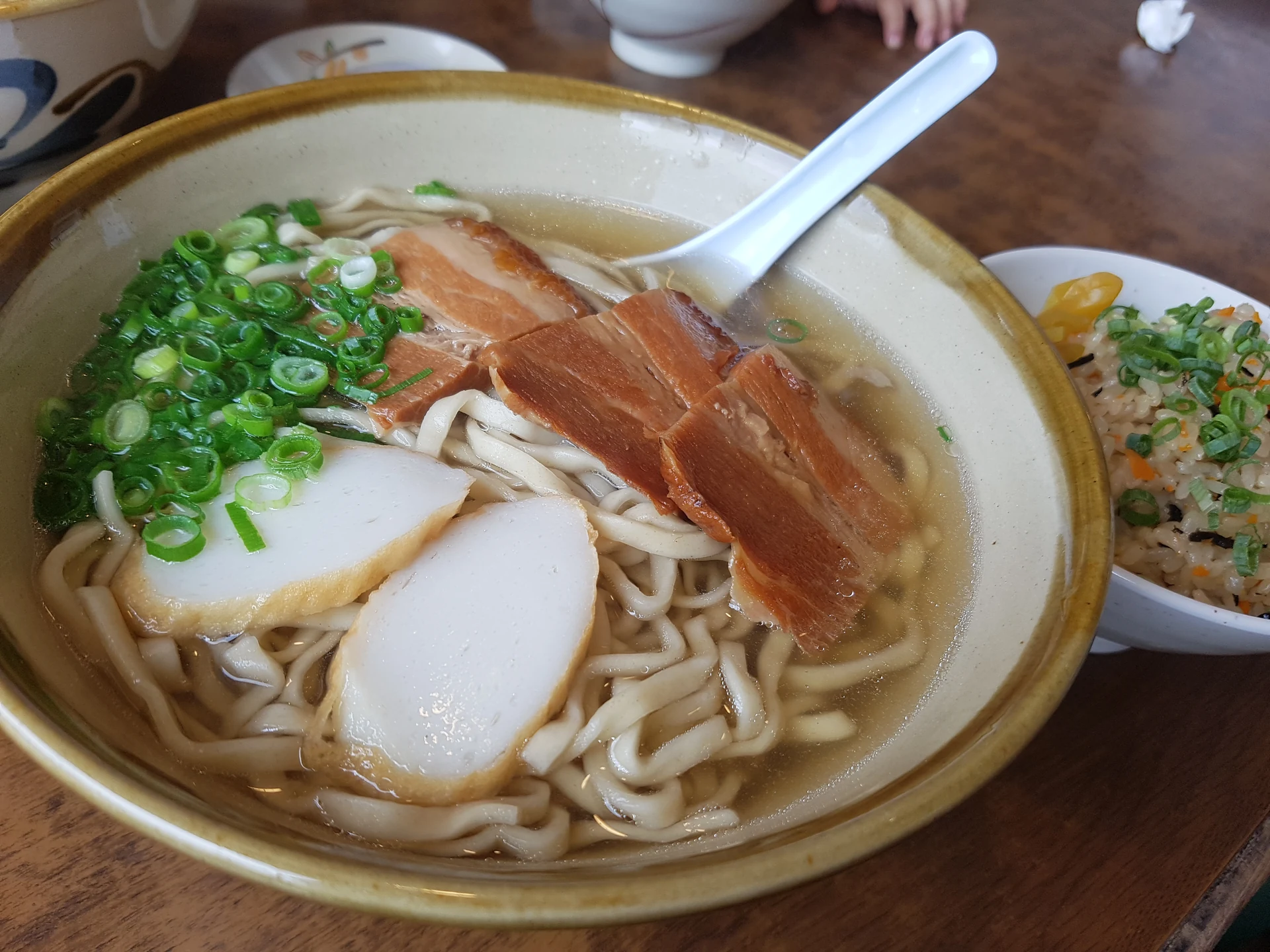
Shuri: allow for the approach, not just the train ride
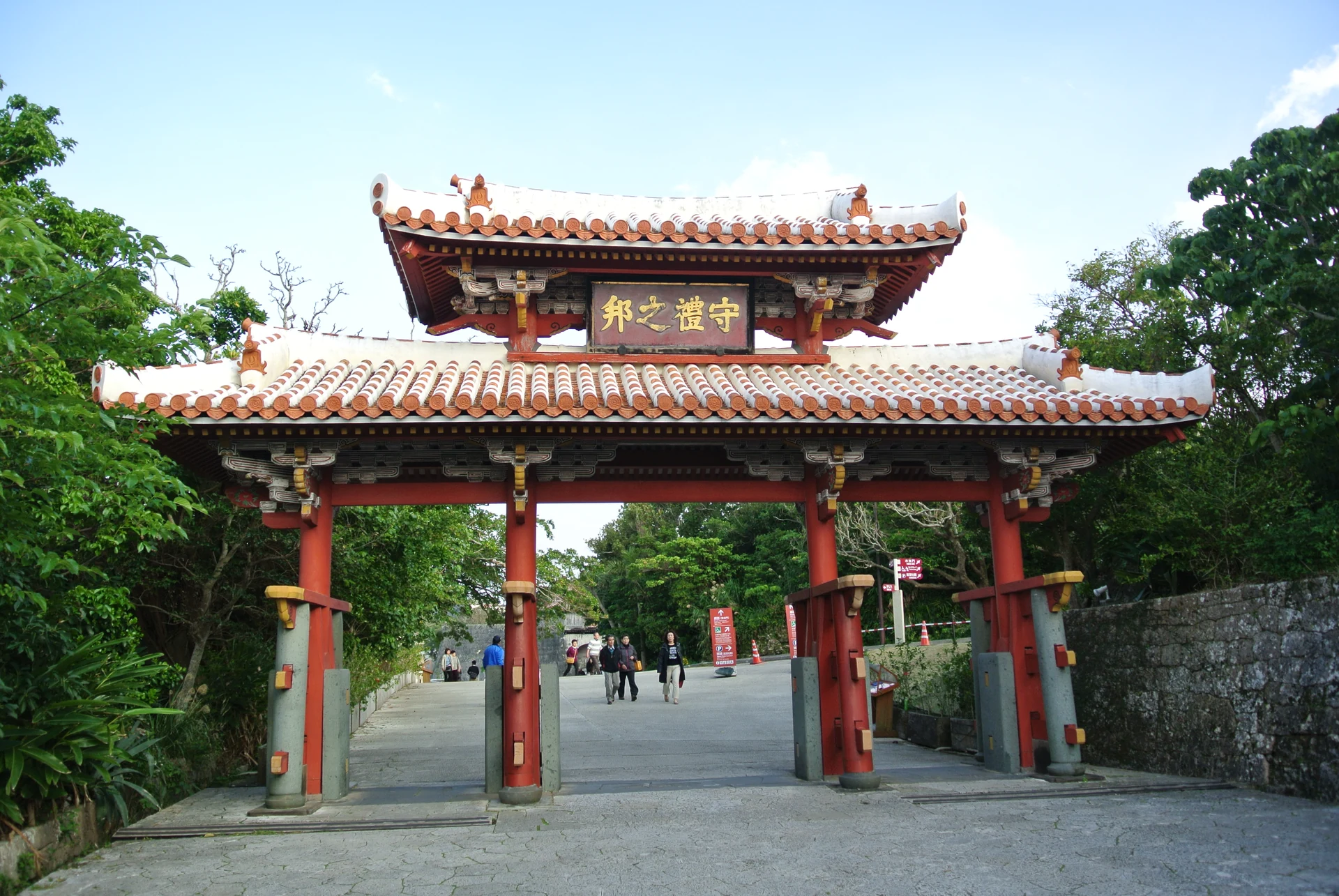
Take Yui Rail to Shuri and plan the walk or a suitable final connection to the park. For visitors reserving the restored main hall, the park’s current booking guide recommends a viewing time 40–50 minutes after estimated arrival at Shuri Station. That allowance includes more than the approach to the grounds.
The same guide announces public opening of the restored Seiden on November 23, 2026, with designated date-and-time reservations for interior viewing. Before that date, plan around the areas actually available. Afterwards, check the ticket and entry slot for your visit. The gate in the photograph below is Shureimon, not the restored main hall.
A Naha itinerary with a lighter pace
Our city-day suggestion is to choose either Shuri or a longer central-city walk as the main activity, then add lunch and one nearby area. You can combine more if your walking pace and available hours allow. For a rainy-day alternative, check the Okinawa Prefectural Museum & Art Museum near Omoromachi; its closure calendar matters when changing plans.
For a full multi-day route, use our three-day Okinawa itinerary. Here, the focus is how to choose the hotel, transport and connections that make your selected visits workable.
How to visit Churaumi Aquarium and the north without a car
Independent bus travel: decide the return first
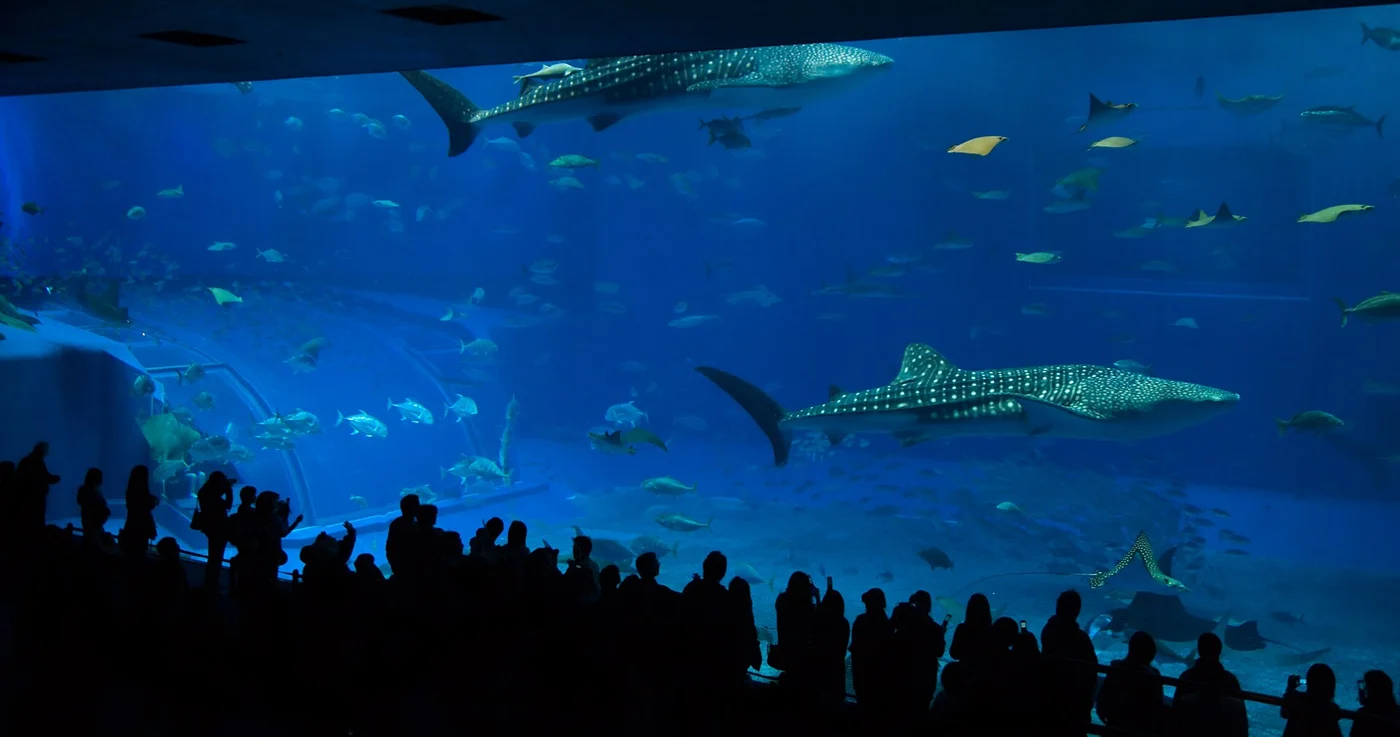
For an aquarium-focused day, compare a scheduled northern bus before arranging a multi-stop tour. Check the named stop, the service date, your outward journey and the return. Allow time to walk from the stop into the park, visit, eat and return to the boarding point.
The following is a dated planning example from Okinawa Airport Shuttle’s official timetable for October 15, 2026–January 31, 2027. It illustrates a Naha-city outing; the outward departure is not at the airport.
| Direction | Selected scheduled service | What it means for your plan |
|---|---|---|
| Outward · rapid #3 | Kencho Kitaguchi 08:15 → Churaumi Aquarium / Kinenkoen Mae 09:56. | Get from your hotel to Kencho Kitaguchi before departure. |
| Return · rapid #16 | Churaumi Aquarium / Kinenkoen Mae 15:30 → Asahibashi / Naha Bus Terminal Mae 17:18. | Return boarding and the final hotel journey are part of the day. |
The scheduled rides are 1 hour 41 minutes outward and 1 hour 48 minutes back, calculated from those times. They exclude hotel connections, walking and waiting, and are not guarantees about traffic. The two Naha stops differ. Recheck the operator’s dated table, fare and booking conditions before travel; the operator suspends services #17 and #22 from October 15 in this timetable.
Bise is another walking plan, not an automatic extra
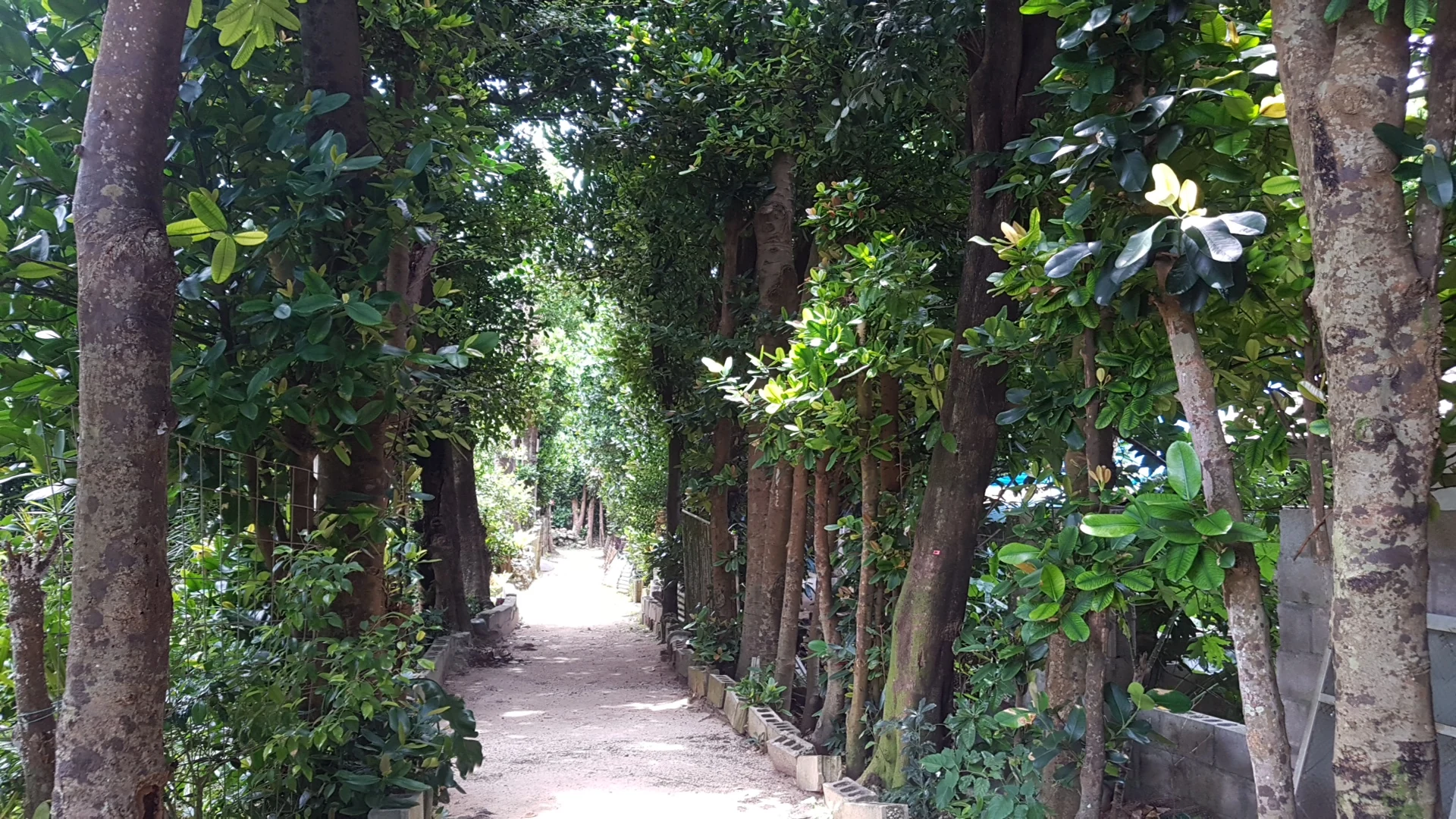
If Bise interests you, choose the village route and where you will board afterwards before setting off. The shuttle also lists Bise Fukugi Namiki Iriguchi, with direction-specific boarding and alighting restrictions. Do not assume you can use the same long-distance service as a short local ride between every northern stop.
Think about everyone’s walking pace, heat, a meal and the return. If you want an extended aquarium visit, it is reasonable to keep the day there. If the village is the main interest, give it the time it deserves rather than squeezing it between a long visit and the last departure.
For several northern stops, compare a tour or agreed charter
An independent aquarium bus journey is different from visiting Churaumi, Kouri, Bise and other northern places in one day. List the stops you care about, then compare a fixed day tour with a private route. Look at the actual time allowed at each attraction, the return point and what happens if your party needs longer.
Do not treat every tour as a door-to-door service. Confirm the selected boarding place, spoken language or audio-guide provision, admission tickets, meals and child conditions. A headline listing several attractions tells you less than the detailed itinerary.
Chatan and Onna without a rental car
Keep a coastal outing centred on one area. A Chatan afternoon can be about the waterfront, browsing and a meal. An Onna stay can be about the hotel, beach facilities and selected outings. Connecting several widely spaced coast stops by separate buses is a different undertaking.
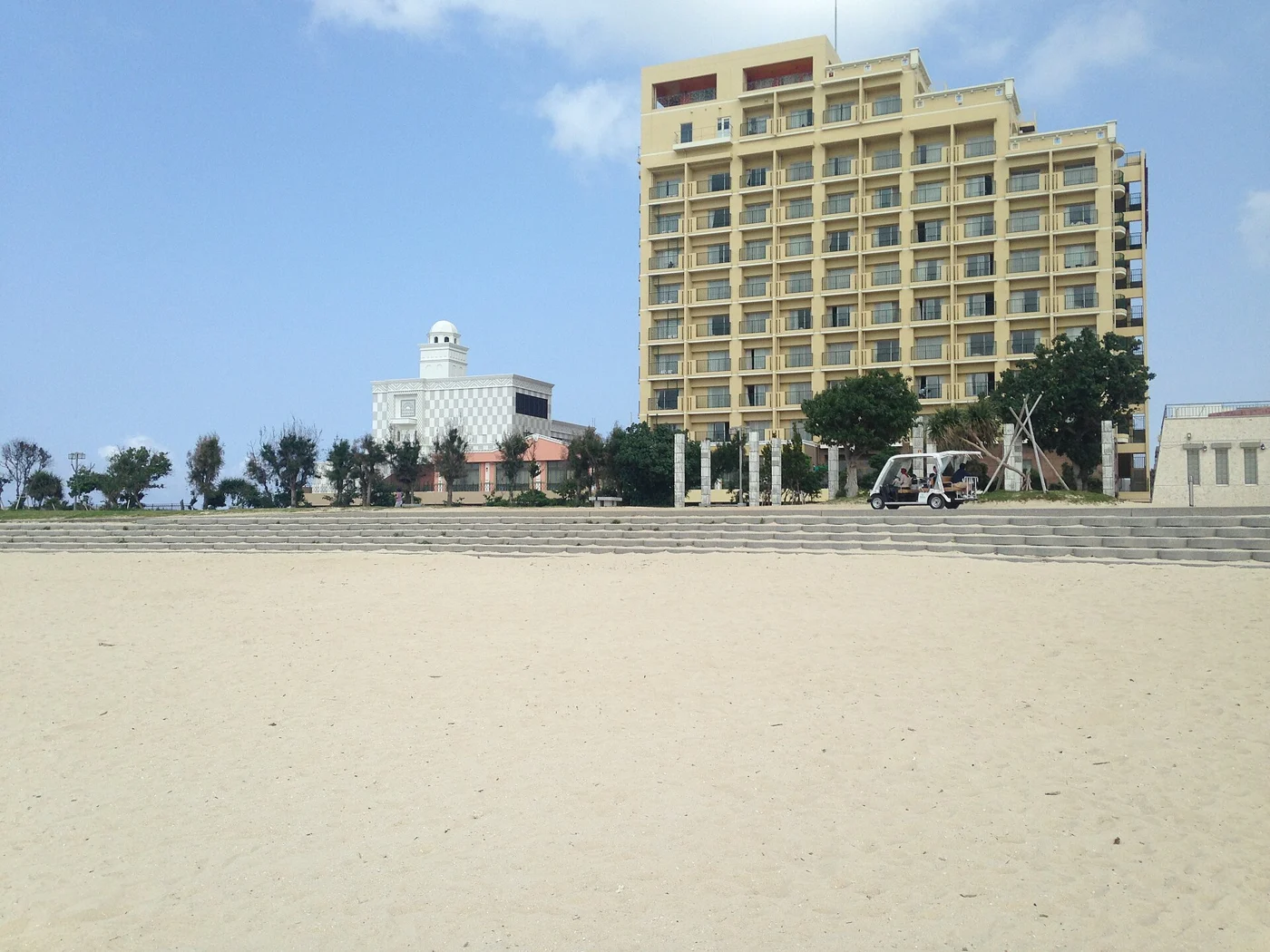
For Onna, check the shuttle operator’s hotel-connection guide. Some listed hotels involve a walk, others require a taxi or hotel pick-up arranged beforehand. Rapid services skip the coastal Onna stops. A bus passing the district is not enough: match the chosen service to the actual stop and the final connection.
If sunset and dinner are the purpose of the outing, find the usable return journey first. Plan the meal’s finish and the walk to boarding. If the timetable does not fit, choose an earlier return, a nearby overnight stay or a pre-arranged road journey. Avoid adding another coast stop simply because it appears along the same broad route.
When an Okinawa taxi, day tour or private driver helps
A short taxi ride can connect a hotel, station or attraction when walking would use too much energy. A longer point-to-point journey or a day of sightseeing needs a clearer arrangement. The official taxi guide distinguishes standard taxis, pre-booked shuttle taxis and sightseeing services, and lists GO and DiDi for advance taxi requests.
Check availability, payment and the fare basis for your actual journey. Save the destination’s address to show the driver. When booking a vehicle for a longer period, confirm the stops, hours, return point, luggage and total quote. English correspondence and a driver’s spoken language should be checked separately.
| Option | Choose it when | Main trade-off |
|---|---|---|
| Scheduled bus | One main destination fits the outward and return services. | You plan the stops, walking and timetable connections. |
| Fixed Okinawa day tour | You like the published route and visit durations. | The meeting point, timetable and stops are set by the product. |
| Short taxi journey | You need a useful final connection or relief from walking. | Confirm availability, capacity and payment for that ride. |
| Private charter with driver | Your party needs an agreed route, pace and return point. | Obtain a suitable vehicle and total quote for the full plan. |
Read our private driver guide for booking questions, and use the vehicle guidance and sample routes when deciding what to discuss.
The cost of Okinawa without a car: tickets and passes
Compare fares for the journeys you will actually make. A pass can simplify a busy transport day, but it does not create extra services or make every bus eligible. The following adult prices were checked against the operators on October 14, 2026.
| Pass | Adult price | Key condition |
|---|---|---|
| Yui Rail QR 1-day ticket | ¥1,000. | 24 hours from purchase; monorail travel. |
| Yui Rail QR 2-day ticket | ¥1,800. | 48 hours from purchase; monorail travel. |
| Okinawa route-bus 1-day pass | ¥2,900. | Designated participating local routes. |
| Okinawa route-bus 3-day pass | ¥5,800. | Check the selected product’s period and eligible routes. |
| 3-day bus pass with Yui Rail addition | ¥6,400. | The included monorail ticket is a 1-day ticket, not three days of rail travel. |
Sources: Yui Rail ticket guide and the official bus-pass prices and conditions. The bus pass excludes routes 111 and 117, airport limousine buses and regular sightseeing buses. Check coverage for each chosen service before buying. Other specialised products have their own rules.
Two adults each buying a ¥1,000 rail ticket spend ¥2,000 on that rail product. This is not a complete day budget. Add any buses outside the pass, taxis, admission, meals and hotel costs. If your city plan involves mostly walking and only a few rail journeys, compare individual fares before buying a pass.
When comparing a day tour with a private vehicle, use the whole party’s transport cost and check included admissions. A per-person bus price and a whole-vehicle quote use different units. Our pricing guidance explains the details to send for an OkinawaVia quote; the public-transport prices here are operator fares.
Build a car-free Okinawa plan that works from door to door
For each outing, write a single chain: hotel entrance → boarding point → main visit → return boarding point → hotel. Put the departure names into your notes, not just the attraction names. That makes missing connections easier to spot before you pay for accommodation or tickets.
- Hotel: check the entrance, walking route, luggage storage and places to eat nearby.
- Outward journey: note the date, operator, service, boarding point and reservation conditions.
- Visit: allow for the approach, tickets, meals and the walking pace of your party.
- Return: identify the correct direction, boarding point and departure before choosing extra stops.
- Payment: prepare the relevant ticket or supported card, plus useful small cash where appropriate.
- Bags and assistance: confirm space, boarding needs, child seats and any access requirements.
- Alternative: know how you will shorten or change the outing if a connection is unavailable.
- Flight day: work backwards from your airline’s airport deadline, including luggage collection and the final terminal journey.
For a family, a slower walker or someone with access requirements, assess the complete connection rather than whether a vehicle is labelled “large.” Ask the hotel and operator about steps, walking and boarding arrangements. A station close on a map does not answer those questions.
If you add an island excursion, make a separate boat-and-island transport plan. Confirm current sailings and the journey from the island port to your chosen place; the official transport guide notes that weather can affect ferry services. Keep enough flexibility for changes rather than treating an island outing as a guaranteed connection to your flight home.
Okinawa without a car: frequently asked questions
Is Okinawa worth visiting without renting a car?
Yes, when you choose a useful base and plan the longer journeys. Naha city days can use rail and walking. A northern outing can use a suitable scheduled bus, fixed tour or private charter. The best choice depends on your stops and the return you need.
Where should I stay without a car?
For a city-and-day-trip holiday, start by comparing Naha hotels near the station and departure points you will use. Chatan or a resort can suit a slower stay, with the journeys outside the area arranged separately. Check the actual hotel entrance and dinner options.
Can I use Suica or PASMO in Okinawa?
Yui Rail accepts the interoperable IC cards listed by the operator, including Suica and PASMO. For a bus, check that service’s payment rules. Do not assume its reader accepts the same card; prepare the correct ticket, OKICA or another supported payment method.
Can I get to Churaumi Aquarium by public transport?
Yes. Compare the northern bus service for your date and plan the return as well. The worked example above uses different Naha stops for the outward and return journeys. Walking into the park and back to boarding remains part of your visit window.
Can I stay in Onna without a rental car?
Yes, particularly when hotel time is a priority. Confirm the airport journey, final hotel connection, meals and chosen outings before booking. A rapid northern bus may skip the coastal stop you need.
Is a private driver the same as a tour guide?
They are different arrangements. A driver provides the agreed transport; detailed guiding, interpretation and specific spoken languages need separate confirmation. State what you need when comparing a tour or requesting a quote.
Does an OkinawaVia enquiry reserve my trip?
The acknowledgement confirms receipt of the enquiry. The itinerary, vehicle, service hours, availability, price and booking are agreed separately. Include your hotel, dates, party, bags and priorities so we can review a suitable plan.
Plan the last ride before choosing the last stop
A route is not complete when you know how to reach the beach. Check the return bus, the walk to its stop, and any connection after that. If dinner or sunset ends after the useful service, arrange a return ride in advance rather than relying on city-style taxi availability in a remote location.
Changing transport from day to day is sensible: monorail and walking in Naha, a reserved vehicle or suitable bus for the north, and a separately planned airport journey. Include every traveller, luggage and waiting time when comparing the full cost.
ABOUT THIS GUIDE
Prepared by OkinawaVia for English-speaking visitors planning Okinawa Main Island without driving. Official transport fares, dated bus examples and visitor notices were checked on October 14, 2026. Hotel-base choices and planning suggestions are editorial advice, not accounts of a personal trip. Use the operator information applying to your travel date. Photographs retain their credited licences; archival images are identified in their captions.